
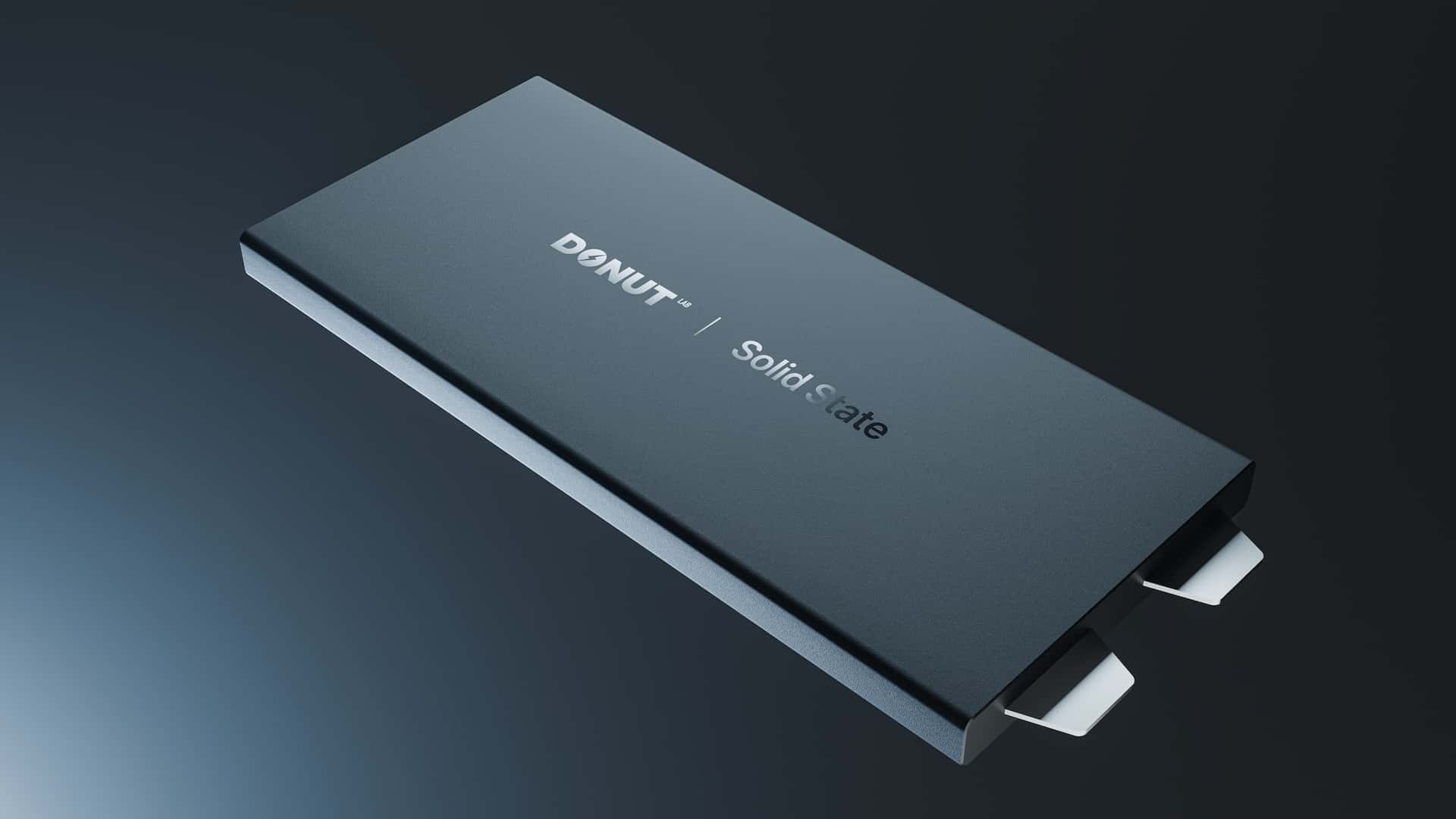
However, experts are still cautious about Donut Lab’s claims, especially regarding cycle life and performance at the pack level. While the charging tests show promising results, there are still many unanswered questions. The lack of transparency around the chemistry of the solid-state cells is a major concern for battery experts.
Without knowing the exact composition of the battery, it is difficult to verify Donut Lab’s claims of fast charging, long cycle life, and high energy density. Shirley Meng, a professor at The University of Chicago’s Pritzker School of Molecular Engineering, emphasized the importance of disclosing the chemistry of the cells to validate their authenticity.
Despite the skepticism, Donut Lab continues to push forward with its solid-state battery technology. The company’s partnership with Verge Motorcycles to install the batteries in EVs demonstrates their confidence in the product. The ability to charge in just five minutes, last 100,000 cycles, and deliver high energy density without the risk of thermal runaway is an impressive feat if proven true.
While the recent tests conducted by VTT show promising results in terms of charging speed and temperature management, there is still a long way to go before Donut Lab’s solid-state batteries can be widely accepted in the industry. More comprehensive testing, including performance at the pack level and long-term durability, will be needed to validate the claims made by the company.
For now, the focus remains on Donut Lab’s solid-state batteries and their potential to revolutionize the electric vehicle industry. With further testing and research, we may soon see a new era of high-performance, fast-charging batteries that could change the way we think about EV technology.
Donut Lab has made a significant breakthrough in battery technology, with their latest solid-state battery cell charging to 80% in just 4.6 minutes and reaching full charge in under eight minutes. What’s even more impressive is that this was achieved with a temperature reading of only 63C (145F).
The tests conducted by Donut Lab involved using single- and double-sided heat sinks to simulate real-world thermal management conditions. Despite the simplicity of the heat sink setup, the results were nothing short of groundbreaking. A fast-charging time of under five minutes to reach 80% capacity could potentially revolutionize the electric vehicle industry, making recharging as quick and convenient as refueling a gas-powered vehicle.
However, experts have cautioned against extrapolating these lab results to real-world applications. Dr. Jia Meng, a researcher specializing in energy storage materials, emphasized the limitations of lab-scale testing. While achieving such rapid charging rates in a single cell is impressive, the behavior of an entire battery pack under similar conditions remains to be seen.
One key point raised by industry experts is the importance of evaluating battery performance over the long term. Donut Lab claims their solid-state battery design can endure up to 100,000 cycles, but demonstrating consistent fast-charging capabilities over the lifetime of a vehicle is crucial. Jiayan Shi, an electrochemistry specialist at BloombergNEF, highlighted the significance of discharge rates and capacity retention in real-world battery applications.
Interestingly, the Donut Lab cell showed improved performance at higher temperatures. When subjected to less cooling during testing, the cell’s temperature rose to 90 degrees Celsius (194 degrees Fahrenheit), leading to a decrease in internal resistance and faster charging. This contrasts with traditional lithium-ion batteries, which typically struggle with excessive heat.
Overall, Donut Lab’s fast-charging solid-state battery cell represents a significant advancement in battery technology. While further research and testing are needed to validate these promising results, the potential for rapid charging and improved thermal performance could have far-reaching implications for the electric vehicle industry. The importance of maintaining the optimal operating temperature for lithium-ion batteries cannot be overstated. Studies have shown that these batteries perform best when operating within a temperature range of 25-40C (77-104F). When exposed to temperatures outside of this range, lithium-ion batteries can lose energy efficiency, become unstable, or even suffer permanent damage.
One company that has been making headlines in the battery technology industry is Donut Lab. The company recently unveiled a new type of battery cell that reportedly outperforms traditional lithium-ion batteries. However, without confirmation of Donut’s underlying technology, questions remain about whether the cell’s performance is due to a fundamentally new chemistry or clever optimization.
Despite the initial excitement surrounding Donut Lab’s new battery technology, the company has faced criticism for not disclosing meaningful technical details. The lack of transparency has made it difficult for Donut Lab to secure the funding needed to scale manufacturing. In response to the negative media coverage, the company has adopted a new communications strategy focused on slowly releasing information over time.
Donut Lab has promised to release additional independent test results in the coming weeks to provide more clarity on their new battery technology. In the meantime, other companies in the industry are also making strides in battery technology. For example, CATL’s latest lithium-iron phosphate (LFP) batteries are capable of charging at peak rates of 12C, while BYD has developed a five-minute charging LFP battery that peaks at 10C. These advancements show that even traditional lithium-ion batteries are becoming increasingly capable of ultra-fast charging speeds.
As the demand for electric vehicles continues to grow, the development of more efficient and reliable battery technology is crucial. Maintaining the optimal operating temperature for lithium-ion batteries is just one of the many factors that contribute to their performance and longevity. With companies like Donut Lab pushing the boundaries of battery technology, the future looks bright for the electric vehicle industry.