
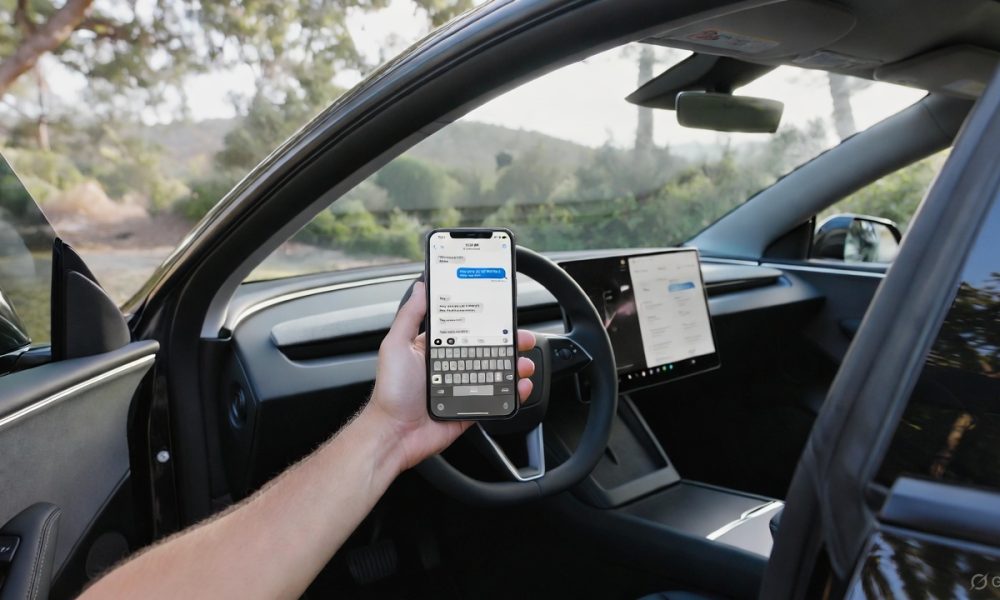
On Thursday, Tesla CEO Elon Musk made a surprising announcement regarding the Full Self-Driving v14.2.1 software update. Musk stated that this update would enable texting and driving, but emphasized that this feature would only be available “depending on the context of surrounding traffic.” This news sparked both curiosity and concern among Tesla owners and the general public.
As a response to this announcement, a test was conducted to determine how the new texting and driving feature worked in real-world scenarios. The main goal of the test was to understand the parameters under which the system would allow drivers to use their phones without interference from the in-car driver monitoring system.
It is important to note that although Tesla had initially projected that this capability would be available within one to two months, caution is still advised. Laws regarding texting and driving vary by location, and it is crucial for drivers to be aware of and comply with local regulations.
The Testing Process
Based on Elon Musk’s statement that the ability to text and drive would be dependent on the context of surrounding traffic, the test was designed to evaluate the feature under three different traffic conditions: low, medium, and high congestion.
During the test, the driver made a conscious effort to divide attention between the phone screen and the road, ensuring that focus was always maintained on the driving environment. The duration of time spent looking at the phone screen was limited to a few seconds, with additional precautions taken in areas with pedestrians and law enforcement presence.
Test Results
Low Congestion Area
In a low congestion area with minimal traffic, the driver was able to glance at the phone screen for short intervals without any alerts or nudges from the driver monitoring system. Occasional checks of the road were made to ensure safety.
Medium Congestion Area
In a medium congestion area with increased traffic flow, the driver continued to test the texting and driving feature. Despite spending a few seconds looking at the phone screen, no alerts were triggered, leading to questions about the system’s sensitivity.
High Congestion Area
On a highway with higher congestion levels, the driver finally received an alert from the driver monitoring system prompting them to focus on the road. This alert indicated that the system was responsive to the surrounding traffic conditions and prioritized safety.
After triggering an alert in the high congestion area, the test was concluded. The driver acknowledged the need for further testing with a second individual present to monitor the road, recognizing the importance of maintaining attention while driving alone.
Final Thoughts
While the test revealed insights into the functionality of the texting and driving feature, the driver expressed reservations about its practicality and safety. Despite the system’s capabilities, the driver emphasized the importance of adhering to laws prohibiting phone use while driving and avoiding distractions that could lead to accidents.
Ultimately, the test highlighted the need for responsible driving practices and awareness of the limitations of technology in ensuring road safety. As advancements in autonomous driving continue to evolve, it is essential for drivers to prioritize attentiveness and compliance with regulations to prevent potential risks on the road.
In Pennsylvania, there is a law known as the Paul Miller Law which prohibits people from even holding their phones while driving, even at stop lights. This strict law aims to increase road safety by minimizing distractions for drivers. However, some individuals may feel uncomfortable using their phones while driving, even with advanced features such as Full Self-Driving (FSD) technology.
While FSD technology may offer a level of automation and assistance, it is important for drivers to remain cautious and attentive on the road. Tesla, a leading manufacturer of electric vehicles, emphasizes the importance of driver attentiveness when using FSD or Autopilot features. Even though FSD technology can assist with tasks such as lane-keeping and traffic-aware cruise control, drivers are still required to pay attention to the road and be prepared to take control of the vehicle if necessary.
For drivers in Pennsylvania and beyond, it is crucial to understand and comply with local laws regarding the use of electronic devices while driving. By prioritizing safety and minimizing distractions, drivers can help reduce the risk of accidents and enhance overall road safety.
If you are interested in learning more about the Paul Miller Law and its implications for drivers in Pennsylvania, be sure to check out our comprehensive test below. Stay informed, stay safe, and remember to always prioritize safety on the road.