
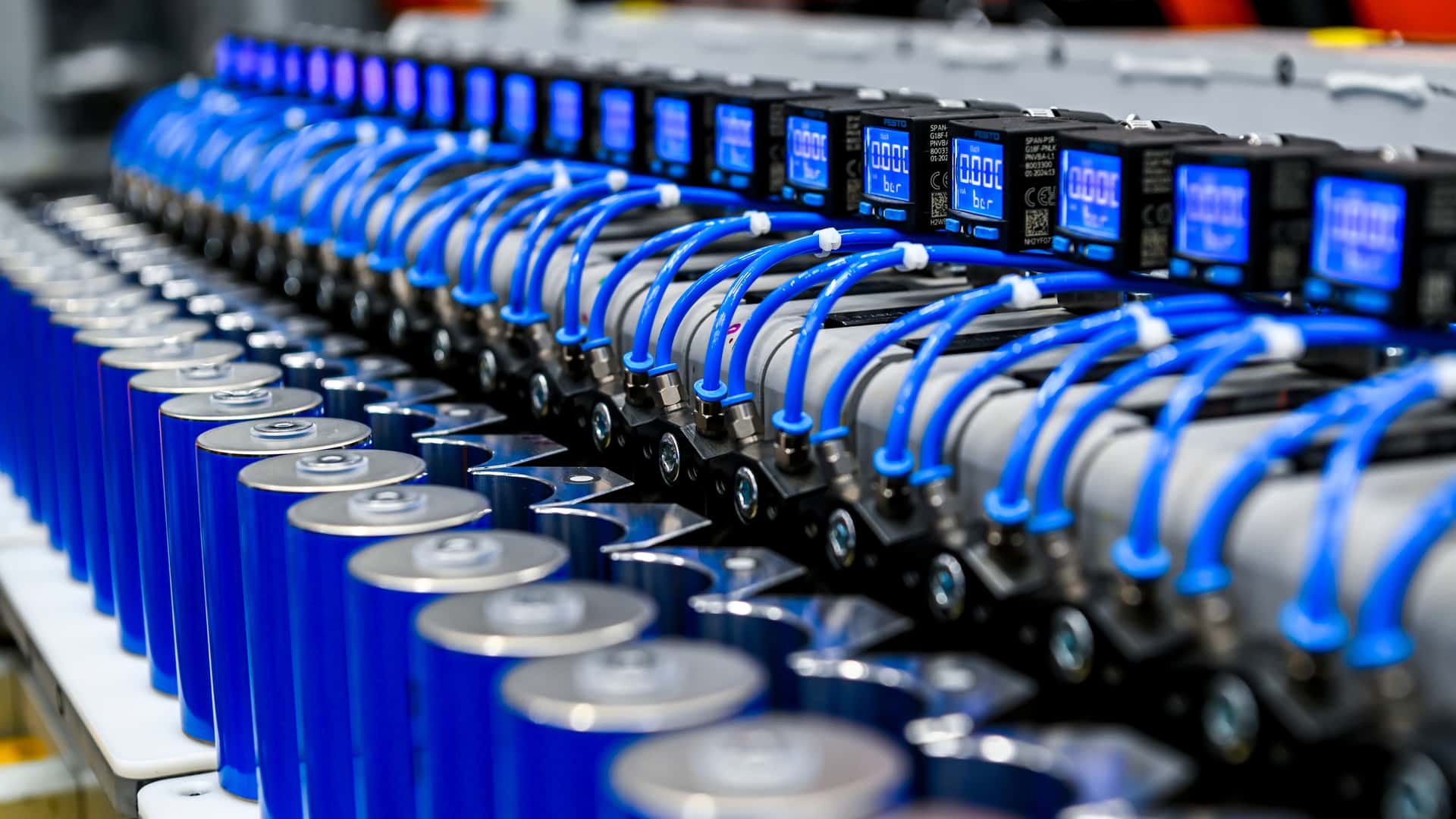
Despite the challenges posed by China’s dominance in the battery supply chain, Europe remains committed to localizing its electric vehicle industry. While several high-profile battery projects have been canceled in recent years, many local manufacturing initiatives are still in progress to strengthen the region’s supply chain.
However, European companies are facing significant hurdles in competing with Chinese batteries on cost. The economics of the China-dominated battery supply chain are making it increasingly difficult for European manufacturers to decouple from their reliance on Chinese battery materials and equipment.
Recent developments have highlighted the struggles faced by European companies in the battery manufacturing sector. Porsche, for example, scaled back production at its Cellforce battery division last year, citing economic viability concerns. Similarly, Sweden’s Northvolt filed for bankruptcy in 2024 due to mounting losses and production-related challenges.
Stellantis-backed Automotive Cells Company also encountered setbacks, shelving two battery factory projects in Germany and Italy. The company stated that the necessary prerequisites to start these plants had not been met, further underscoring the challenges faced by European companies in the battery manufacturing space.
One of the primary factors hindering Europe’s quest for battery independence is China’s manufacturing prowess, well-established supply chain, and sustained state-backed incentives. The mature battery supply chain in China, coupled with its manufacturing scale and cost advantages, make it challenging for European manufacturers to compete on a level playing field.
A joint statement from the CEOs of Volkswagen Group and Stellantis emphasized the need for an integrated European sector to ensure technological sovereignty. However, the statement also acknowledged the necessity of importing cheaper batteries, particularly from China, to make electric vehicles more affordable for consumers.
While Europe continues to grapple with the economic realities of the battery supply chain, the U.S. faces distinct challenges in its battery industry. Factors such as the loss of tax credits and regulatory changes have impacted demand for battery cells in the U.S., leading companies to pivot their focus towards stationary storage applications.
Despite these challenges, both Europe and the U.S. are making strides in their battery manufacturing ecosystems. The Volkswagen Group’s PowerCo battery division has significantly increased production at its Salzgitter, Germany, plant, showcasing Europe’s ongoing commitment to developing a robust battery manufacturing infrastructure.
As the global electric vehicle market continues to evolve, the dynamics of the battery supply chain will play a crucial role in shaping the competitiveness of different regions. While Europe faces hurdles in competing with Chinese batteries on cost, ongoing initiatives and investments demonstrate the region’s determination to localize its electric vehicle industry and reduce its reliance on external suppliers.
The dependence on imported manufacturing tools from Asia, particularly China, has become a concern for policymakers and industry leaders in the automotive sector. The reliance on foreign suppliers for essential tools and equipment poses a risk to supply chains and national security. In response to this challenge, the European Union (EU) has taken proactive steps to reduce this dependency and promote local manufacturing capabilities.
One of the initiatives launched by the EU is the Battery Booster program, which allocated €1.8 billion in interest-free loans to European battery companies to establish local production facilities for battery cells. By supporting the development of domestic manufacturing capacity, the EU aims to strengthen its position in the global electric vehicle (EV) market and reduce its reliance on imports from Asia.
In addition to the Battery Booster program, the EU is also exploring local sourcing requirements for critical minerals used in batteries. Similar to the Inflation Reduction Act (IRA) in the United States, these regulations aim to promote the domestic extraction and processing of essential raw materials for battery production. By establishing a more robust supply chain for battery materials, the EU can enhance its resilience to global market fluctuations and geopolitical risks.
The United States provides a cautionary tale for the potential challenges of promoting local battery manufacturing. While the passage of the IRA led to a surge in battery project announcements, many of these projects were later canceled or postponed under the Trump administration. This uncertainty created significant financial losses for automakers and battery suppliers, highlighting the importance of stable and consistent policy support for the industry.
Unlike the political volatility in the United States, Europe’s EV market appears to be more stable and supportive of sustainable mobility initiatives. With growing demand for electric vehicles and strong government incentives, the European EV market continues to expand rapidly. This favorable market environment, combined with proactive policy measures like the Battery Booster program, positions Europe as a promising hub for electric vehicle production and innovation.
By investing in local manufacturing capabilities and promoting sustainable supply chains, the EU aims to reduce its dependence on imported manufacturing tools and materials from Asia. These strategic initiatives not only enhance Europe’s competitiveness in the global EV market but also contribute to the region’s economic growth and environmental sustainability goals.