
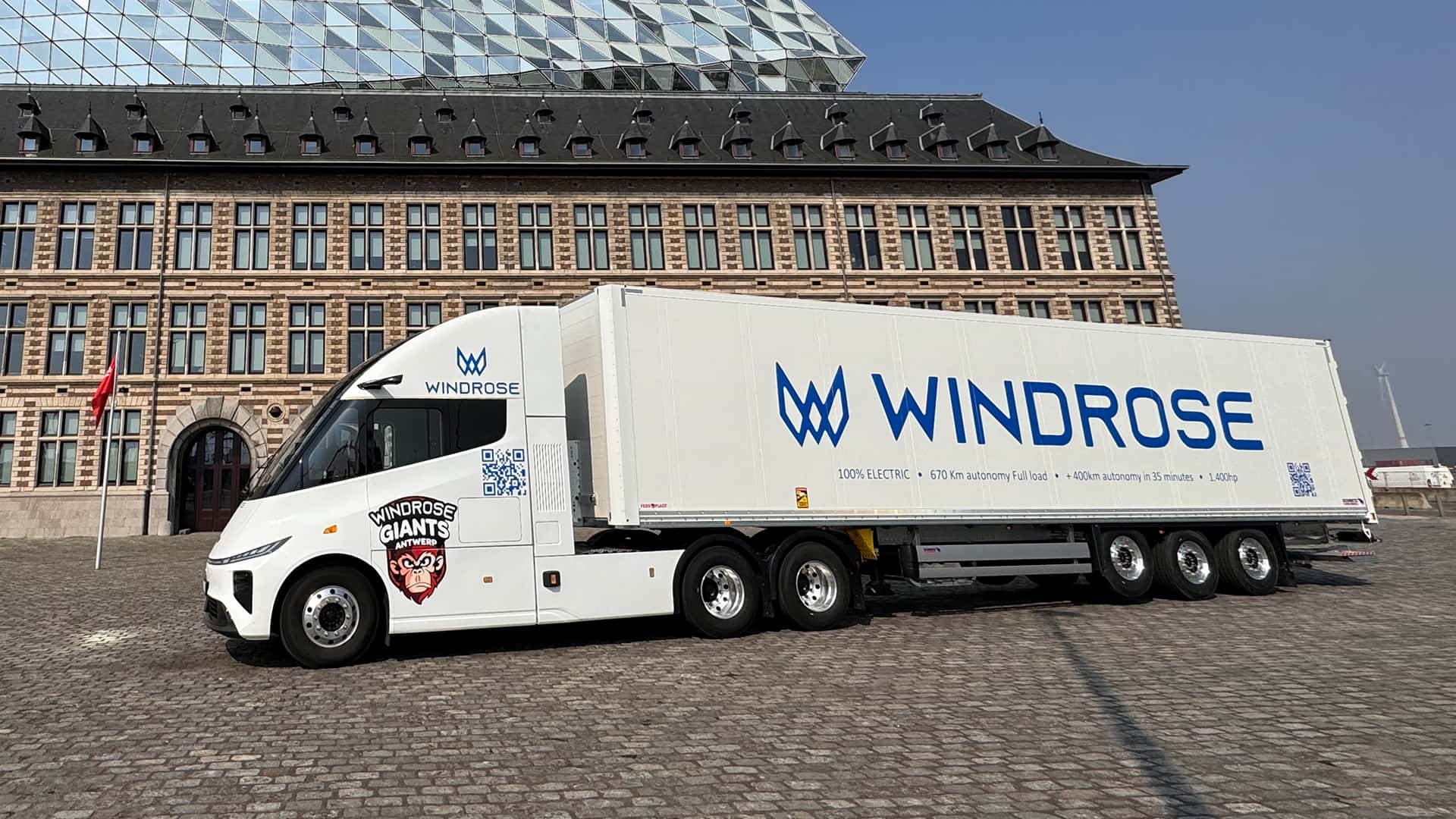
China’s EV manufacturers are setting their sights on a new target market: commercial trucks. With the potential to disrupt Europe’s legacy heavy-duty trucking segment, Chinese automakers are poised to offer trucks at prices that could beat out current battery-electric truck prices by a significant margin of 30%.
The next major battle in the EV industry is expected to play out in the realm of electric freight trucks. These massive battery-powered semis are quietly becoming the next global arms race, with China’s major automakers gearing up to enter this emerging market. Meanwhile, Europe’s traditional truck makers are bracing themselves for the threat of low-cost competition arriving on their doorstep sooner than they anticipated.
A recent report by Automotive News highlights the looming threat that Chinese freight trucks pose to Europe. Similar to the impact made by made-in-China passenger cars, these semi trucks are expected to offer more advanced technology at a lower price point, putting pressure on established competitors.
Familiar names like BYD and Geely are among the Chinese manufacturers involved in this push, alongside startups like Windrose and SuperPanther, as well as industry players like Sinotruk and Sany. These companies are aiming to price their electric trucks around 30% below the European average for commercial EV trucks, potentially reducing a $380,000 business cost to just $266,000. While still relatively expensive compared to diesel-powered trucks, which average around $115,000 in the EU, the competitive pricing could make Chinese trucks an attractive option for buyers.
China already holds a significant advantage in electric truck scaling compared to Europe, with zero-emission trucks accounting for 29% of heavy-duty commercial vehicle sales in China, compared to just 4.2% in Europe. Moreover, Chinese manufacturers have demonstrated a remarkable speed in developing new products, with startups like Windrose completing development cycles in just three years, compared to the seven years it typically takes for domestic players.
The rapid pace of innovation and development in the Chinese market has raised concerns within the European heavy-duty trucking industry. Industry experts warn that European companies have a limited window of opportunity to stay ahead of the competition from China. Volvo Group’s CEO Martin Lundstedt acknowledged the agility and commitment of Chinese brands, emphasizing the need for European companies to act swiftly to maintain their competitive edge.
With the potential for significant cost savings and operational efficiencies, EV heavy trucks are becoming increasingly attractive to fleet operators and businesses. The prospect of slashing upfront costs by 30% makes Chinese trucks a compelling option for companies looking to transition to electric vehicles. Legacy automakers in Europe should take note of the looming threat posed by Chinese manufacturers in the commercial trucking sector and take proactive steps to stay ahead of the curve. The world of technology is rapidly advancing, with new innovations and developments being made every day. One of the most exciting areas of technological advancement is in the field of artificial intelligence (AI). AI is revolutionizing the way we live, work, and interact with the world around us.
One of the most significant developments in AI technology is the creation of virtual assistants. Virtual assistants are AI-powered software programs that can perform various tasks and provide assistance to users. These virtual assistants are designed to understand natural language commands and can help users with a wide range of tasks, from scheduling appointments to answering questions and providing information.
Virtual assistants have become increasingly popular in recent years, with companies like Apple, Google, and Amazon all offering their own versions of these AI-powered helpers. Apple’s Siri, Google Assistant, and Amazon’s Alexa are some of the most well-known virtual assistants on the market today.
These virtual assistants are constantly evolving and improving, thanks to advances in AI technology. They are becoming more intelligent and capable of understanding and responding to a wider range of commands and queries. Virtual assistants are also becoming more integrated into various devices and platforms, making them even more useful and accessible to users.
One of the key benefits of virtual assistants is their ability to streamline and simplify everyday tasks. From setting reminders and alarms to ordering groceries and booking flights, virtual assistants can help users save time and stay organized. They can also provide personalized recommendations and suggestions based on a user’s preferences and habits.
Virtual assistants are also being used in various industries and sectors to improve efficiency and productivity. In healthcare, AI-powered virtual assistants are being used to help doctors and nurses with tasks such as medical transcription and patient monitoring. In finance, virtual assistants are being used to provide personalized financial advice and assist with banking transactions.
However, as with any technology, there are also concerns and challenges associated with the widespread use of virtual assistants. Privacy and security are major concerns, as users may be sharing sensitive personal information with these AI-powered programs. There are also concerns about the potential for virtual assistants to replace human jobs and the ethical implications of relying on AI for important decision-making tasks.
Overall, virtual assistants are shaping the future of technology and changing the way we interact with machines and devices. As AI technology continues to advance, virtual assistants will become even more sophisticated and capable, providing users with even more ways to simplify their lives and enhance their productivity.