
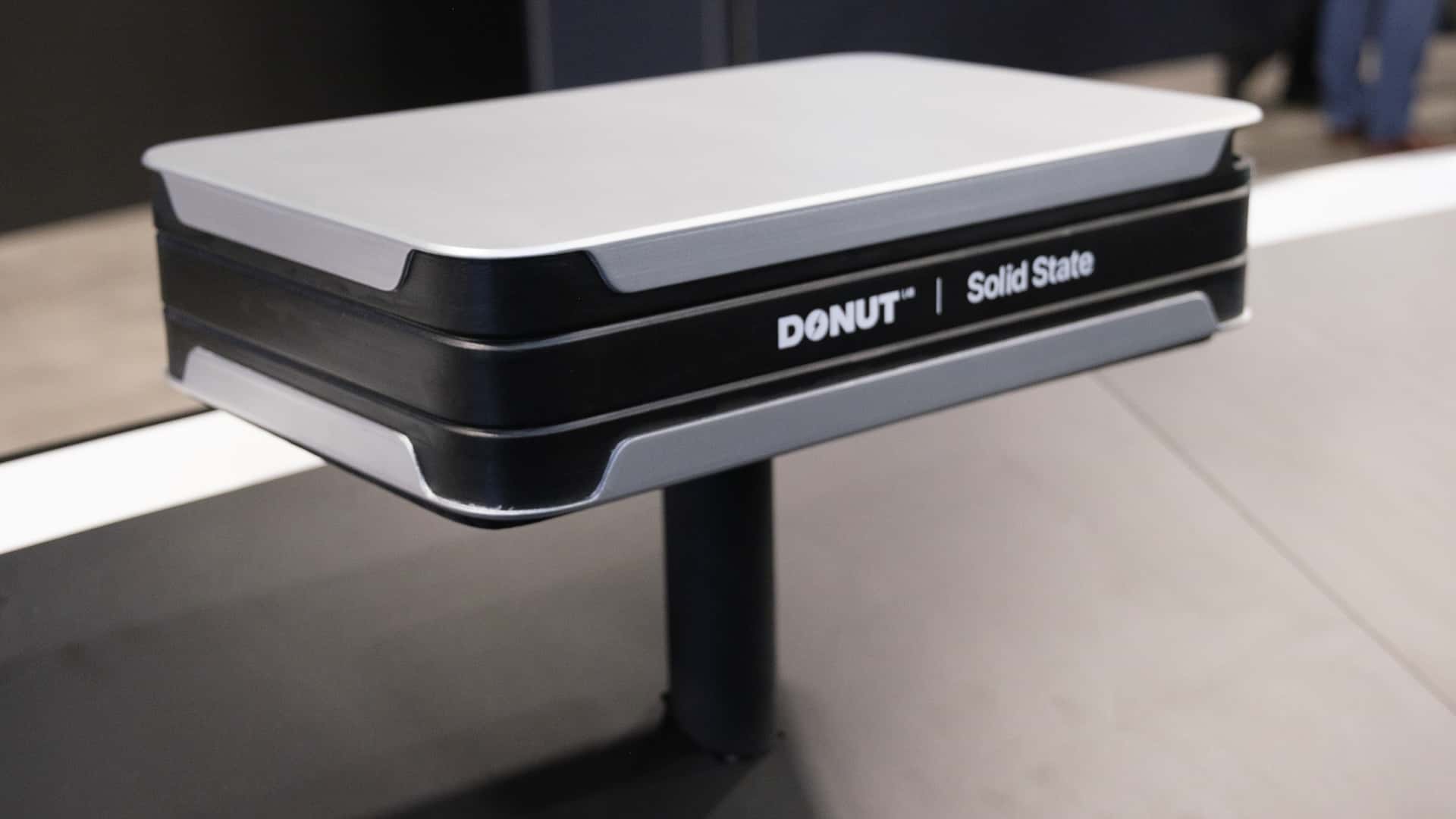
The results were clear: the Donut Lab battery retained 93.5% of its charge after 240 hours of idle time. This performance is consistent with a battery, not a supercapacitor. Supercapacitors typically lose charge much more quickly when left idle, making them unsuitable for long-term energy storage applications.
These test results should put to rest any doubts about the nature of the Donut Lab battery. It is indeed a true solid-state battery, capable of high energy density, long cycle life, and rapid charging. The company’s innovative approach to solid-state battery technology has the potential to revolutionize the electric vehicle industry and energy storage sector.
With each new test result, Donut Lab is proving the validity and reliability of its groundbreaking technology. The future looks bright for this Finnish startup as it continues to push the boundaries of battery innovation and pave the way for a sustainable energy future.
For more information on Donut Lab and its all-solid-state battery technology, visit the company’s official website.
Donut, a startup claiming to have developed a revolutionary solid-state battery technology, has been making waves in the energy storage industry. The company recently released data showing that their cell exhibited minimal voltage drop over an extended idle period, retaining nearly 98% of its stored energy. This characteristic is more commonly associated with batteries rather than capacitors, according to Donald R. Sadoway, Professor Emeritus of Materials Chemistry at the Massachusetts Institute of Technology.
Sadoway’s assessment of the Donut battery suggests that it does not behave like a typical supercapacitor, which can deliver powerful bursts of energy but only for a short duration. However, despite acknowledging the impressive performance of the cell, Sadoway stopped short of fully endorsing Donut’s claims of a groundbreaking advancement. He emphasized that the information provided by the startup was too generic and lacked the necessary depth to substantiate their extraordinary breakthrough.
Donut has been gradually releasing test results to the public, with each update raising more questions than answers. While the initial tests showcased the cell’s ability to charge rapidly and withstand extreme temperatures, experts in the field remain skeptical. Battery scientists caution that laboratory-scale tests are just the beginning, as the true test of the technology’s viability lies in its performance at the pack level over thousands of cycles.
Sadoway echoed these sentiments, noting that the report from Donut lacked specificity and credibility. As the startup continues to unveil more data on their solid-state battery technology, the industry remains cautiously optimistic, awaiting conclusive evidence of its real-world performance and reliability.