
Tesla’s Vision-Based Occupancy Network: A Deep Dive into FSD Technology
Tesla has unveiled a groundbreaking patent that sheds light on its innovative vision-based occupancy network. Titled “Artificial Intelligence Modeling Techniques For Vision-based Occupancy Determination,” this patent, officially published on March 12, 2026, provides a comprehensive look into how Tesla harnesses artificial intelligence to interpret the physical world without the need for radar or LiDAR technology.
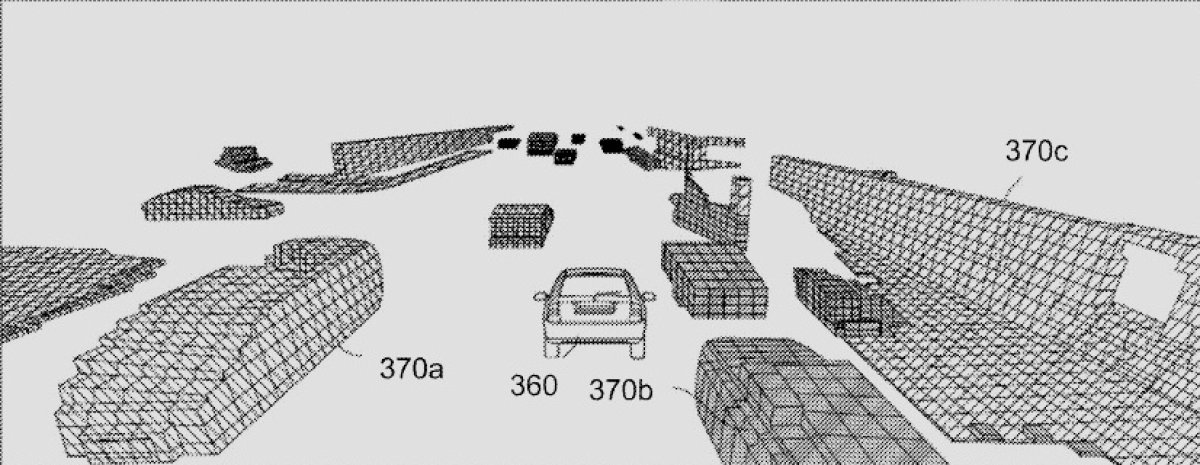
At the core of Tesla’s occupancy network lies the concept of voxels, three-dimensional pixels that represent specific points within a volumetric grid surrounding the vehicle. By processing image data from the vehicle’s eight exterior cameras, Tesla’s artificial intelligence model predicts whether each voxel is occupied by an object with mass. To streamline this process, Tesla leverages unsupervised training methods to scale the training of these models efficiently.
One of the patent’s most intriguing revelations is Tesla’s dynamic adjustment of voxel sizes to manage computing power effectively. While the default voxel size is 33 centimeters on each vertex, FSD can reduce the size to 10 centimeters for areas near the vehicle, allowing for higher granularity in crucial areas. The neural networks can even predict partial occupancy by dividing occupied spaces into smaller sub-voxels, enabling accurate identification of curved objects.
Tesla’s AI doesn’t stop at static frames but utilizes a transformer to aggregate 2D image data into a unified 3D representation. By fusing spatial and temporal data from previous timestamps, the network can calculate occupancy flow and discern the nature of objects within the environment. This data is continuously aggregated into a queryable dataset that powers real-time navigational decisions and generates the 3D environmental map displayed to users.
While the patent primarily focuses on autonomous vehicles, it emphasizes the adaptability of the underlying technology. The same vision-based occupancy network could be utilized by bipedal humanoid robots to navigate diverse terrains. This versatile technology underpins Tesla’s commitment to innovation and advancement in the field of autonomous driving.
For more insights into Tesla’s FSD technology, check out our full series on related patents, including “How FSD Works Part 1-5,” “Tesla’s Occupancy Network,” “Tesla’s Universal AI Translator,” “How Tesla Optimizes FSD,” and “How Tesla Will Label Data with AI.” Stay tuned for more updates on Tesla’s cutting-edge developments in autonomous driving technology.