
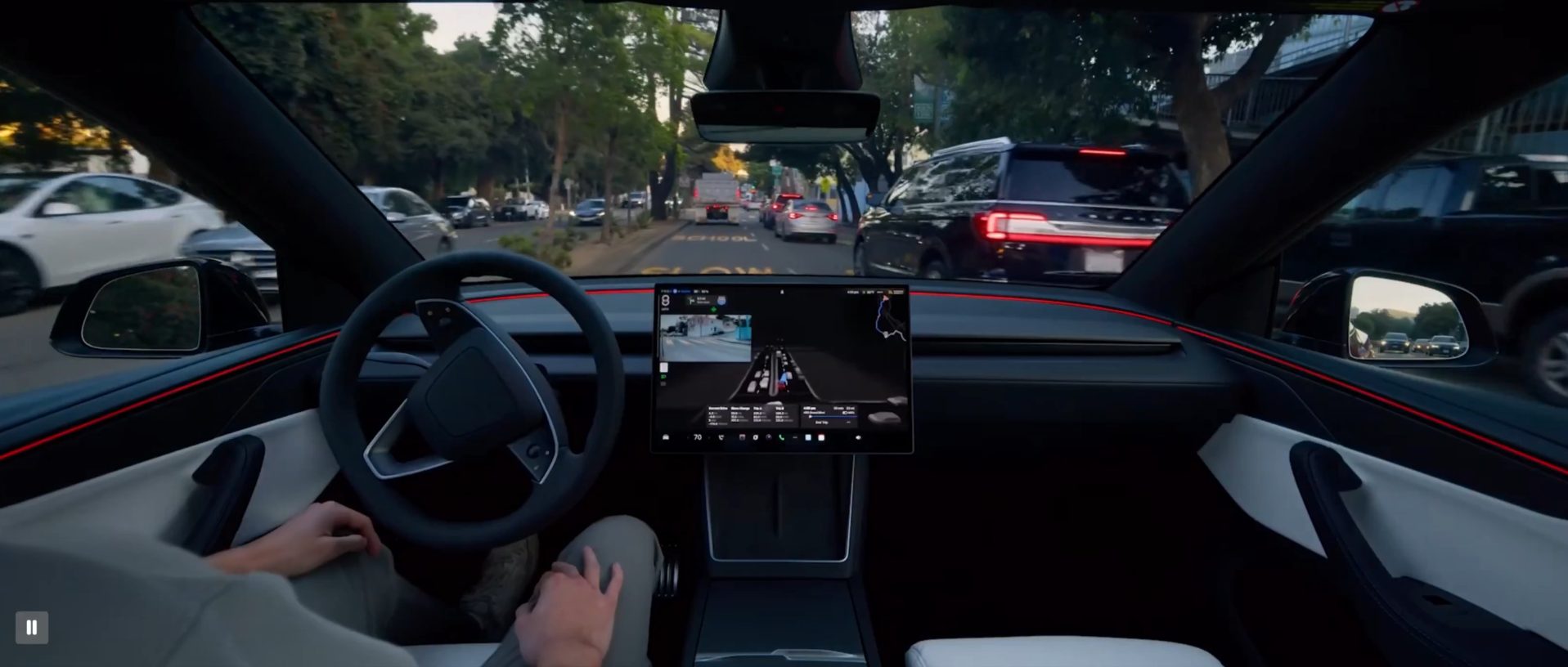
On Wednesday, Tesla Vice President of Vehicle Engineering Lars Moravy appeared before the U.S. Senate Commerce Committee during a hearing titled “Hit the Road, Mac: The Future of Self-Driving Cars,” where lawmakers examined how the U.S. should modernize regulations around autonomous vehicles. Moravy represented Tesla alongside Waymo Chief Safety Officer Dr. Mauricio Peña, Autonomous Vehicle Industry Association CEO Jeff Farrah, and University of South Carolina law professor Bryant Walker Smith.
In his opening statement, Moravy emphasized the importance of a unified national approach to autonomous vehicle regulation, stating that the U.S. is at risk of falling behind in the autonomous vehicle space without a federal framework. He stressed the need for America to maintain its position in global technological development and grow its advanced manufacturing capabilities by enacting a federal framework for the development and deployment of autonomous vehicles. Moravy urged the committee to position the National Highway Traffic Safety Administration (NHTSA) as a global gold standard for autonomous vehicle development.
Tesla had previously submitted written remarks warning lawmakers that the U.S. could lose the AI and self-driving race to China without regulatory reform and a consistent federal framework. Currently, autonomous vehicle rules vary widely by state, making large-scale deployment more complex than necessary.
The testimony comes on the heels of Tesla CEO Elon Musk’s claim that the company has effectively “solved” full autonomy, with remaining hurdles being primarily regulatory rather than technical. Tesla has begun offering fully unmanned Robotaxi rides in Austin, Texas, with no driver or safety monitor onboard, showcasing the company’s progress in autonomous vehicle technology.
A more hospitable federal framework could accelerate both development and deployment of autonomous vehicles, giving the U.S. a clearer path to compete with China in the autonomous vehicle and AI-powered transportation industries.
During the hearing, Moravy also addressed concerns around vehicle cybersecurity, highlighting Tesla’s robust security measures. He emphasized that Tesla’s architecture was designed with isolation and redundancy in mind, with critical driving systems physically and digitally separated from external access. Moravy assured senators that Tesla has multiple layers of security in place, with strict internal controls around software updates to prevent unauthorized access to vehicle systems.
Moravy stated that no one has been able to take over control of Tesla vehicles, emphasizing the company’s commitment to cybersecurity. He described Tesla’s security protocols, which require multiple layers of authorization and approval before any firmware updates can be downloaded to vehicles.
To learn more about the Senate hearing and hear additional testimony from industry leaders, including Waymo, you can watch the full hearing to gain deeper insight into how U.S. lawmakers are considering the future of self-driving cars.