
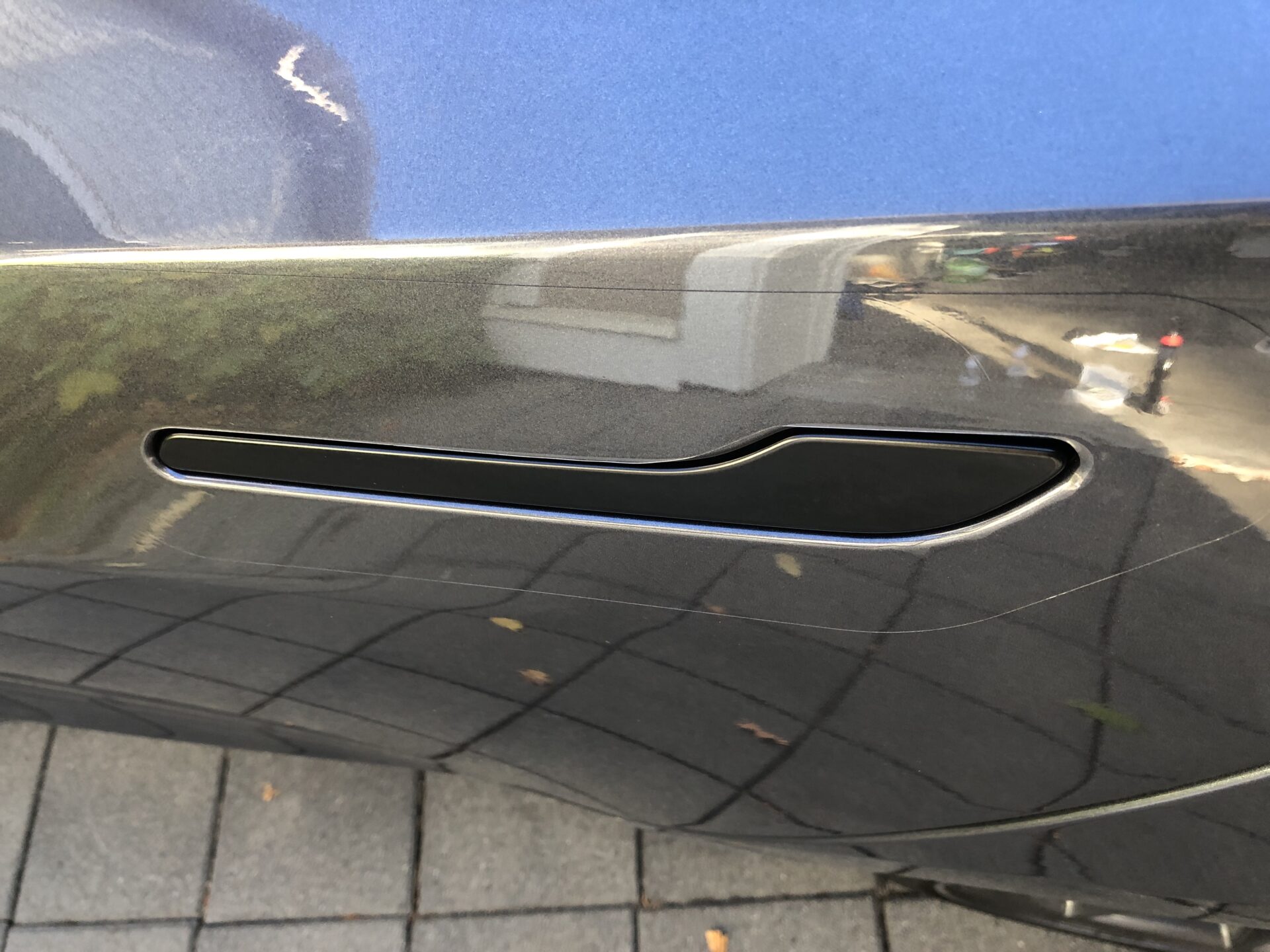

China has announced a significant change in regulations that will impact the design of electric vehicles (EVs) moving forward. Effective January 1, 2027, new vehicles sold in China will no longer be permitted to feature retractable, electronic door handles like those seen on Tesla vehicles, signaling a shift away from a design trend that once epitomized futuristic minimalism.
As reported by Autoblog, Chinese regulators are implementing rules mandating that all vehicles weighing less than 3.5 tons must be equipped with mechanical emergency door releases for both interior and exterior handles. The primary objective of this requirement is to ensure that in the event of a crash, fire, or power failure that disables electronic systems, occupants and emergency responders can still access the vehicle manually.
Retractable door handles have gained popularity among EV manufacturers, with Tesla being a frontrunner in incorporating them across its vehicle lineup. These handles not only enhance the aesthetic appeal of vehicles and improve aerodynamic efficiency but also help them stand out visually. However, concerns regarding safety have steadily mounted over time. Regulators argue that solely electronic systems are prone to failure at critical moments, potentially turning a simple task into a hazardous obstacle.
While most EVs, including those produced by Tesla, already include mechanical emergency releases within the cabin, these systems have faced criticism for being challenging to locate, inadequately labeled, or cumbersome to operate under stressful situations. Issues such as cold-weather malfunctions, delayed handle deployment, and instances of fingers getting pinched have contributed to growing dissatisfaction among vehicle owners.
Tesla, a prominent advocate of electronically actuated, flush-mounted handles, has come under scrutiny due to documented cases where individuals struggled to exit vehicles following accidents resulting from power loss. In certain incidents, occupants reportedly resorted to breaking windows to escape. This new regulation in China places additional pressure on the company, known for its minimalist design philosophy.
Similar scrutiny surrounding door handle safety has emerged in other regions as well. In the United States, the National Highway Traffic Safety Administration recently initiated a defect investigation involving over 170,000 Tesla Model 3 sedans due to concerns regarding the ease of identifying manual door releases during emergencies. While Tesla vehicles manufactured at Gigafactory Shanghai feature clear markings on interior emergency door latches, those produced at Tesla’s facilities outside China lack such markings.

Tesla has acknowledged the safety concerns and is reportedly working on a new handle design that integrates electronic and mechanical releases into a single control, as confirmed by design chief Franz von Holzhausen. With China’s latest regulations, this redesign is no longer just an option but a necessity.
The restriction on retractable door handles in China reflects a broader trend where these features are reminiscent of pop-up headlights in the EV era—innovative, futuristic, yet ultimately constrained by safety considerations. Given China’s status as the largest EV market globally, automakers have little choice but to adapt their designs to comply with regulations or risk exclusion from a significant market.