
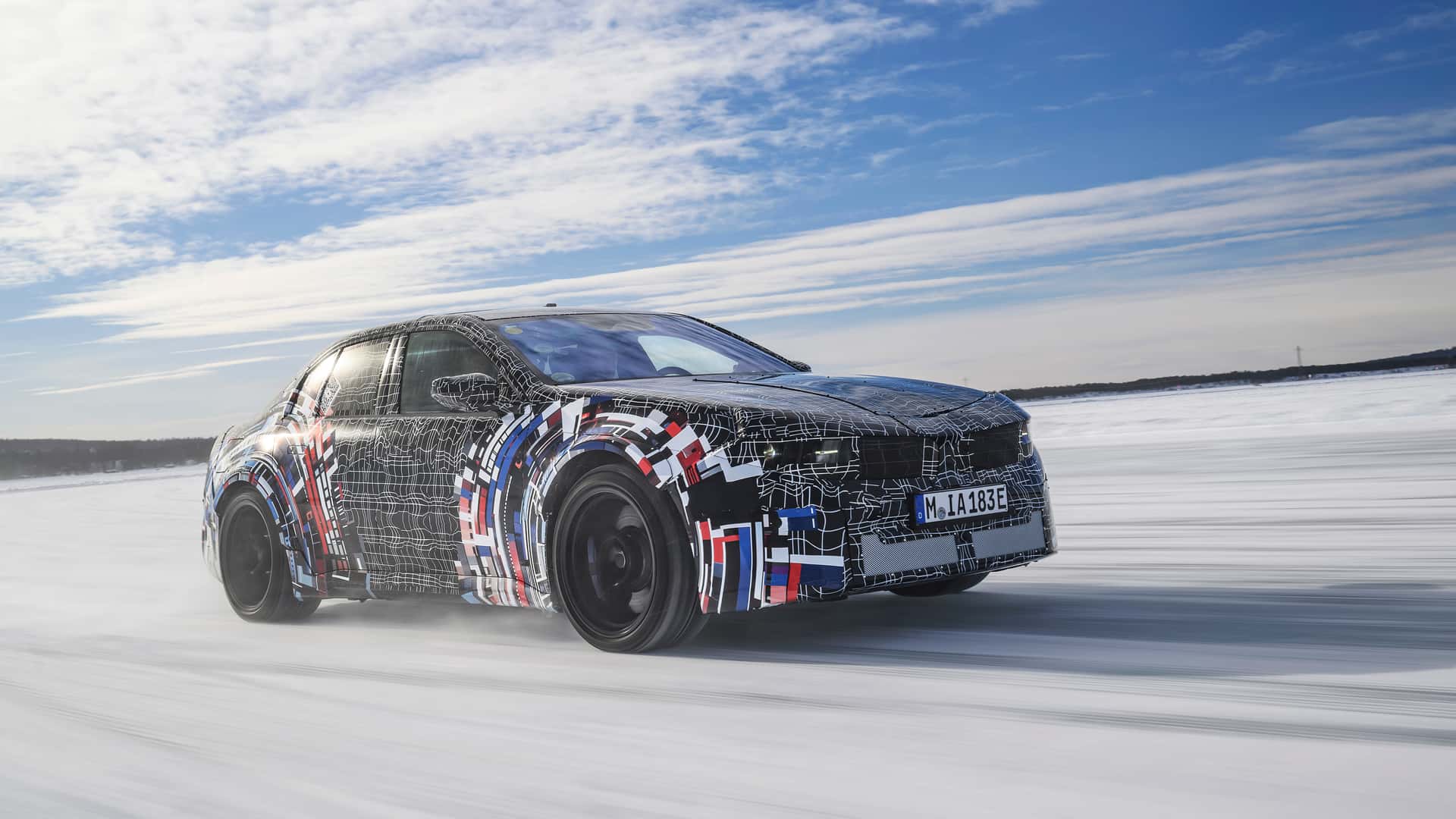
This quad-motor setup will enable the electric M cars to deliver power and torque to each wheel independently, allowing for enhanced handling and performance. Additionally, BMW is working on implementing simulated gear shifting in these electric M cars to provide a more engaging driving experience for enthusiasts.
According to Brunn, the battery technology in the Neue Klasse M cars has also been overhauled to deliver high power output. This will ensure that the electric M cars can sustain high performance levels without compromising on range or efficiency.
Challenges and Opportunities
BMW’s move towards electrifying its high-performance M cars is both a challenge and an opportunity. The company must ensure that these electric M cars meet the expectations of enthusiasts who have long associated the M badge with thrilling driving dynamics and exhilarating performance.
By introducing fully electric M cars with quad-motor powertrains and advanced battery technology, BMW is signaling its commitment to pushing the boundaries of electric performance vehicles. The upcoming electric M cars are poised to redefine the driving experience for enthusiasts and set new benchmarks for high-performance electric vehicles.
With the launch of the first electric M cars scheduled for 2027, BMW is gearing up to make a significant impact in the electric vehicle market. The combination of cutting-edge technology, performance-focused design, and the legacy of the M brand is set to make BMW’s electric M cars a force to be reckoned with in the world of high-performance electric vehicles.
BMW is pushing the boundaries of driving dynamics with its new M cars, boasting a unique concept that allows for quick and independent control of each wheel. According to BMW, this innovative setup sets a new standard for performance in M production cars.
“The unique concept lets us achieve performance levels you’ve never seen in a BMW M production car as of now,” said BMW spokesperson Brunn.
The key to this groundbreaking performance lies in the new drive units developed by BMW, each housing two motors. This setup, with one drive unit at the front and another at the rear, allows for unparalleled control and agility on the road. Additionally, BMW’s new drive unit includes two gearboxes, an inverter, and a lubrication system all in one housing.
One of the standout features of the new M cars is the ability to mechanically disconnect the front axle for enhanced efficiency during highway cruising. This feature showcases BMW’s commitment to optimizing performance and efficiency in its vehicles.
While specific performance numbers have not been disclosed by BMW, Brunn hinted that the horsepower, torque, and acceleration of the new M cars will reach new heights, setting a new benchmark for the brand.
Faster Software And Fake Gear Shifts
Aside from the revolutionary drive units, BMW’s new M cars will also benefit from a faster and more responsive electrical architecture. By consolidating vehicle functions into a smaller number of high-performance computers, BMW aims to enhance the driving experience of its electric vehicles.
This approach mirrors the “zonal architectures” found in other EVs like Rivians and Teslas, allowing for quicker data transfer between control units and improved overall performance.
BMW has also overhauled the battery technology in its Neue Klasse models, incorporating different cells, improved cooling, and an upgraded battery-management system. These enhancements contribute to faster data transfer and a noticeable performance gain for the new M cars.
Overall, BMW’s new M cars represent a significant leap forward in performance and driving dynamics, showcasing the brand’s commitment to innovation and pushing the boundaries of what is possible in the world of electric vehicles.
The latest advancements in BMW’s Neue Klasse vehicles are set to revolutionize the driving experience, particularly in the realm of performance and dynamics. The introduction of the “Heart of Joy,” a central computer system designed specifically for M cars, promises to enhance system responses and sharpen driving dynamics by making the system 10 times faster.
One of the key features of this new system is the inclusion of simulated gear shifts, a first for BMW, along with corresponding “M-specific sounds” that will further enhance the driving experience. Drawing inspiration from the success of Hyundai’s Ioniq 5 N in incorporating phony shifting and engine noises in an electric car, BMW aims to take it a step further by offering a range of engine notes from their iconic models, such as the BMW 2002’s four-cylinder and the modern V-8 M5, all in a quad-motor EV.
The performance of the Neue Klasse vehicles will be powered by an 800-volt powertrain featuring a high-performance Neue Klasse battery pack with enhanced cooling capabilities and power delivery prioritization over energy density. This results in higher power output and faster charging times, although the overall capacity and driving range may be slightly reduced. The battery management system has also been upgraded to handle the higher energy peaks efficiently.
Furthermore, the M pack is intricately connected to the vehicle and suspension in multiple places, stiffening the car and improving overall driving dynamics. BMW’s commitment to adapting the M3 and M5 for the electric age showcases their dedication to bringing innovative ideas and technology to the high-performance space.
In conclusion, the advancements in BMW’s Neue Klasse vehicles promise to deliver a driving experience that exceeds any M car, with enhanced performance, dynamics, and cutting-edge technology. With a focus on speed, responsiveness, and overall driving pleasure, BMW is setting a new standard for electric vehicles in the high-performance segment.