
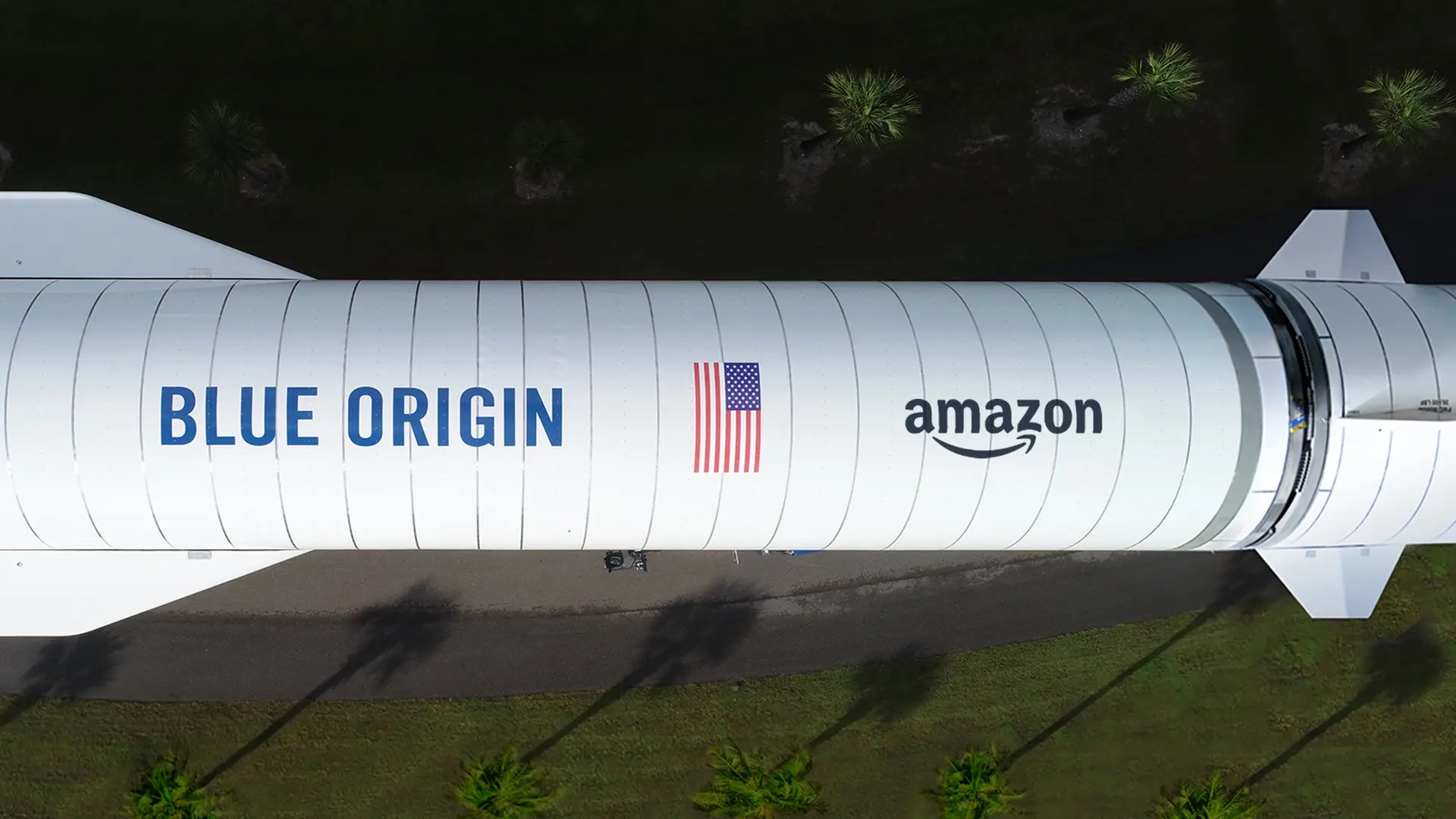
Blue Origin, the space exploration company founded by Jeff Bezos, has thrown down the gauntlet against Elon Musk’s SpaceX with a bold proposal to create a constellation of satellites for hosting orbital data centers. In a recent filing to the Federal Communications Commission (FCC) on March 19, 2026, Blue Origin introduced Project Sunrise, outlining plans to launch up to 51,600 satellites dedicated to this ambitious venture.
This move signals a significant escalation in the ongoing rivalry between Bezos and Musk, following reports of SpaceX’s merger with xAI to focus on space-based artificial intelligence. While Musk has proposed a staggering constellation of one million satellites, Blue Origin’s approach with 51,600 satellites is positioned as a more targeted and sustainable infrastructure initiative.
The rationale behind Project Sunrise lies in addressing the energy crisis plaguing the tech industry, particularly in the realm of AI. By relocating AI workloads to space, Blue Origin argues that satellite-based data centers can leverage near-constant solar energy without the environmental impact associated with traditional terrestrial facilities. This shift is crucial in light of the strain on power grids and water resources caused by data centers on Earth.
In its FCC filing, Blue Origin directly criticized SpaceX’s expansive plans as “profoundly disproportionate” and potentially hazardous to the orbital environment. Amazon, another Bezos-founded company, supported this stance by highlighting the lack of technical specifics in SpaceX’s proposal and the potentially lengthy timeline for completion.
The satellites comprising Project Sunrise will be equipped with high-speed lasers to facilitate data transmission through Blue Origin’s forthcoming TeraWave network. Leveraging its reliable New Glenn rocket for deployment, Blue Origin aims to achieve cost-effective pricing for this groundbreaking endeavor.
As the FCC weighs the merits of these contrasting visions for the future of AI infrastructure, skepticism looms from critics like OpenAI’s Sam Altman, who deems the concept of orbital data centers as “ridiculous” due to the formidable technical and logistical challenges involved. Nevertheless, the potential for green, solar-powered computing presents an enticing prospect for the tech industry.
In this dynamic landscape of space exploration and AI innovation, Blue Origin’s Project Sunrise stands as a testament to Bezos’s ambition and vision for a sustainable future in space. As the rivalry between Blue Origin and SpaceX intensifies, the race for dominance in the stars has never been more compelling.