
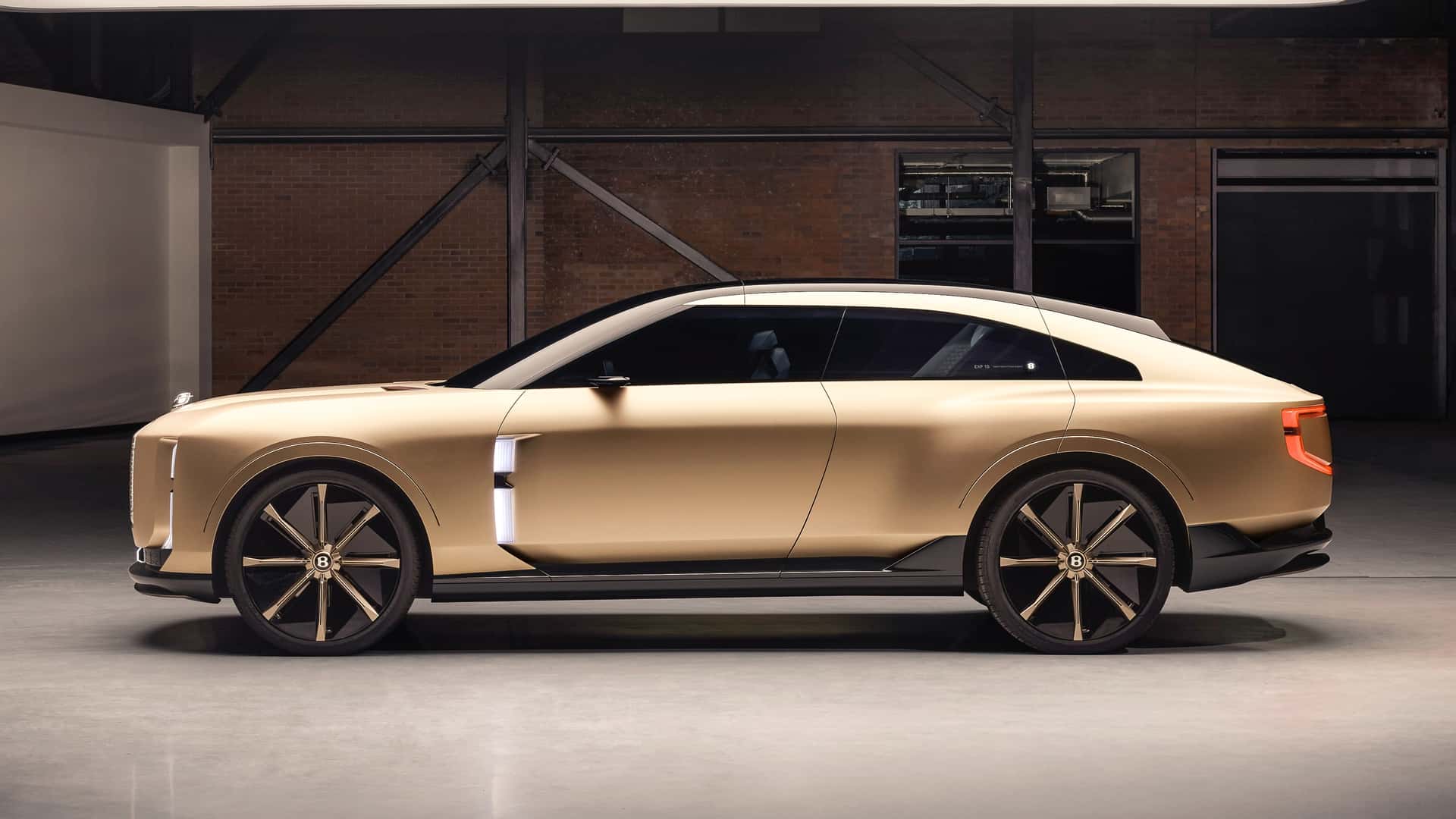
Bentley, the renowned British luxury automaker, has recently made a significant decision to shift its focus away from its ambitious electrification plan. The company has decided to scrap the development of four out of five new electric vehicles (EVs) that were originally scheduled to debut by 2035. Instead, Bentley will now concentrate on hybridization to ensure profitability in the upcoming years.
The only surviving EV project from Bentley’s original plan is the “Urban SUV,” which is set to be unveiled in 2027. This decision reflects the brand’s strategic shift towards prioritizing profit generation over ambitious but potentially risky ventures in the electric car market. With the burden of maintaining profitability, Bentley has chosen to realign its priorities and streamline its product lineup.
In a recent statement, Bentley CEO Frank Walliser emphasized the importance of reassessing the company’s product strategy and future offerings. He acknowledged the necessity of adapting to changing market conditions and consumer demands, leading to a revised approach compared to the initial plans set two years ago. This shift in strategy aligns with Bentley’s commitment to sustainable growth and financial stability.
The decision to scale back on EV development can be attributed to Porsche’s cancellation of the Scalable Systems Platform (SSP), which was intended to underpin Bentley’s upcoming flagship SUV. Porsche’s transition to the Premium Platform Combustion (PPC) platform, which supports both gas and plug-in hybrid powertrains, influenced Bentley’s decision to focus on hybrid models in the short term.
While Bentley remains committed to eventually transitioning to a fully electric portfolio, the company recognizes the need to prioritize hybrid and plug-in hybrid electric vehicles (PHEVs) in the current market landscape. Walliser reiterated the brand’s long-term vision of embracing electric vehicles, with plans for the next all-electric model expected to debut after 2030.
Bentley’s forthcoming all-electric production model, touted as “the world’s first true luxury urban SUV,” is anticipated to share platforms with the new Porsche Cayenne Electric. Drawing inspiration from the EXP 15 concept, the battery-powered luxury SUV is projected to offer rapid charging capabilities, allowing for 100 miles of range in just seven minutes. While specific details regarding charging power and battery capacity remain undisclosed, Bentley’s EV is expected to deliver performance comparable to the Porsche Cayenne EV, enabling quick charging times and efficient power delivery.
As Bentley navigates the evolving automotive landscape, the brand remains committed to innovation and sustainability in its pursuit of electrification. With a strategic focus on hybridization in the short term and a long-term vision for a fully electric future, Bentley continues to uphold its legacy of luxury and performance excellence in the automotive industry. As technology continues to advance at a rapid pace, the future of artificial intelligence (AI) looks brighter than ever. From self-driving cars to virtual assistants, AI is revolutionizing the way we live and work. However, with this rapid progress comes new challenges and opportunities.
One of the most exciting developments in the field of AI is the rise of deep learning. Deep learning is a subset of machine learning that uses artificial neural networks to mimic the way the human brain processes information. This technology has already been used to create speech recognition systems, image recognition algorithms, and even autonomous robots.
Another important area of AI research is natural language processing (NLP). NLP is the ability of a computer program to understand human language as it is spoken or written. This technology is already being used in applications such as chatbots, language translation tools, and voice-activated assistants like Siri and Alexa.
One of the biggest challenges facing AI researchers is ensuring that these systems are ethical and unbiased. As AI becomes more integrated into our daily lives, there is a growing concern about the potential for these systems to perpetuate existing biases and discrimination. For example, AI algorithms used in hiring processes have been shown to favor male candidates over female candidates.
To address these concerns, researchers are working on developing AI systems that are transparent, explainable, and fair. This includes creating tools that can detect and mitigate bias in AI algorithms, as well as establishing guidelines for the ethical use of AI technology.
Despite these challenges, the future of AI looks incredibly promising. From healthcare and finance to transportation and entertainment, AI is poised to revolutionize every industry. As researchers continue to push the boundaries of what is possible with artificial intelligence, we can expect to see even more groundbreaking innovations in the years to come.