
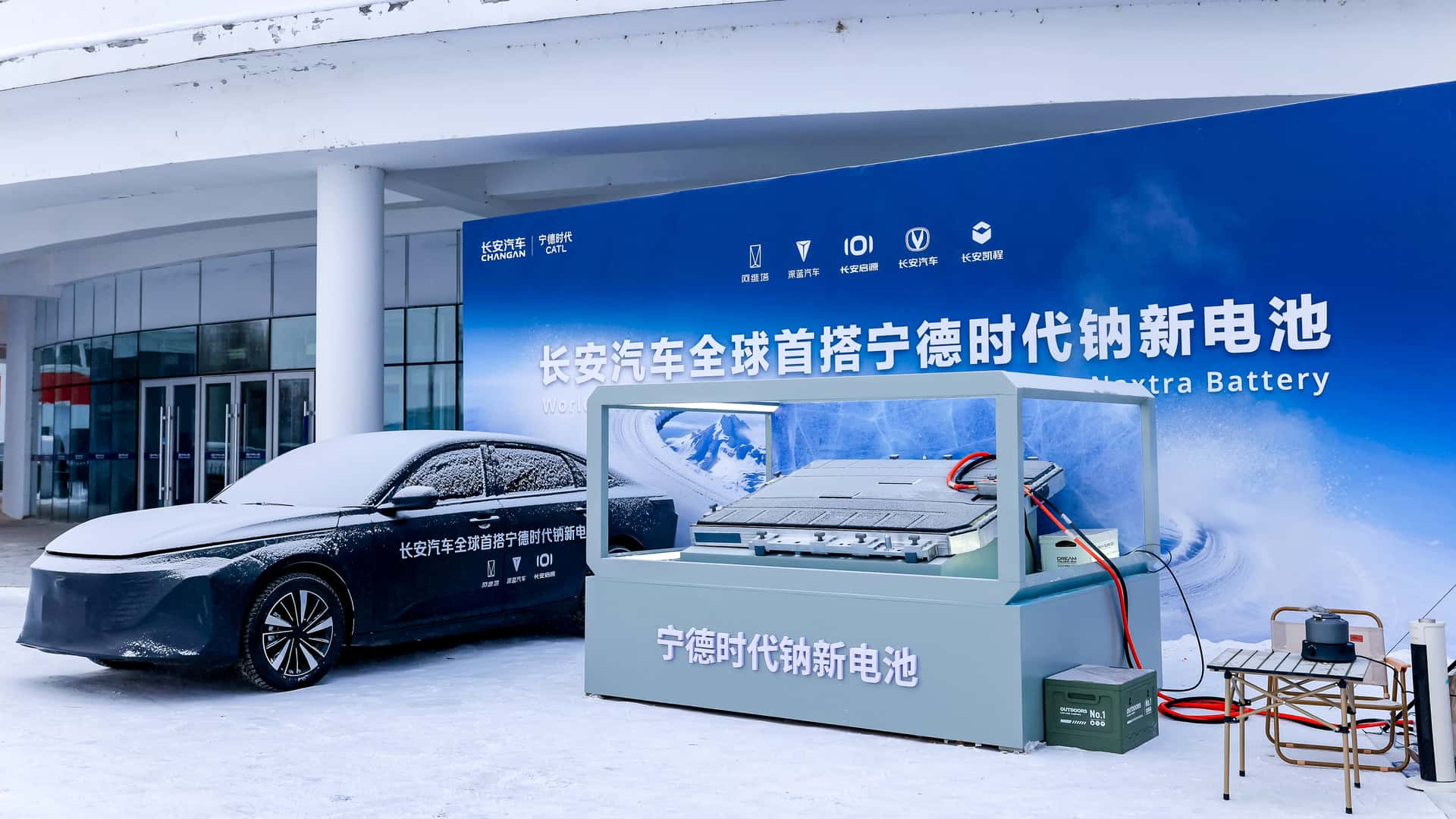
The Changan Nevo A06 is making history as the world’s first mass-produced car powered by a sodium-ion battery. This groundbreaking technology is set to revolutionize the electric vehicle industry, offering a range of about 250 miles and exceptional performance even in extreme temperatures as low as -40 degrees Fahrenheit.
Chinese battery giant CATL and automaker Changan Automobile are collaborating to introduce the CATL Naxtra sodium-ion battery in the Changan Nevo A06 sedan by mid-2026. This innovative battery is expected to provide an estimated range of 400 kilometers (249 miles) on the China Light-Duty Test Cycle, setting the stage for a new era where sodium-ion batteries complement lithium-ion batteries in the electric vehicle market.
The launch of the sodium-ion battery marks a significant milestone in the industry’s transition towards a dual-chemistry ecosystem. Sodium-ion batteries offer several advantages over traditional lithium-ion batteries, including a lower risk of thermal runaway, greater resilience to extreme temperatures, and a more cost-effective and abundant raw material in sodium.
While the energy density of the Naxtra battery is competitive but not revolutionary, delivering 175 watt-hours per kilogram, it is well-suited for low-cost and low-range electric vehicles as well as stationary energy storage applications. By adopting a cell-to-pack design, CATL was able to achieve a range of 249 miles on the CTLC cycle, showcasing the efficiency of the sodium-ion technology.
Looking ahead, CATL envisions further improvements in the range capabilities of sodium-ion batteries, with expectations of reaching 600 kilometers (373 miles) for electric vehicles and 400 kilometers (249 miles) for extended-range EVs and hybrids. The cold-weather performance of the Naxtra battery is particularly impressive, with reports of minimal range loss even at temperatures as low as -40 degrees Celsius (-40 degrees Fahrenheit).
While independent testing will provide more insights into the real-world performance of sodium-ion batteries, the technology shows great promise on paper. Although the Naxtra battery may not be available in the U.S., it could offer significant benefits to regions with harsh winter climates, where electric vehicle drivers often struggle with range loss in cold temperatures.
As the electric vehicle industry continues to evolve, it is clear that multiple battery chemistries will play a crucial role in shaping the future of EVs. While lithium-ion batteries remain prevalent, the emergence of sodium-ion technology highlights the potential for diverse battery chemistries to coexist and drive innovation in the electric vehicle market. Artificial intelligence (AI) is revolutionizing the way we live, work, and interact with technology. From self-driving cars to virtual assistants, AI is becoming increasingly integrated into our daily lives. One area where AI is making a significant impact is in the field of healthcare.
AI has the potential to transform healthcare in a variety of ways, from improving diagnosis and treatment to streamlining administrative tasks and reducing costs. One of the key benefits of AI in healthcare is its ability to analyze large amounts of data quickly and accurately. This can help healthcare providers make more informed decisions and provide better care to patients.
One of the most exciting applications of AI in healthcare is in the field of medical imaging. AI algorithms can analyze images such as X-rays, MRIs, and CT scans to identify patterns and abnormalities that may be missed by human radiologists. This can help speed up the diagnosis process and ensure that patients receive the appropriate treatment in a timely manner.
In addition to improving diagnosis, AI can also help personalize treatment plans for patients. By analyzing a patient’s medical history, genetic information, and other data, AI algorithms can recommend the most effective treatment options based on the individual’s unique characteristics. This can help reduce the risk of adverse reactions and improve patient outcomes.
AI is also being used to improve the efficiency of healthcare systems. By automating administrative tasks such as scheduling appointments, billing, and coding, AI can help healthcare providers save time and resources, allowing them to focus more on patient care. AI can also help predict patient demand and optimize resource allocation, ensuring that healthcare facilities are operating at maximum efficiency.
Despite the many benefits of AI in healthcare, there are also challenges and concerns that need to be addressed. One of the main concerns is the potential for bias in AI algorithms, which could lead to disparities in care for certain populations. It is important for healthcare providers to ensure that AI systems are trained on diverse and representative datasets to prevent bias from influencing decision-making.
Overall, AI has the potential to revolutionize healthcare by improving diagnosis, treatment, and efficiency. By harnessing the power of AI, healthcare providers can deliver more personalized and effective care to patients, leading to better outcomes and a healthier population. As AI continues to evolve, we can expect to see even more innovative applications of this technology in the field of healthcare.