
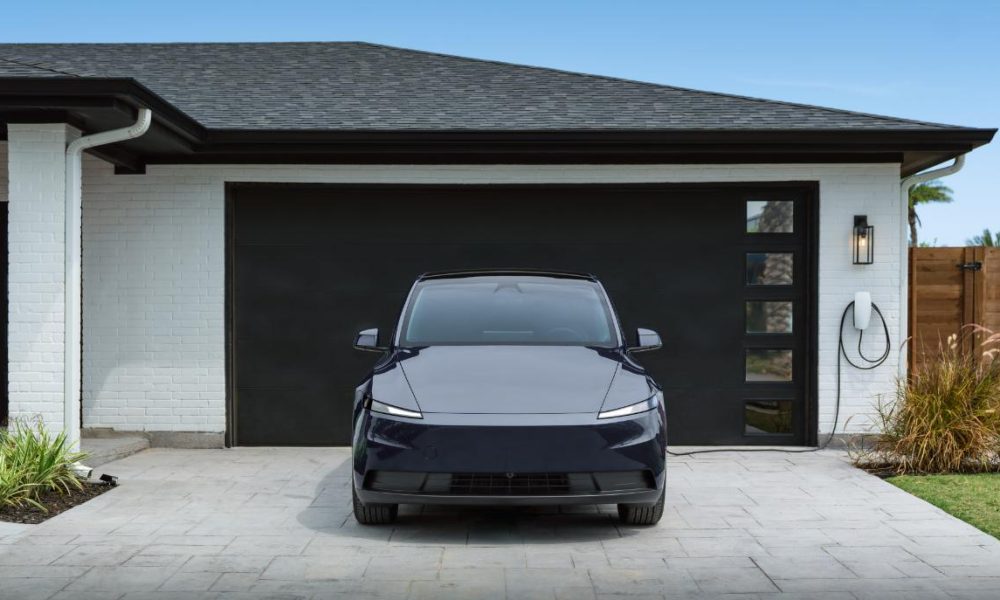
Tesla made a significant change with the launch of a new trim level for the Model Y last night, which went almost unnoticed amidst the excitement. The company decided to drop the use of the “Standard” moniker that was recently added to a couple of its variants of the all-electric crossover.
The new Model Y All-Wheel-Drive was unveiled at a competitive price of $41,990, but without the luxurious features found in the Premium trims. Upon closer inspection, it was evident that Tesla had done away with the “Standard” designation that was previously used to identify its entry-level offerings of the Model Y.
The Standard Model Y vehicles were introduced last year to lower the entry price after changes were made to the U.S. EV tax credit. These models had certain features stripped away, such as the panoramic glass roof, premium audio, ambient lighting, acoustic-lined glass, and some storage options.
With the launch of the new trim level, Tesla has now simply labeled the configurations as the Model Y Rear-Wheel-Drive and Model Y All-Wheel-Drive. There are a few reasons why Tesla may have made this change.
Firstly, the term “Standard” can sometimes carry a negative connotation in marketing, implying “basic,” “bare-bones,” or “cheap” to consumers. By dropping this label, Tesla can avoid making the entry-level Model Y seem inferior, even though it is designed for affordability. This move allows the base trim to sound more neutral and spec-focused, while “Premium” continues to signal desirable upgrades.
Secondly, simplifying the naming structure can reduce confusion for consumers. The initial “Standard vs. Premium” split created a somewhat clunky hierarchy, especially as Tesla introduced more variants. Removing “Standard” streamlines the lineup and makes it easier to understand the progression of different models.
Lastly, keeping the “Premium” designation helps to elevate the brand perception and protect the perceived value of the higher-end models. By eliminating “Standard,” Tesla can maintain its upscale image in a competitive EV market, while still offering accessible entry-level options.
Overall, the decision to drop the “Standard” moniker from the Model Y lineup seems to be a strategic move by Tesla to streamline its naming structure, improve brand perception, and enhance the overall customer experience. As the company continues to innovate and expand its product offerings, these subtle changes can make a significant impact on how consumers perceive and interact with the Tesla brand.