
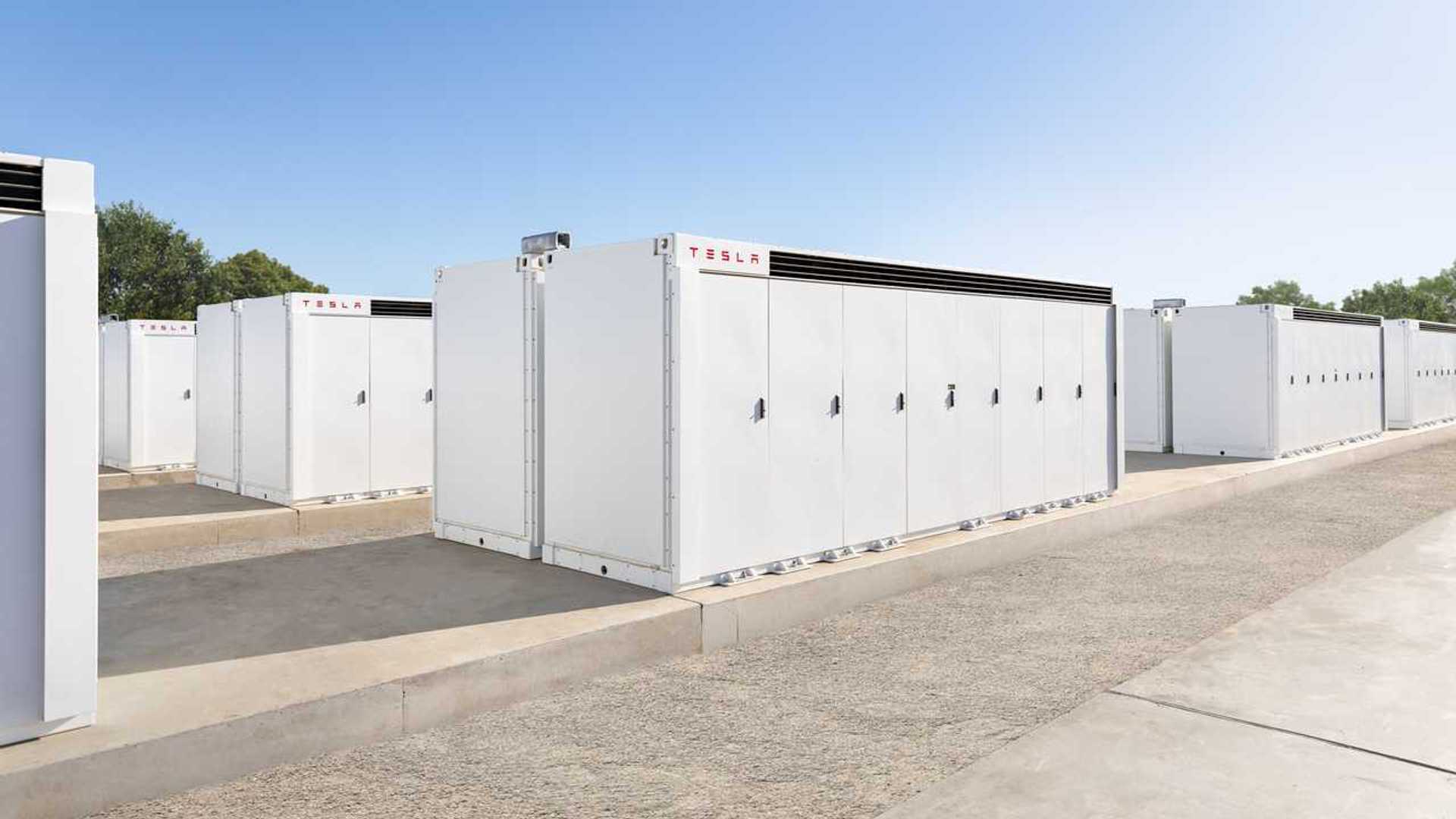
Tesla’s energy storage division has emerged as a shining beacon amidst the challenges faced by the company in other sectors. The fourth-quarter and full-year 2025 earnings report released by Tesla revealed a significant increase in stationary energy storage deployments, driven primarily by the demand for Megapack batteries. The Q4 energy storage deployment reached 14.1 gigawatt-hours, showcasing a substantial growth compared to the previous year.
Tesla’s energy business includes a diverse range of products such as solar panels, residential Powerwall batteries, and industrial-scale Megapack systems. The Megapack batteries, which are as large as shipping containers, play a crucial role in storing excess energy during off-peak hours and releasing it during peak demand periods. These batteries are also instrumental in smoothing out the intermittency of renewable power sources, a key requirement for utilities worldwide.
The company reported that record Megapack deployments contributed to a gross profit of $1.1 billion for its energy generation and storage business in the fourth quarter. This marked the fifth consecutive quarter of record-setting performance in this segment. Additionally, Tesla mentioned that over one million installed Powerwall units are helping homeowners save approximately $1 billion annually on electricity costs.
Tesla’s charging infrastructure is also closely integrated with its energy ecosystem. Recent Superchargers, including the massive facility in Lost Hills, California, are supported by solar farms and Megapack batteries, making them entirely off-grid. The Lost Hills site is recognized as the largest Supercharger station globally, highlighting Tesla’s commitment to sustainable energy solutions.
While Tesla faces challenges in its passenger vehicle business and uncertainties regarding its investments in AI and robotics, its energy division stands out as a robust and promising segment. With the increasing demand for energy storage solutions driven by AI data centers and renewable energy sources, Tesla’s focus on energy storage products like Megapack batteries positions it at the forefront of the AI power boom. As the company navigates through evolving market dynamics, its energy arm continues to demonstrate resilience and growth potential in the rapidly changing energy landscape. The Impact of Technology on Education
In today’s digital age, technology has revolutionized the way we live, work, and learn. One of the most significant areas where technology has made a profound impact is in education. From online learning platforms to interactive whiteboards in classrooms, technology has transformed the way students learn and teachers teach.
One of the key benefits of technology in education is the ability to personalize learning. With the help of adaptive learning software, students can receive personalized instruction based on their individual learning styles and abilities. This allows students to learn at their own pace and ensures that they are receiving the support they need to succeed.
Technology has also made learning more accessible and convenient. Online learning platforms have made it possible for students to access educational resources and courses from anywhere in the world. This has opened up a world of opportunities for students who may not have had access to quality education otherwise.
Furthermore, technology has made learning more engaging and interactive. Interactive whiteboards, virtual reality simulations, and educational games are just a few examples of how technology has transformed the classroom experience. These tools not only make learning more fun and engaging for students but also help them retain information better.
In addition to enhancing the learning experience, technology has also improved communication and collaboration in education. Students and teachers can now easily communicate and collaborate online through emails, video conferencing, and collaborative tools. This has made it easier for students to work together on group projects and for teachers to provide timely feedback to their students.
Despite the numerous benefits of technology in education, there are also challenges that come with incorporating technology into the classroom. One of the main challenges is ensuring equal access to technology for all students. Not all students have access to the necessary devices and internet connection needed for online learning, which can create a digital divide among students.
Another challenge is the potential for technology to distract students from learning. With the constant presence of smartphones and social media, students may be tempted to use technology for non-educational purposes during class time. Teachers must find ways to balance the use of technology in the classroom to ensure that it enhances rather than hinders learning.
Overall, the impact of technology on education has been overwhelmingly positive. It has transformed the way students learn, making education more personalized, accessible, engaging, and collaborative. As technology continues to evolve, it will be exciting to see how it further enhances the educational experience for students and teachers alike.