
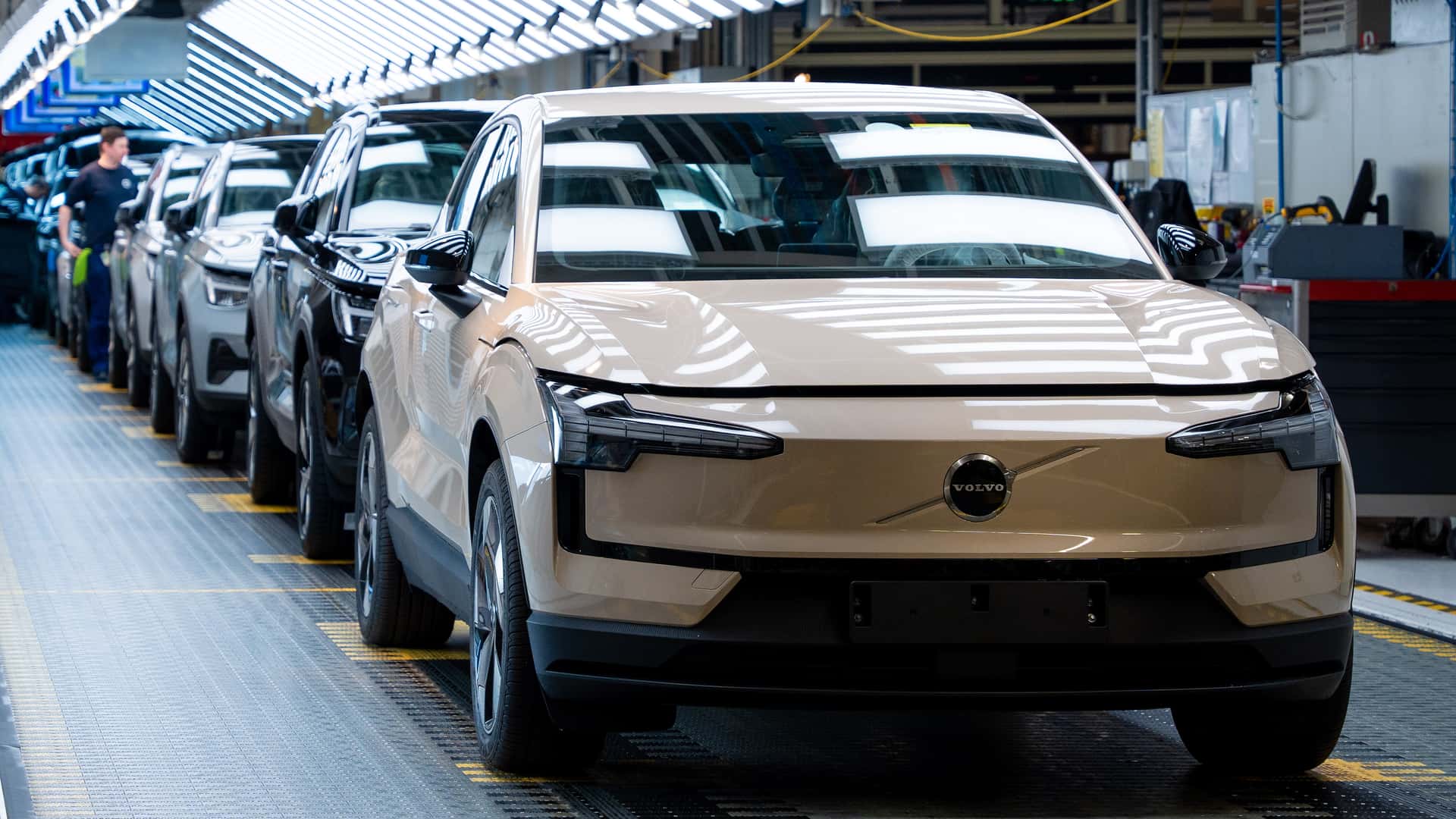
The shift towards electric vehicles (EVs) in Europe has reached a significant milestone, with EVs outselling traditional gas-powered cars for the first time in December of last year. This historic event marks a major turning point in the regional car market, as Europeans purchased over 300,000 EVs in the closing month of the year.
The rise of EVs in Europe has been steady, surpassing diesel cars at the end of 2023 and plug-in hybrids a year later. This latest development comes amidst a proposed loosening of the upcoming 2035 gas car ban, signaling a clear shift towards cleaner and more sustainable transportation options.
Automakers are now flooding the market with more battery-powered models to keep their average fleet emissions low. The availability of more affordable EV options has attracted car buyers away from traditional powertrains towards electric vehicles.
While hybrids currently lead the sales charts in Europe, the gap between EVs and hybrids is narrowing. In December 2025, European customers registered 308,955 new EVs, with 217,898 registrations in the EU alone. This represents a little over a 50% increase compared to the previous year.
In comparison, 380,921 hybrid cars were registered in the EU, EFTA, and UK in December 2025, with 324,799 registrations in the EU alone. The growth rate of hybrid registrations, however, was much lower than that of EVs, at 5.8% in the EU and 4.9% in the EU, EFTA, and UK.
Gas-powered cars saw a decline in registrations, with 216,492 registrations in the EU alone, marking a 19.2% decrease from the previous year. Diesel cars also continued their decline, barely surpassing 70,000 registrations in the EU, EFTA, and UK regions.
On the other hand, plug-in hybrids are still on the rise, with 123,460 new registrations in December, marking a 35.8% increase from the previous year. Overall, nearly 2.6 million EVs were registered in the EU, EFTA, and UK in 2025, a 29.7% increase from 2024.
Hybrid registrations reached nearly 4.6 million units, a 12.4% increase, while plug-in hybrid registrations surpassed 1.2 million units, up 33.4% year-over-year. Gas cars accounted for nearly 3.5 million registrations, while diesel-powered vehicles had 1 million registrations.
The data clearly indicates a shifting trend towards electric and hybrid vehicles in Europe, reflecting the growing preference for cleaner and more sustainable transportation options among European car buyers. The world of technology is constantly evolving, with new advancements being made every day. One area that has seen significant growth in recent years is artificial intelligence (AI). AI is the development of computer systems that can perform tasks that typically require human intelligence, such as visual perception, speech recognition, decision-making, and language translation.
One of the key areas where AI is making a significant impact is in the field of healthcare. AI has the potential to revolutionize the way healthcare is delivered, making it more efficient, accurate, and personalized.
One of the most exciting applications of AI in healthcare is in medical imaging. AI algorithms can analyze medical images such as X-rays, MRIs, and CT scans with a level of accuracy that is comparable to, or even better than, human radiologists. This can help to speed up the diagnosis process, allowing patients to receive treatment faster and potentially improving outcomes.
AI can also be used to predict patient outcomes and help healthcare providers make more informed decisions about treatment options. By analyzing large amounts of data, AI algorithms can identify patterns and trends that may not be apparent to human clinicians, leading to more personalized and effective treatment plans.
Another area where AI is making a significant impact is in drug discovery and development. Developing new drugs is a time-consuming and expensive process, with many potential drug candidates failing in clinical trials. AI can help to streamline this process by analyzing vast amounts of data to identify potential drug targets, predict how drugs will interact with the body, and even design new drugs from scratch.
AI can also be used to improve patient care and outcomes outside of the hospital setting. For example, AI-powered virtual assistants can help patients manage chronic conditions, remind them to take medications, and provide personalized health advice. This can help to improve patient adherence to treatment plans and reduce the need for costly hospital visits.
While AI has the potential to revolutionize healthcare, there are also challenges that need to be addressed. These include concerns about data privacy and security, the need for regulatory oversight to ensure the safety and effectiveness of AI systems, and the potential for bias in AI algorithms.
Overall, the future of AI in healthcare looks promising. By harnessing the power of artificial intelligence, we have the potential to transform the way healthcare is delivered, making it more efficient, accurate, and personalized than ever before.