
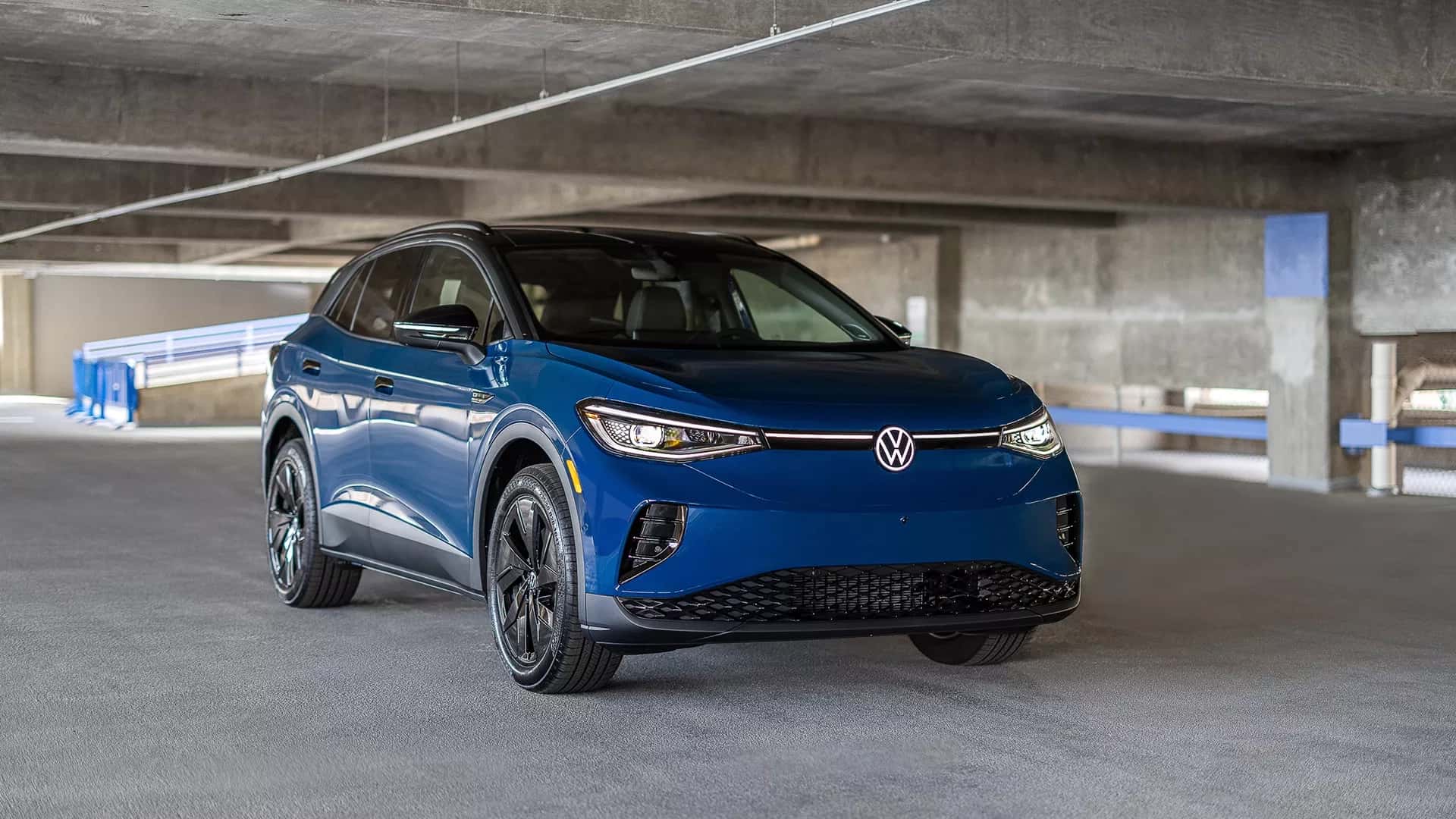
Tiguan debuts.
In addition to the interior changes, the exterior of the ID. Tiguan will also receive a significant facelift. The crossover will sport a new front fascia, updated headlights and taillights, and possibly even new wheel designs. These changes will help differentiate the ID. Tiguan from its predecessors and give it a fresh, modern look.
Overall, the shift from the ID.4 to the ID. Tiguan represents Volkswagen’s commitment to evolving its electric vehicle lineup and aligning it more closely with its gas-powered models. By incorporating familiar names and design cues, Volkswagen aims to make its EVs more appealing to a wider audience and continue its success in the rapidly growing electric vehicle market.
What we do know is that Volkswagen is aiming to improve the driving range and charging capabilities of the refreshed model. The current ID.4 offers up to 260 miles of range on a single charge, and it can be fast-charged to 80% in around 38 minutes. With advancements in battery technology and charging infrastructure, we can expect the new ID. Tiguan to offer even better performance in these areas.
In terms of features and technology, Volkswagen is likely to bring the ID. Tiguan up to date with the latest connectivity options and driver-assist systems. The current model already offers features like adaptive cruise control, lane-keeping assist, and a digital cockpit display. We can expect the refreshed model to build on these offerings and possibly introduce new cutting-edge technologies to enhance the driving experience.
Overall, the arrival of the refreshed ID. Tiguan later this year is something to look forward to for fans of electric vehicles and crossover SUVs. With improvements in design, performance, and technology, the new model is poised to attract even more customers and solidify Volkswagen’s position in the electric vehicle market. Stay tuned for more updates and details on the upcoming ID. Tiguan as we get closer to its launch date.