
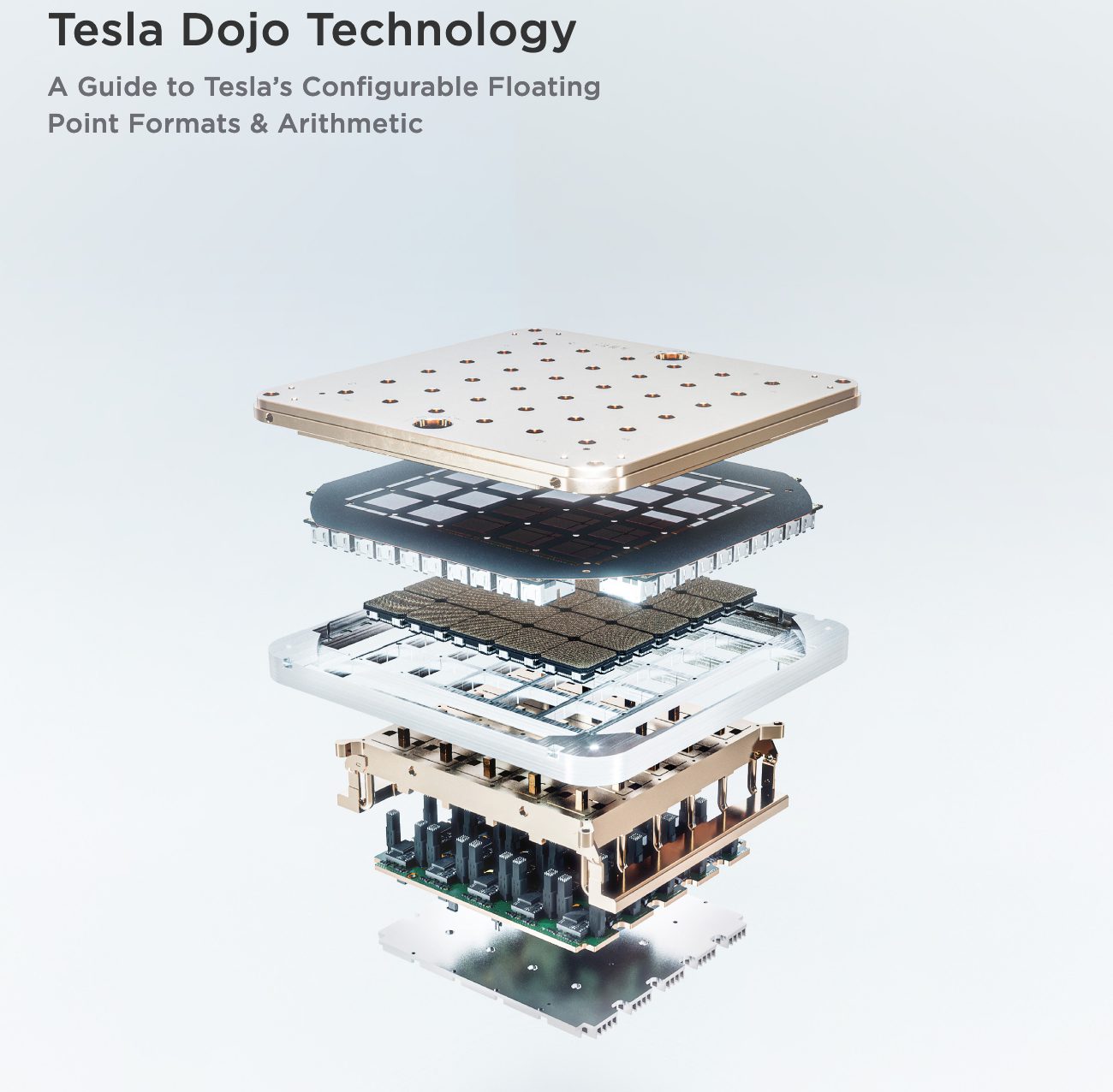
Tesla’s Dojo supercomputer project is making a comeback, with Elon Musk announcing that work on Dojo 3 will resume now that the next-generation AI5 chip is in good shape. Originally introduced in 2019, Dojo was created as Tesla’s in-house AI training supercomputer, powered by the custom D1 chip to train neural networks for Full Self-Driving technology and beyond. However, last year Musk decided to put the project on hold, deeming Dojo 2 as an “evolutionary dead end” and focusing on fixing the AI5 chip instead.
Musk’s decision to prioritize the development of AI5 now appears to be a strategic move, as the chip is said to offer performance comparable to Nvidia’s Hopper architecture at a fraction of the cost and power consumption. With AI5 nearing completion, Tesla is now able to consolidate its chip designs for real-time inference in vehicles and robots with large-scale AI training into a single chip family. This unified approach will allow the same chips powering Tesla’s vehicles and Optimus robots to scale into massive training clusters within data centers and potentially even beyond Earth.
As Tesla looks towards the future, Musk has hinted that AI5 will excel in autonomous driving performance, while AI6 will focus on Optimus and data center applications. The upcoming AI7 and Dojo 3 chips are expected to be designed for space-based AI compute, indicating Tesla’s ambition to create a vertically integrated compute stack spanning various platforms. Unlike traditional automakers and AI labs that rely on Nvidia hardware, Tesla is committed to developing its entire AI pipeline in-house.
The revival of the Dojo project signifies a new chapter for Tesla’s AI capabilities, with the potential for a “Terafab” facility to meet the growing demand for custom chips. By reimagining Dojo as part of a comprehensive AI strategy encompassing cars, robots, data centers, and even space-based applications, Tesla is positioning itself as a leader in AI innovation. The reinvigoration of the Dojo project marks a significant milestone in Tesla’s journey towards achieving autonomous driving and advancing AI technologies across various industries.