
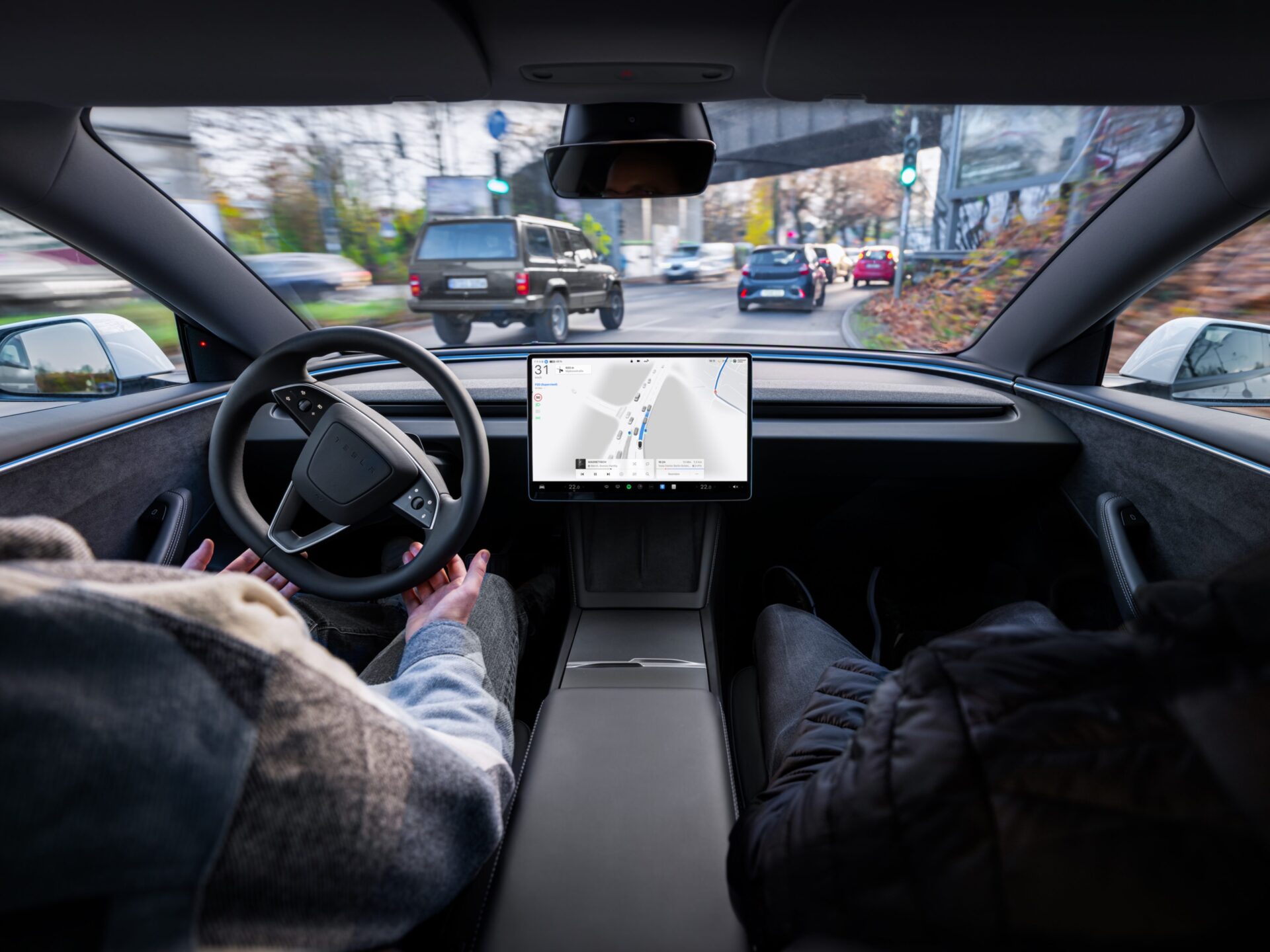
Tesla has always been at the forefront of innovation when it comes to autonomous driving technology. One of the biggest concerns among Tesla owners has been hardware obsolescence, especially when it comes to vehicles marketed as “Full Self-Driving capable.” However, a newly published Tesla patent suggests that the company may have found a way to extend the life of older Hardware 3 (HW3/AI3) vehicles without the need for swapping out chips.
The patent, titled Bit-Augmented Arithmetic Convolution, introduces a clever solution that allows modern, high-precision AI models to run on older, lower-precision hardware using innovative math and software techniques. Essentially, Tesla has patented a “mixed-precision bridge” that enables inexpensive 8-bit hardware to perform tasks typically reserved for more power-hungry 32-bit systems. This breakthrough allows advanced neural networks used for Full Self-Driving and Tesla’s Optimus robot to maintain high spatial and temporal accuracy without compromising performance.
In practical terms, Tesla splits higher-precision numbers into smaller chunks that the HW3 can handle. For example, a 16-bit value is divided into two 8-bit parts, processed separately by the existing neural network accelerator, and then recombined to achieve behavior closer to a 16-bit or even 32-bit system. This approach relies on software and math tricks rather than requiring new hardware, making it a cost-effective solution for upgrading older vehicles.
This development is significant as Tesla introduced HW3 in 2019 when most AI workloads were designed around simple 8-bit math. With the advancements in Full Self-Driving models requiring higher precision for tasks such as long-context memory and stable object tracking, this patent opens up new possibilities for older hardware to run newer, more capable FSD models efficiently.
While there are trade-offs such as slightly higher latency and power usage, the benefits of this innovation are substantial. Millions of Teslas could potentially continue receiving FSD updates instead of becoming outdated, giving owners more time before considering an upgrade. This breakthrough could also play a crucial role in ensuring that older hardware remains relevant in the rapidly evolving landscape of autonomous driving technology.
Overall, Tesla’s patent for Bit-Augmented Arithmetic Convolution represents a significant step forward in addressing hardware obsolescence concerns among Tesla owners. By leveraging innovative software and math techniques, Tesla is paving the way for older vehicles to stay competitive and continue benefiting from the latest advancements in autonomous driving technology.