
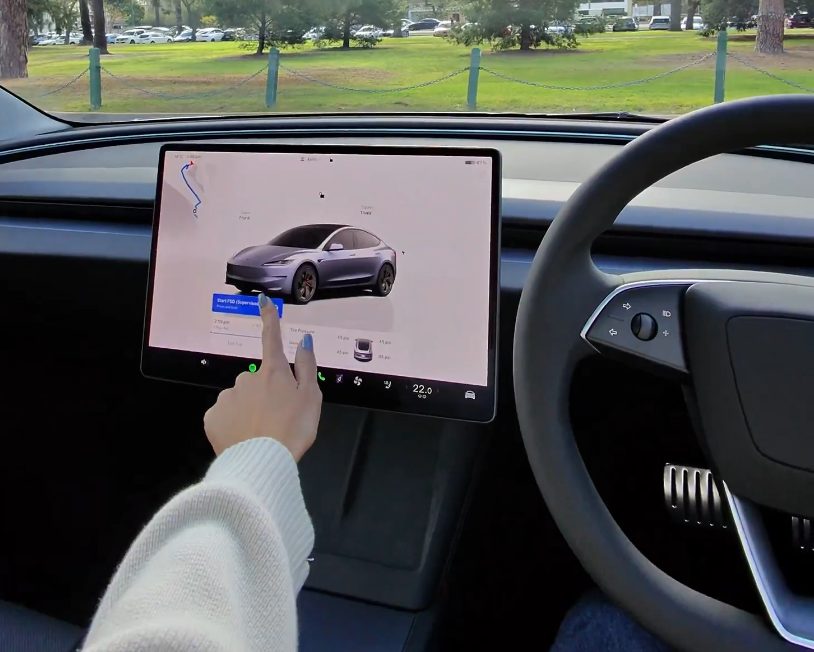
A groundbreaking new shuttle service utilizing Tesla vehicles equipped with Full Self-Driving (Supervised) technology has officially launched in Germany, marking a significant milestone as the first project of its kind in Europe. The pilot program is currently operational in the rural Eifelkreis Bitburg-Prüm region of Rhineland-Palatinate, with a primary focus on enhancing mobility outside major urban centers.
The initiative was unveiled by the Ministry for Economic Affairs, Transport, Agriculture, and Viticulture of Rhineland-Palatinate, which lauded the project as a “real boon for rural mobility.” The shuttle service is designed to complement existing community bus systems by providing more flexible and accessible transportation options, particularly in areas where traditional transit services may be limited or infrequent. Notably, the service is completely free of charge for users.
This collaborative effort between municipalities, approval authorities, and Tesla demonstrates a high level of government involvement and oversight. Economic Affairs and Transport Minister Daniela Schmitt personally experienced the technology in action, underscoring the thorough regulatory framework supporting the pilot program.
While Tesla’s Full Self-Driving system still requires human supervision, the launch of this service represents a significant regulatory breakthrough within the European Union. Tesla has been actively advocating for expanded FSD approval in global markets, with a particular focus on Europe. The company has been engaging lawmakers and the public through ride-alongs to showcase the capabilities of the system. FSD is already available in seven countries, and Tesla is actively pursuing approval in additional European countries such as Denmark and Germany, as well as the UAE.
The timing of this launch is significant in light of Tesla’s rapid software advancements. The latest public release of FSD, version 14.2.1, introduced features that allow drivers to text under specific road and traffic conditions. Tesla is also testing an advanced “unsupervised” version of FSD internally with its Robotaxi fleet in Austin, Texas. Some Robotaxi vehicles have been operating without a human driver or safety monitor onboard, showcasing the potential for autonomous driving technology.
In addition to Tesla’s autonomous initiatives, The Boring Company, another venture led by Elon Musk, has begun utilizing FSD-powered vehicles for passenger transportation in controlled environments like the Las Vegas Loop. The introduction of the German shuttle service signifies a significant step towards integrating autonomous technology into real-world public services.
This project could serve as a model for how autonomous vehicles can address transit challenges in rural areas where traditional solutions may be lacking. It also signals Tesla’s expanding autonomy ambitions beyond North America, highlighting the company’s commitment to revolutionizing transportation on a global scale.