
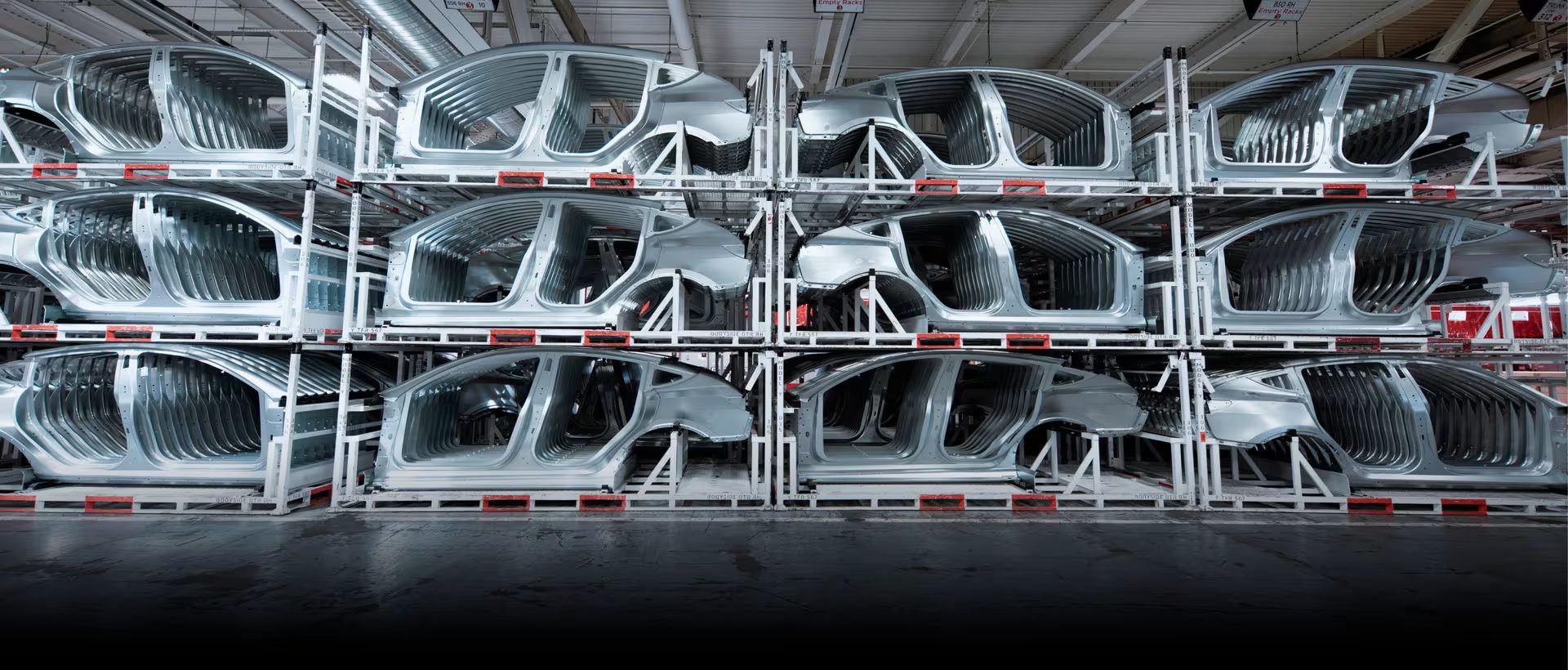
Tesla has recently unveiled a groundbreaking metallurgy breakthrough that could revolutionize the way structural vehicle components are manufactured. The international patent, published on December 18, 2025, discloses a new aluminum alloy process that allows Tesla to produce high-performance parts using low-cost, recycled scrap metal instead of expensive virgin aluminum.
Traditionally, critical vehicle components like chassis frames and crash rails require pure aluminum alloys to achieve the necessary strength and ductility. However, Tesla’s innovative process embraces “dirty” scrap metal, including shredded vehicles, old alloy wheels, sheet aluminum, and used radiators. By carefully measuring impurity levels and adding performance-enhancing additives like manganese, magnesium, and silicon, Tesla has successfully created a premium alloy that meets the required strength standards.
One of the key advantages of this new alloy is its ability to achieve the desired strength without the need for post-casting heat treatment. This not only saves energy and production time but also prevents warping in large parts, ultimately reducing costs. Additionally, the alloy is optimized for high-pressure die casting, which is essential for Tesla’s Gigacasting approach used in vehicles like the Model Y and Cybertruck.
From a sustainability perspective, this breakthrough allows Tesla to close the loop by recycling old vehicles into new ones, aligning with the company’s broader environmental efforts. By utilizing reclaimed aluminum streams, Tesla can reduce its dependence on raw materials and further enhance its manufacturing processes, such as the Unboxed production method for the upcoming Cybercab.
As competition in the electric vehicle market intensifies, innovations like this could give Tesla a significant advantage in terms of cost, scalability, and resilience. By continuously pushing the boundaries of manufacturing technology, Tesla is solidifying its position as a leader in the industry and setting new standards for sustainable production methods.