
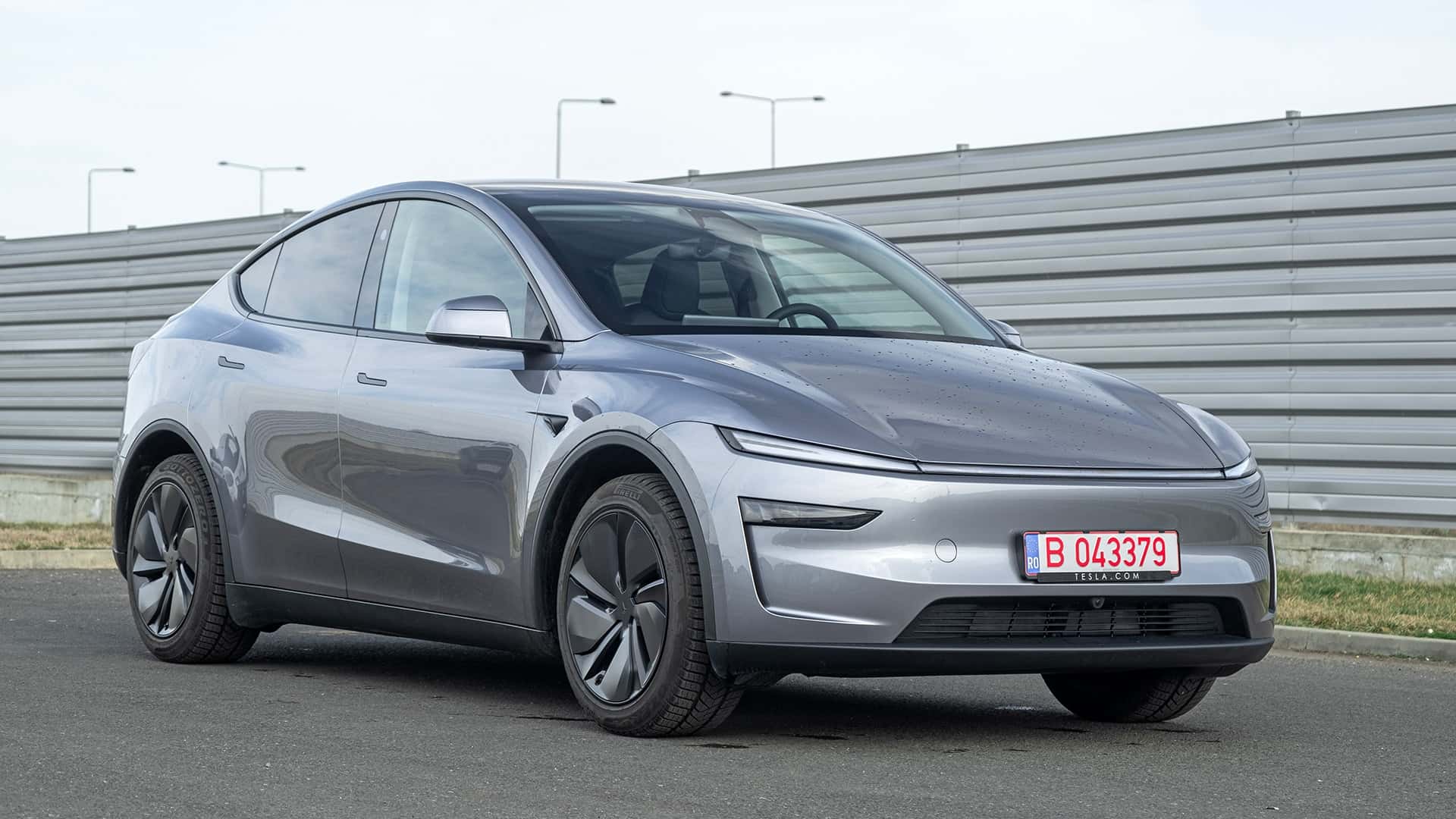
After a challenging 2025, Tesla’s European sales are showing signs of growth once again. The company faced declining sales, increased competition, and negative publicity surrounding Elon Musk’s public image and political involvement. Despite the ongoing success of the Model Y, Tesla’s dominance in the European market was being questioned for the first time.
However, recent data indicates that Tesla is on the rebound in Europe. In April, registrations for Tesla vehicles increased by 46.5% year-over-year, totaling 10,654 vehicles. This marked the third consecutive month of growth for Tesla after a prolonged period of decline. Specifically, in the European Union, Tesla’s registrations surged by over 67% in April to 9,169 vehicles, following similar gains in March and February.
It is important to note that Tesla’s growth in April appears more significant due to the previous year’s weak performance. Throughout 2025, Tesla struggled while the broader EV market in Europe was recovering. In 2025, EU EV registrations reached 1,880,370 vehicles, with a market share of 17.4%, up from 13.6% in the previous year.
The overall European car market grew by 7% in April, with electrified vehicles accounting for over two-thirds of all registrations. Tesla’s growth can be attributed to the recovering European car market and the increasing shift towards electrified vehicles, driven by incentive schemes, subsidies, and rising fuel prices.
In comparison to Tesla, BYD, a rising competitor in Europe, experienced even faster growth in April, with registrations increasing by 114.5% to 27,008 units. BYD’s diverse lineup, including plug-in hybrid models like the Dolphin G DM-i, allows them to target market segments that Tesla does not currently cover.
Despite the competition, Tesla is rumored to be developing a smaller, more affordable electric vehicle, specifically a compact SUV, to cater to the lower end of the market. While this new model would fill a gap in Tesla’s product range below the Model Y, there is no official confirmation or timeline for its release.
Although Tesla’s recent growth in Europe is a positive sign, the market has become significantly more competitive with the emergence of better local EVs, increased Chinese presence, and more discerning buyers looking beyond Tesla’s established models. Tesla’s ability to navigate this evolving landscape will determine its continued success in the European market. Tesla’s dominance in the European electric vehicle market has been undeniable for years, but recent numbers from April show that the company is no longer setting the pace as it once did. While Tesla still holds significant sway in the region, other automakers are starting to catch up and gain traction in the EV market.
In April, Tesla’s sales numbers in Europe were strong, with the Model 3 continuing to be a top seller in several countries. However, the company’s overall market share has started to decline as more competitors enter the market with their own electric offerings. This shift is a clear indicator that Tesla’s once-dominant position in Europe is being challenged by other players in the industry.
One of the main reasons for Tesla’s decreasing market share in Europe is the increasing competition from traditional automakers who are ramping up their electric vehicle production. Companies like Volkswagen, BMW, and Mercedes-Benz have all introduced electric models that are gaining popularity among European consumers. These established automakers have the resources and manufacturing capabilities to produce electric vehicles at scale, posing a significant threat to Tesla’s market dominance.
Another factor contributing to Tesla’s changing position in Europe is the evolution of government incentives and regulations. Many European countries are implementing stricter emissions standards and offering incentives for electric vehicle adoption, leading more consumers to consider electric cars from a variety of manufacturers. This shift in policy has leveled the playing field for automakers and allowed for greater competition in the EV market.
Despite these challenges, Tesla remains a strong player in the European electric vehicle market. The company’s brand recognition, innovative technology, and dedicated fan base continue to set it apart from the competition. Additionally, Tesla’s expanding Supercharger network and commitment to sustainability resonate with European consumers who are increasingly conscious of their environmental impact.
In conclusion, while Tesla may no longer be setting the pace in the European electric vehicle market, the company still holds significant influence and remains a key player in the industry. As competition heats up and more automakers enter the EV market, Tesla will need to continue innovating and expanding its product line to maintain its position as a leader in the European electric vehicle landscape.