
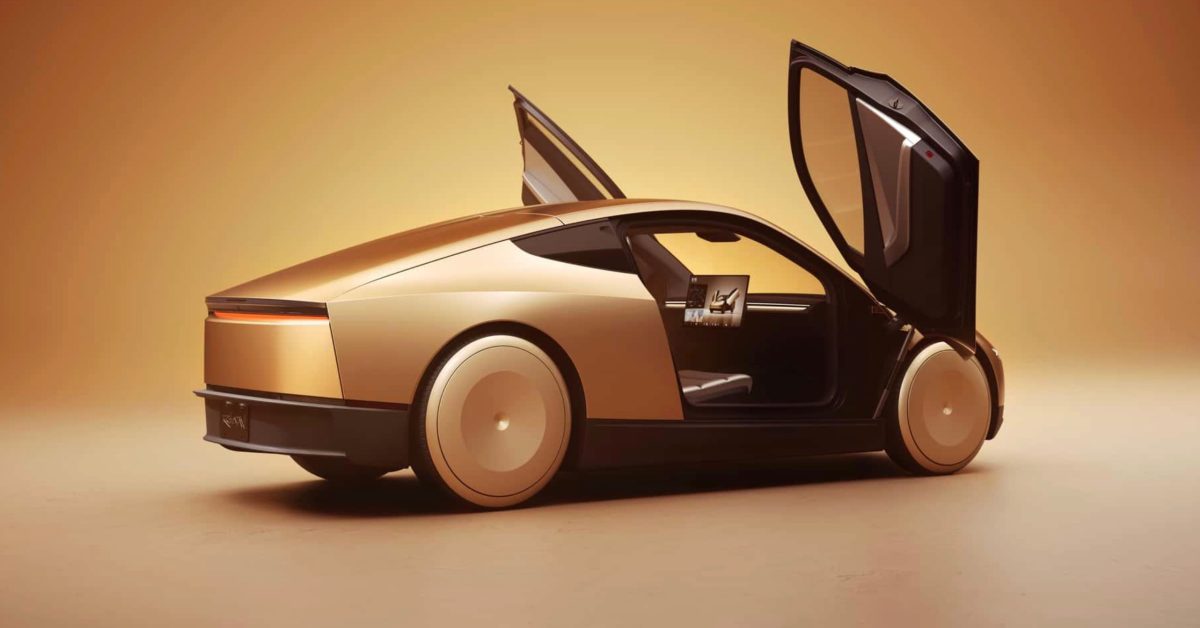
Tesla’s Cybercab has set a new standard for efficiency in electric vehicles, with a certified rating of 165 Wh/mi. This makes it the most efficient EV ever produced, surpassing the next closest competitor, the Lucid Air Pure, by 28%. The Cybercab, a two-seat autonomous pod with no steering wheel or pedals, achieved this remarkable efficiency with a sub-50 kWh battery pack.
Comparing the Cybercab to other EVs on the market, it outperforms them by a significant margin. The Lucid Air Pure RWD consumes 230 Wh/mi, the Tesla Model 3 RWD and Model Y RWD both require 240 Wh/mi, and the Hyundai Ioniq 6 SE RWD uses 241 Wh/mi. Even the Tesla Model S AWD, which is considered one of the most efficient passenger EVs, consumes 270 Wh/mi. The efficiency of the Cybercab is a testament to Tesla’s commitment to pushing boundaries in powertrain technology.
However, it’s important to note that the Cybercab’s efficiency is a result of its design as a robotaxi, optimized for cost-per-mile rather than passenger comfort or cargo space. The vehicle’s small battery pack and streamlined aerodynamic body allow it to achieve close to 300 miles of range. This efficiency is crucial for the economics of running a robotaxi fleet, as it reduces energy costs and charging times.
While the Cybercab’s efficiency record is impressive, it is contingent on Tesla solving the autonomy problem. A robotaxi that cannot drive itself effectively is just a highly efficient two-seat car. Tesla’s unsupervised driving technology is still in development, and the company faces challenges in scaling it for commercial use. The success of the Cybercab as the most efficient EV ever made hinges on Tesla’s ability to deliver on its autonomy promise.
In conclusion, the Cybercab represents a significant achievement in EV efficiency, showcasing Tesla’s engineering prowess. Whether this efficiency translates into real-world impact depends on Tesla’s ability to overcome the challenges of autonomous driving. As the industry continues to evolve, innovations like the Cybercab pave the way for a more sustainable and efficient transportation future.