
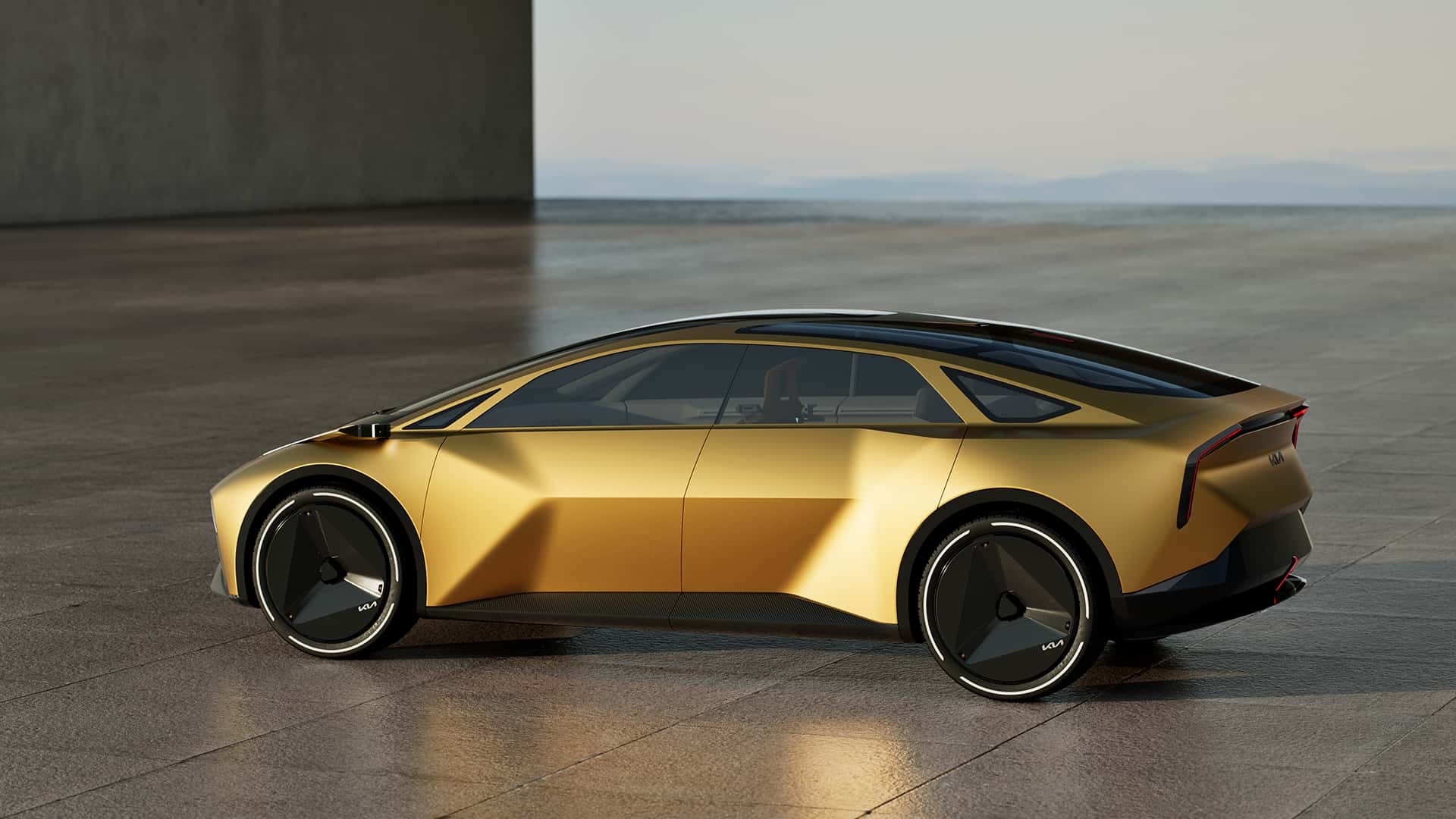
Kia is known for pushing boundaries and taking risks in the automotive industry, and it seems that they are ready to do it again. The brand has expressed interest in building a spiritual successor to the Stinger, a rear-wheel-drive enthusiast car that made waves in the sports sedan segment. However, the biggest obstacle in their way is the cost of creating an electric performance sedan.
According to Kia’s design boss, Karim Habib, the brand is not ruling out the possibility of building a new version of the Stinger if electric vehicles continue to gain popularity. In a recent interview with Autocar, he mentioned that Kia is still very much interested in creating a successor to the Stinger, but this time with an electric powertrain.
The idea of a “sports sedan for the gamer generation” may sound like a marketing gimmick, but Kia is serious about building cars that evoke emotion and connection with drivers. The Meta Turismo concept, which represents the future of Kia’s high-performance sedans, could serve as inspiration for the next-generation Stinger.
Habib stressed the importance of offering a unique driving experience, something that has been overlooked in the era of SUVs and crossovers. Kia understands that there is a demand for cars that provide excitement and engagement on the road, not just practicality.
While Kia has the ambition to create a new Stinger, the main challenge lies in the cost of developing a high-performance electric vehicle. Habib explained that the price of building such a car is currently a limiting factor, but Kia remains hopeful that as EV technology advances, the cost will become more feasible.
The automotive industry is seeing a shift towards enthusiast EVs, with brands like Hyundai, Kia’s parent company, leading the charge. Hyundai’s N division has been praised for its enthusiast cars, and Kia is looking to follow suit with a new Stinger model. Despite the challenges, Kia’s determination to create a compelling and engaging electric sports sedan speaks volumes about the brand’s commitment to innovation and pushing boundaries. In an era where the automotive industry is often hesitant to take risks, the mere mention of a “performance sedan” by a company is a breath of fresh air. This bold move signifies a willingness to push boundaries and innovate in a market that can sometimes feel stagnant.
The concept of a performance sedan is not new, but it is one that has been overshadowed in recent years by the rise of SUVs and electric vehicles. However, for enthusiasts who appreciate the combination of speed, handling, and practicality, a performance sedan holds a special place in their hearts.
A company that dares to venture into this territory is setting itself apart from the competition. By developing a performance sedan, they are catering to a niche market that values driving dynamics and excitement behind the wheel. This move shows a commitment to innovation and a willingness to take risks in order to stand out in a crowded market.
The decision to produce a performance sedan is a bold one, but it also reflects a deep understanding of the automotive landscape. While SUVs and electric vehicles may dominate the market, there is still a demand for vehicles that prioritize performance and driving experience. By tapping into this demand, the company is positioning itself as a leader in the industry, setting the stage for future success.
In conclusion, the emergence of a performance sedan in today’s automotive industry is a promising sign of innovation and risk-taking. By embracing this segment, the company is demonstrating a commitment to pushing boundaries and meeting the needs of enthusiasts who crave speed and excitement. As the automotive landscape continues to evolve, a performance sedan may just be the vehicle that sets the company apart from the competition.