
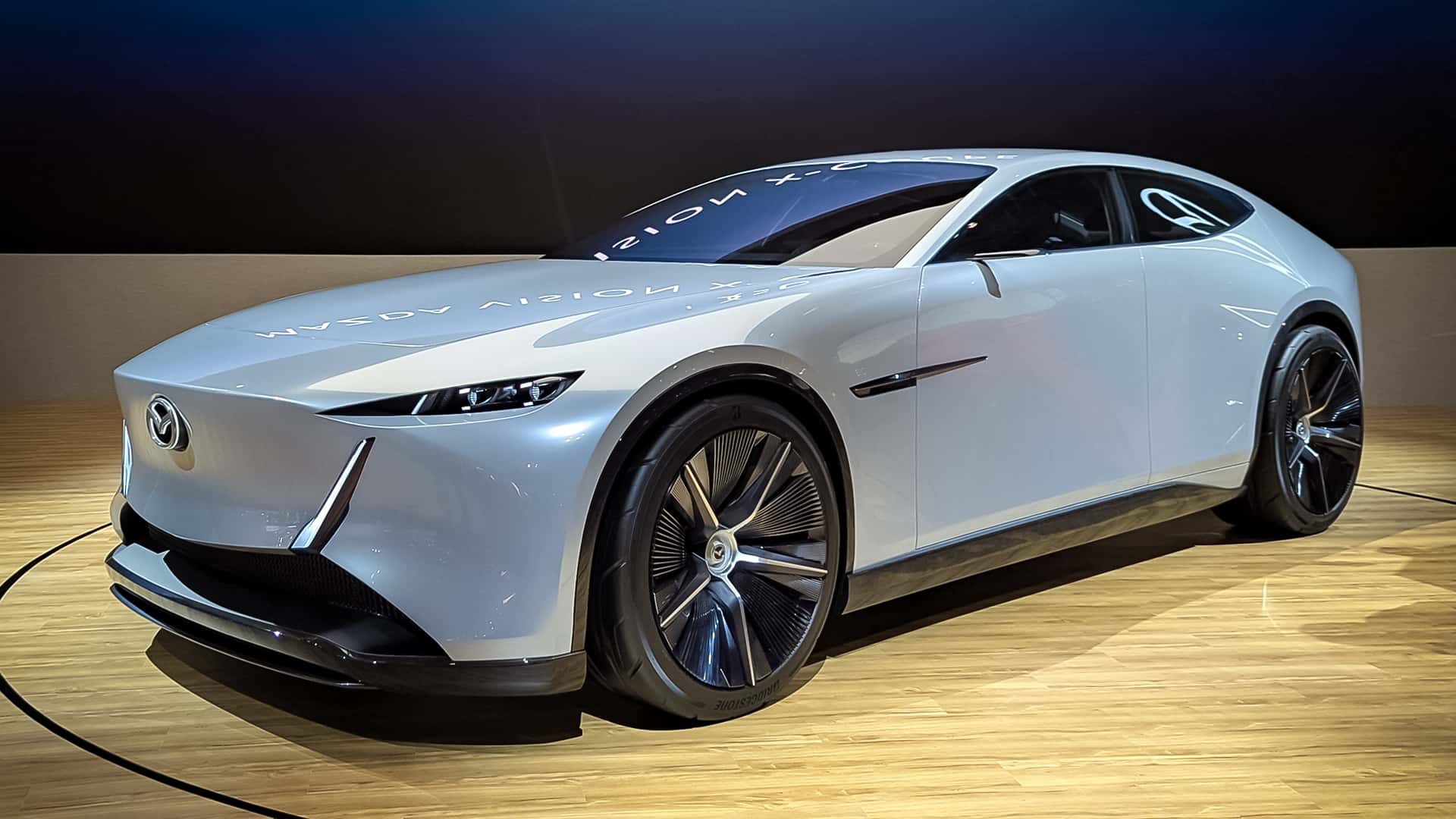
Mazda, the Japanese automaker known for its sleek designs and reliable vehicles, has hit a roadblock in its plans for electric vehicle (EV) production. The company was set to launch its first long-range EV next year, but a recent announcement has pushed back the timeline to 2029 or later. This delay comes as a surprise to many, especially considering Mazda’s slow progress in the EV market.
Not only has Mazda postponed the project, but its CEO also admitted that the company had not taken any significant steps towards production of the EV before the change of plans. This revelation raises questions about Mazda’s commitment to electrification and its ability to keep up with competitors in the rapidly evolving automotive industry.
In a statement to Automotive News, Mazda’s CEO explained the decision to delay the EV launch, stating, “We made the decision before we started.” This admission suggests that Mazda had not made any irreversible moves towards EV production, indicating a lack of preparation and strategic planning on the company’s part.
The setback in Mazda’s EV plans highlights the challenges the company faces in balancing the need to develop next-generation EVs with a slower-than-expected transition in the U.S. market. Additionally, Mazda’s smaller cash pile compared to its competitors puts it at a disadvantage in the race to build compelling, affordable, long-range EVs.
The company’s lackluster performance in the EV market is evident in its current lineup, with only one EV, the MX-30, available in the U.S. market. The MX-30, launched in 2021, offered just 100 miles of EPA range for $35,000, falling short of consumer expectations for a modern EV. Unsurprisingly, the MX-30 was discontinued in the U.S. market within two years of its launch.
In response to the delay in its EV plans, Mazda has announced a shift in focus towards internal combustion and hybrid development. The company plans to launch a hybrid version of its CX-5 compact crossover next year, with more hybrid models expected to follow before the end of the decade. While this strategy may help Mazda stay relevant in the short term, it raises concerns about the company’s long-term commitment to electrification.
Overall, Mazda’s decision to delay its first long-range EV launch underscores the challenges and uncertainties facing traditional automakers in the transition to electric mobility. As the industry continues to evolve, Mazda will need to reassess its priorities and accelerate its efforts to stay competitive in the rapidly changing automotive landscape. Mazda has been making waves in the automotive industry with its announcement of a new electric crossover, the CX-6e. This vehicle marks a significant step forward for the company as it aims to enter the electric vehicle market. Unlike the CX-50 Hybrid, which uses Toyota motor and hybrid technology, the CX-6e will feature Mazda’s own electric system.
The decision to develop its own electric system is a bold move for Mazda, especially considering the relatively small amount the company plans to invest in electrification by 2030. With only $7.52 billion earmarked for electric vehicle development, Mazda is taking a cautious approach compared to competitors like Ford and General Motors, who are investing significantly more in EV technology.
Despite the smaller investment, Mazda is determined to make a mark in the electric vehicle market. The company’s focus on lightweight design and driving enthusiasm has the potential to set it apart from other electric vehicles on the market. By developing its own electric system, Mazda is positioning itself as a key player in the EV industry, with the CX-6e serving as a testament to the company’s commitment to innovation.
While Mazda may not have the same resources as larger automakers, its dedication to creating high-quality, cutting-edge vehicles is evident in the CX-6e. The company’s partnership with Chinese automakers has already produced impressive results, and Mazda is poised to continue pushing boundaries in the EV market.
As the automotive industry continues to shift towards electric vehicles, Mazda’s decision to invest in its own electric system is a strategic move that could pay off in the long run. By staying true to its commitment to innovation and excellence, Mazda is poised to make a significant impact in the electric vehicle market with the introduction of the CX-6e.