
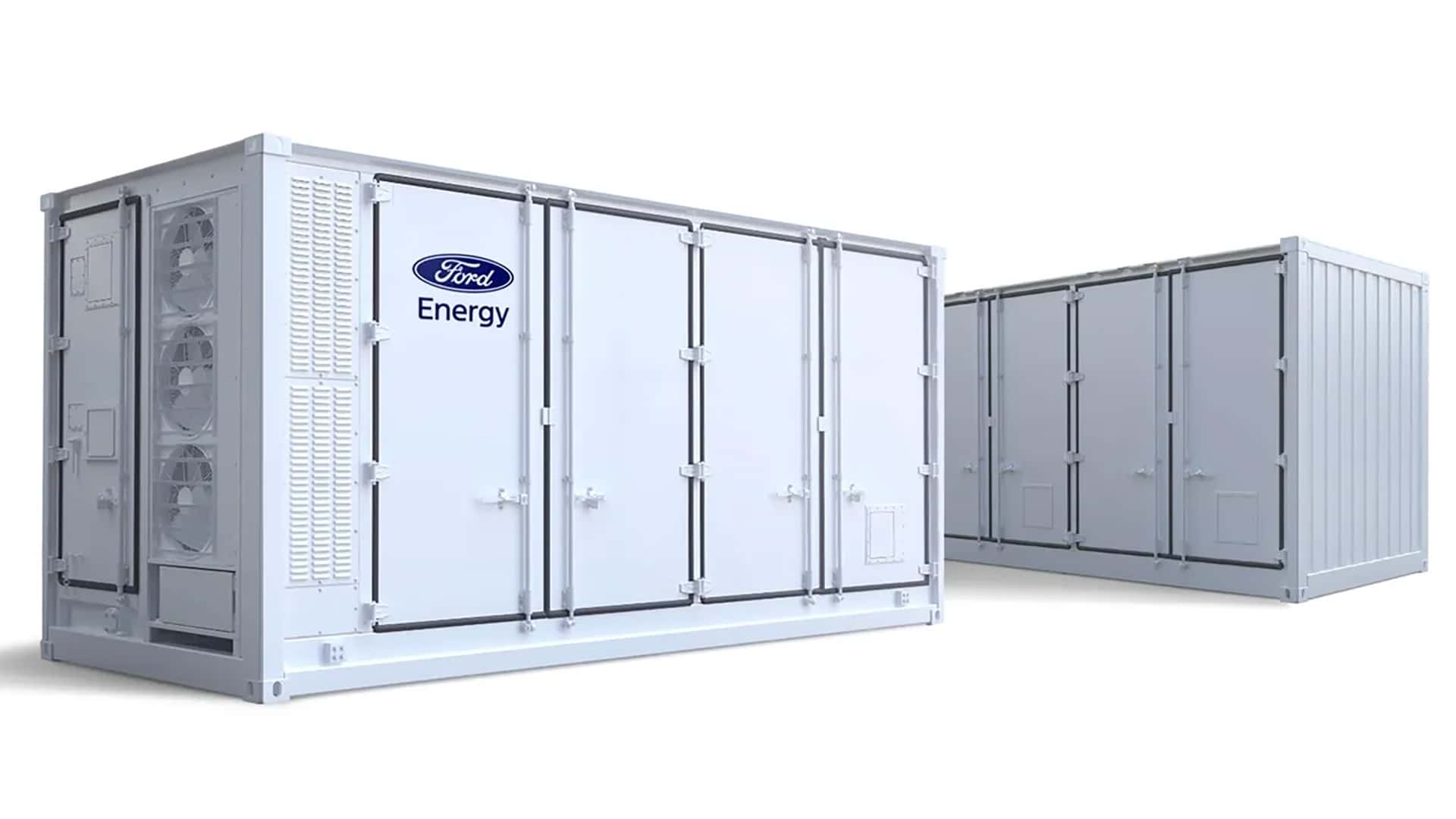
Ford Energy, a subsidiary of Ford Motor Company, has made a significant entry into the stationary energy storage industry. The company is set to build modular battery containers in Kentucky using prismatic LFP cells.
After facing challenges in competing with Tesla in electric car sales, Ford has pivoted towards the battery energy storage market with the launch of Ford Energy. Their first product, the DC block, is positioned to rival Tesla’s Megapack.
The decision to venture into the energy storage market comes at a time when the American EV market has seen a decline in sales following the discontinuation of federal tax credits. Ford is leveraging its extensive manufacturing capabilities to seize the opportunity presented by the growing demand for energy storage solutions.
Ford Energy’s flagship product, the DC block, is designed to have a lifespan of at least 20 years. It incorporates hundreds of 512 amp-hours lithium iron phosphate (LFP) prismatic cells within a standardized 20-foot container, along with essential power electronics. The company offers both a two-hour and a four-hour model, featuring liquid-cooled thermal management and a sophisticated battery management system.
Each container is equipped with a layered fire protection system that combines smoke, heat, and hydrogen detection mechanisms, along with ventilation and suppression features. The DC block boasts a capacity of 5.45 megawatt-hours and operates at a rated DC voltage between 1,040 and 1,500 volts. It is designed to function within a temperature range of -31°F (-35°C) to 131°F (55°C) and has an IP55 ingress protection rating.
To facilitate the production of these energy storage solutions, Ford has repurposed its existing battery factory in Glendale, Kentucky. Initially used for assembling high-nickel battery packs for vehicles like the F-150 Lightning and E-Transit in collaboration with SK On, the facility is now solely dedicated to manufacturing energy storage modules. This move follows the separation of Ford and SK On, with the latter taking full ownership of a battery plant in Tennessee.
With the discontinuation of the F-150 Lightning and underwhelming sales figures for the E-Transit, Ford’s foray into stationary energy storage appears strategic and timely. The company aims to replicate the success seen by Tesla in the energy storage sector, which generated substantial profits in recent quarters. Ford plans to oversee the entire manufacturing process, from electrode coils to container assembly, to ensure a seamless production chain. Ford recently announced plans to enter the energy storage market with a projected annual manufacturing capacity of 20 gigawatt-hours. The first customer deliveries are scheduled for the beginning of 2027. This move marks Ford’s foray into the growing energy storage sector, aiming to compete with industry leader Tesla.
In comparison, Tesla currently boasts a total annual manufacturing capacity of 80 GWh, or 20,000 Megapacks. The company has already deployed over 47 GWh of energy storage systems in more than 65 countries. This significant lead positions Tesla as a formidable player in the energy storage market.
Ford’s decision to enter the energy storage sector reflects the growing demand for sustainable energy solutions. By leveraging their manufacturing expertise and technological capabilities, Ford aims to make a significant impact in the renewable energy space. The company’s entry into energy storage also aligns with its broader commitment to sustainability and innovation.
With the first customer deliveries set for 2027, Ford is gearing up to compete with established players like Tesla in the energy storage market. As the demand for renewable energy solutions continues to rise, Ford’s entry into energy storage signifies a strategic move to diversify its business portfolio and capitalize on the growing market opportunities.
Overall, Ford’s entry into the energy storage market signals a new chapter for the company as it expands its presence in the renewable energy sector. With a projected annual manufacturing capacity of 20 GWh, Ford is poised to make a significant impact in the energy storage market and drive innovation in sustainable energy solutions.