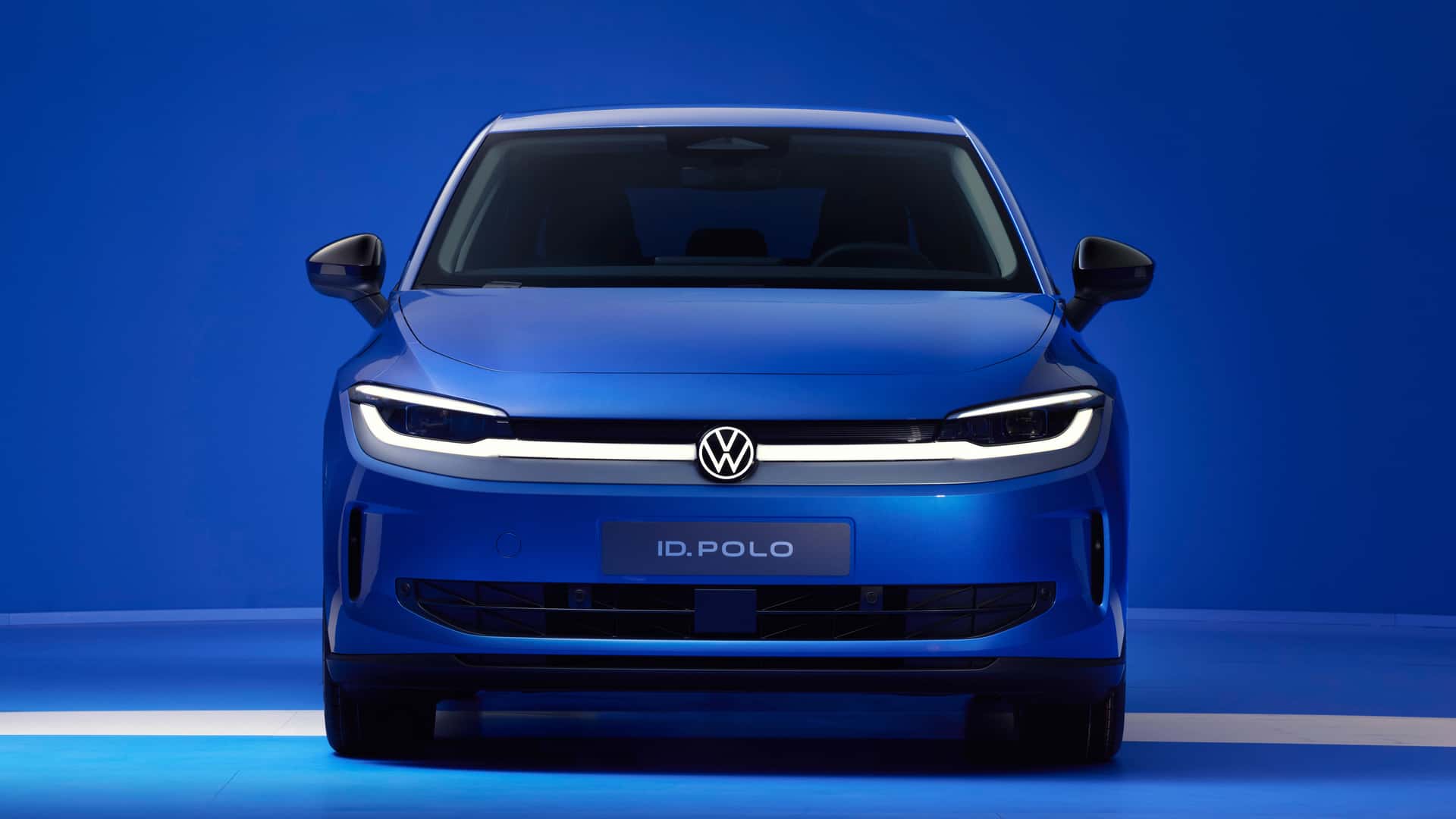
Polo GTX model will arrive at a later date with 232 hp (173 kW) and a dual-motor setup for all-wheel drive capability. This variant will also boast a more aggressive design to differentiate it from the rest of the range.
Charging the ID. Polo can be done at home with a standard AC wallbox, with Volkswagen claiming it can be charged from 5% to 80% in around 40 minutes using a 100 kW DC fast charger. The new hatchback also comes with an 11 kW onboard charger as standard.
On the safety front, the ID. Polo offers a suite of driver assistance systems, including adaptive cruise control, lane-keep assist, traffic sign recognition, and autonomous emergency braking. The electric hatchback has also been awarded a five-star safety rating by Euro NCAP.
Overall, the Volkswagen ID. Polo promises to be a strong contender in the affordable electric vehicle market in Europe. With a competitive starting price, decent range, and a host of features, it looks set to shake up the subcompact EV segment. It remains to be seen how it will stack up against rivals like the Renault 5, Kia EV3, Hyundai Inster, and BYD Dolphin Surf, but the ID. Polo certainly has a lot going for it.
Customers can expect to see the Volkswagen ID. Polo hitting dealerships this month, offering a compelling option for those looking to make the switch to electric mobility without breaking the bank.
Polo (2026) – Photo”>
![Volkswagen ID. Polo (2026)]()
The upcoming Polo GTI with 222 horsepower (166 kW) is set to join the Volkswagen ID. Polo range next year. This high-performance variant will be powered by the same 52 kWh NMC battery as its lower-trim siblings, offering a perfect blend of power and efficiency.
The base ID. Polo model comes equipped with a 37 kWh battery pack that can be fast-charged at up to 90 kW. This allows for a 10-to-80% top-up in just 27 minutes. With this battery, the ID. Polo can cover up to 204 miles (329 km) on a full charge. The larger NMC pack, on the other hand, can accept up to 105 kW of charging power, resulting in a shorter 10-to-80% charge time of around 24 minutes. Both versions of the ID. Polo come with 11 kW AC charging as standard, providing flexibility for charging at home or on the go. The battery packs are assembled using the cell-to-pack (CTP) method, which eliminates traditional battery modules and helps reduce weight.
Despite its impressive power and performance, the ID. Polo remains relatively lightweight, with a minimum weight ranging between 3,457 pounds (1,568 kilograms) and 3,474 pounds (1,576 kilograms). The subcompact EV measures 159.5 inches (4,053 millimeters) in length, 71.5 inches (1,816 mm) in width, and 60.2 inches (1,530 mm) in height, with a wheelbase of 102.3 inches (2,600 mm).
In terms of practicality, the ID. Polo offers a spacious trunk with a 441-liter capacity when the rear seatbacks are upright. Folding down the rear seats allows for a maximum cargo capacity of 1,249 liters. For added versatility, an optional tow hook is available, with a maximum towing capacity of 2,645 lbs (1,200 kg).
Interested customers in Europe can look forward to placing their orders for the Volkswagen ID. Polo starting at the end of April. With its combination of performance, efficiency, and practicality, the ID. Polo is poised to be a popular choice in the growing electric vehicle market.