
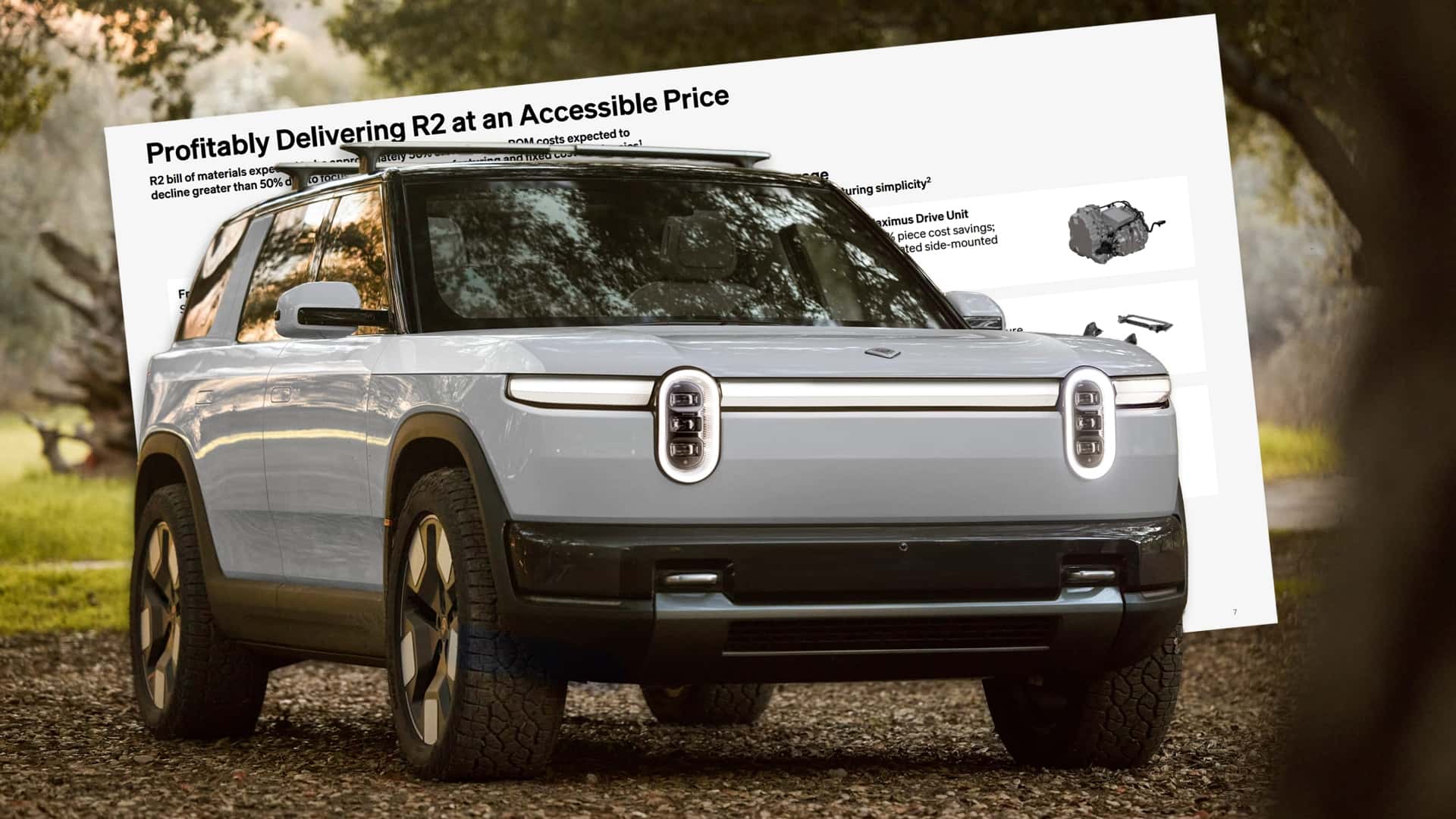
Rivian, the electric vehicle startup, has recently announced that its upcoming R2 crossover will cost 50% less to build compared to its flagship R1 series. During a quarterly earnings call, the automaker revealed that the R2 will have up to 90% fewer parts in some areas of manufacturing, leading to significant cost savings.
The central mission behind the R2 was to offer everything that customers love about the more expensive R1 series at a more affordable price point. Rivian has managed to achieve this goal, with the R2 priced at $45,000, significantly lower than the R1S and R1 models. Reservation holders are expected to be able to configure their R2s in the coming weeks, with the R2 Performance starting at around $58,000.
Rivian explained in detail how it was able to reduce the input costs of the R2 during its latest earnings release. One of the key strategies was implementing a new zonal competing architecture for the wiring harness, resulting in a 2.3-mile reduction in overall harness length and a 60% decrease in the number of connectors required. Additionally, the brand was able to cut down on expensive high-voltage cabling by 70% by consolidating the power conversion module.
The R2 also features the new Maximus Drive, which has 41% fewer parts compared to the Enduro drive units in the R1. By mounting the inverter on the drive unit itself and using the inverter lid as the drive unit mount, Rivian was able to reduce the total number of parts and manufacturing time. The company also replaced ultrasonic sensors with corner radars on the R2, achieving a 50% cost savings compared to the R1.
On the mechanical side, the R2’s front suspension achieved 70% cost savings by switching to a MacPherson setup from a double wishbone design. The underbody structure uses large die castings, resulting in 90% fewer parts and 30% cost savings. Even the rear doors of the R2 have been simplified, reducing complexity by 65% in terms of part count.
RJ Scaringe, Rivian’s CEO, emphasized that the company expects to achieve more than a 50% reduction in costs by focusing on design for manufacturing and leveraging fixed cost efficiencies through higher production volumes. Rivian has also been able to negotiate better deals with suppliers as it has grown, resulting in lower costs for components like the front windshield.
Overall, the R2’s smaller size and simplified design contribute to lower material needs and manufacturing costs, paving the way for Rivian to target a mass-market audience. With the R2, Rivian aims to deliver a high-performance electric vehicle at an accessible price point without compromising on the quality and utility that customers have come to expect from the brand. As the electric vehicle market continues to grow, all eyes are on Rivian to see if they can stick the landing. With production of their R1T and R1S vehicles ramping up and customer deliveries set to begin this spring, the spotlight is on whether Rivian can meet the high expectations set for them.
Rivian has been making waves in the EV industry with their innovative designs and cutting-edge technology. The company’s Georgia plant has recently been boosted to a capacity of 300,000 units, indicating their commitment to scaling up production to meet demand. This increase in capacity is a positive sign for Rivian’s future success, but the real test will come when they start delivering vehicles to customers.
Dealerships are feeling the pressure as direct sales become more prevalent in the industry. With Rivian’s online sales model and direct-to-consumer approach, traditional dealerships are “terrified” of what the future may hold. However, Rivian’s focus on customer experience and convenience could set them apart in a market that is rapidly evolving.
One key factor that sets Rivian apart is their commitment to sustainability. The company has announced plans to run their factory on their own used EV batteries by 2026, showcasing their dedication to reducing waste and carbon emissions. This forward-thinking approach aligns with the growing trend towards environmentally-friendly practices in the automotive industry.
As Rivian prepares to launch their R2 production line and deliver vehicles to customers, the question remains: can they stick the landing? With increased capacity, a direct sales model, and a focus on sustainability, Rivian is poised to make a significant impact on the EV market. The coming months will be crucial in determining whether Rivian can live up to the hype and establish themselves as a major player in the industry.