
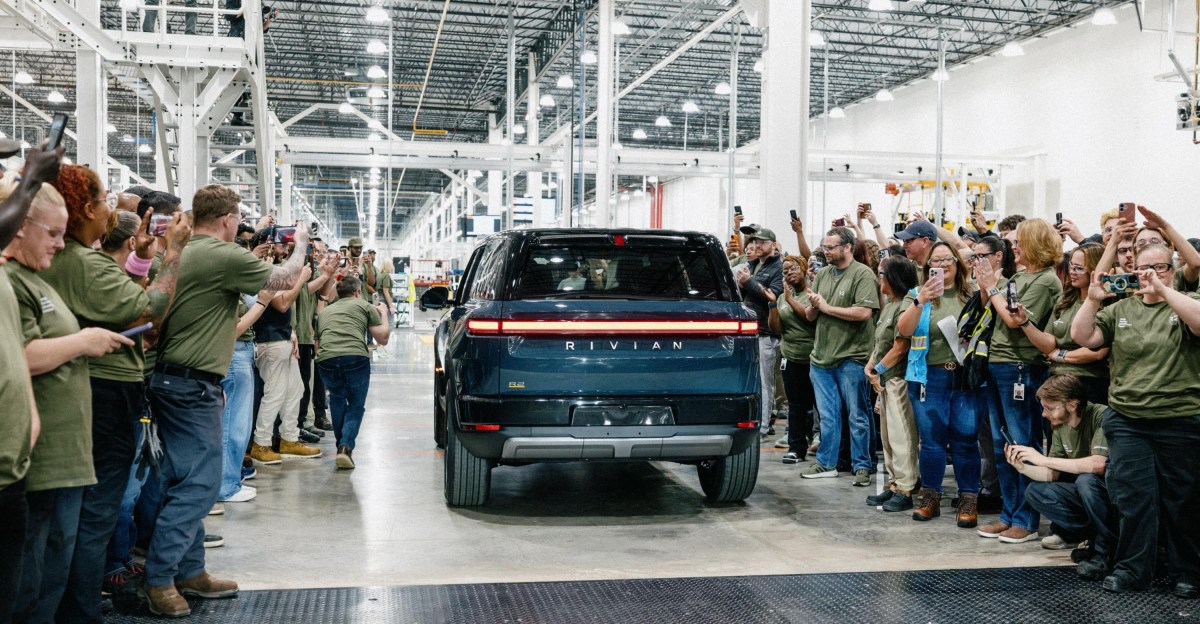
Rivian, the electric vehicle manufacturer, recently released its production and delivery statement for the first quarter of the year. According to the report, the company sold 10,365 vehicles in Q1, showing a 20 percent increase year over year. Additionally, Rivian produced 10,236 vehicles at its factory in Normal, Illinois, marking a 30 percent increase compared to the same period last year. The company also reiterated its forecast to sell 62,000–67,000 vehicles throughout the year.
In terms of revenue, Rivian reported a total of $1.38 billion, an 11.3 percent increase compared to Q1 2025. Of this amount, $908 million came from automotive revenue, which saw a slight decrease of 1.5 percent year over year. On the other hand, the company recorded $473 million from software and subscription services, showing a significant 48.7 percent increase year over year. As the demand for electric vehicles slows down, Rivian is focusing on generating more revenue from its digital products, including the newly introduced Autonomy Plus package.
Despite a decrease in gross profits by 42 percent year over year, Rivian’s automotive profits showed a loss of $62 million in Q1, compared to $92 million in gross profits during the same quarter in 2025. This decline can be attributed to a $100 million decrease in automotive regulatory credits sales and lower production volumes.
Rivian is pinning its hopes on the launch of its more affordable R2 vehicle to drive sales, especially after the federal $7,500 EV tax credit was eliminated, impacting EV demand. The introduction of the midsized SUV is crucial for the company’s financial stability as it continues to invest in a new factory and autonomous driving projects. The timely release of the R2, with the first deliveries expected in June, is crucial for the company’s success.
Looking ahead, Rivian aims to achieve positive gross profit margins by the end of 2026 and sell over 20,000 R2 vehicles by the year’s end. Despite facing challenges such as a tornado damaging part of its factory in Normal, Rivian remains committed to its goals.
In recent months, Rivian has been actively expanding its offerings, including designing its own AI chips and adding lidar sensors to future R2 models for autonomous driving capabilities. The company also announced the rollout of the R2, starting with higher-priced variants and gradually introducing more affordable options.
Rivian’s partnership with Volkswagen in a software joint venture has unlocked additional investment from the German auto giant, with plans to develop a next-gen software platform for VW brands. Moreover, the company secured a significant deal with Uber to supply tens of thousands of R2 vehicles for use as robotaxis, with Uber investing $1.25 billion in the partnership.
Overall, Rivian’s strategic initiatives and partnerships indicate a promising future for the company as it continues to innovate in the electric vehicle market.