
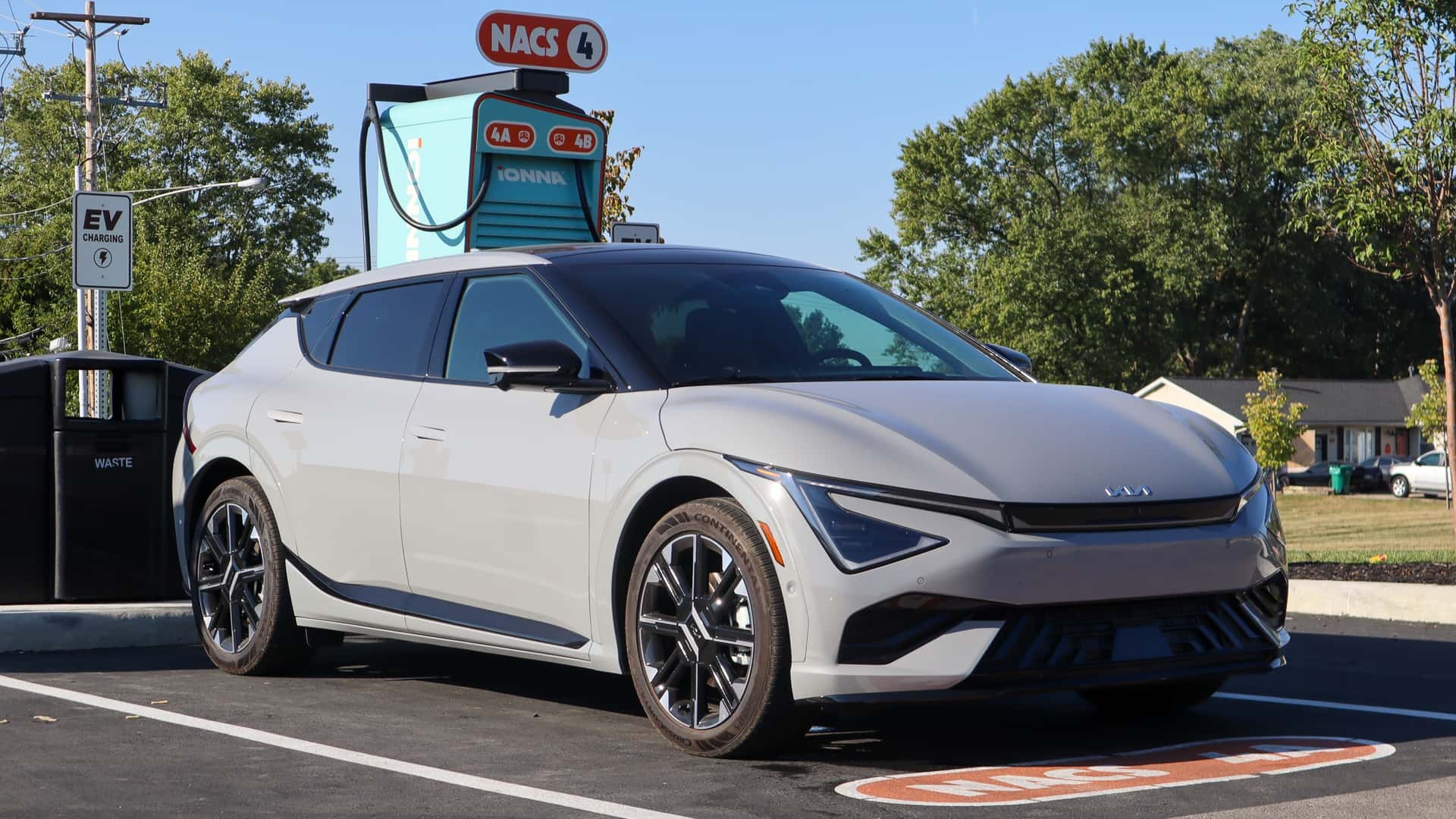
Kia has made a significant move in the electric vehicle market by slashing the starting price of its EV6 crossover by at least $5,000 in the U.S. This price cut makes the American-made EV more affordable, with the entry-level model now starting from less than $40,000, including destination. With this new pricing, the Kia EV6 is now cheaper than the Tesla Model Y, providing consumers with a compelling alternative in the EV segment.
The 2026 Kia EV6 Light, the base model, now starts from $39,445, representing a $5,000 reduction from the previous year. This pricing undercuts the Tesla Model Y Rear-Wheel Drive by $2,185, making the EV6 a more affordable option for those looking to make the switch to electric vehicles. Despite the lower starting price, the EV6 Light offers standard wireless Apple CarPlay and Android Auto connectivity, as well as an FM radio, features that are not available in the entry-level Model Y.
Moving up the trim levels, the 2026 Kia EV6 Wind starts from $46,345, a $5,500 decrease from the previous model. This trim comes with a larger battery, resulting in a longer 319-mile range. The 2026 Kia EV6 GT-Line, the top-spec model, starts from $50,245, also receiving a $5,500 price drop. This trim offers additional features such as a hidden drift mode, sunroof, head-up display, premium Meridian sound system, LED ambient lighting, and a sportier exterior.
While the Tesla Model Y may offer a longer range compared to the EV6, the Kia crossover provides a competitive option with its lower starting price and unique features. Both vehicles come equipped with a NACS charge port, making charging convenient for users. However, the high-performance Kia EV6 GT has been delayed in the U.S. due to sluggish sales, indicating a possible shift in consumer preferences in the EV market.
Overall, the price reduction of the 2026 Kia EV6 makes it a more attractive option for consumers looking to go electric. With its blend of affordability, features, and performance, the EV6 is poised to make a significant impact in the growing electric vehicle market, offering a compelling alternative to established competitors like Tesla. With the rise of technology in our modern world, it’s no surprise that the way we live our lives is constantly changing. From the way we communicate to the way we work, technology has had a profound impact on nearly every aspect of our daily routines. One area where technology has made a particularly significant impact is in the field of healthcare.
Advancements in technology have transformed the way we approach healthcare, making it more efficient, accessible, and personalized than ever before. From telemedicine to wearable health devices, technology has revolutionized the way we receive and deliver healthcare services.
One of the most significant advancements in healthcare technology is the rise of telemedicine. Telemedicine allows patients to consult with healthcare providers remotely, using video conferencing and other communication technologies. This has made it easier for patients to access medical care, particularly for those who live in rural or underserved areas. Telemedicine has also proven to be a valuable tool during the COVID-19 pandemic, allowing patients to receive care while minimizing the risk of exposure to the virus.
Wearable health devices are another technological advancement that has had a major impact on healthcare. These devices, such as smartwatches and fitness trackers, allow individuals to monitor their health in real-time, tracking everything from heart rate to sleep patterns. This data can be shared with healthcare providers, providing valuable insights into a patient’s health and allowing for more personalized care.
Artificial intelligence (AI) is another technology that is revolutionizing healthcare. AI has the ability to analyze vast amounts of data quickly and accurately, helping healthcare providers to make more informed decisions about patient care. AI can also be used to develop personalized treatment plans based on a patient’s unique health profile, leading to more effective and efficient care.
Overall, the impact of technology on healthcare has been overwhelmingly positive. It has made healthcare more accessible, efficient, and personalized, leading to better outcomes for patients. As technology continues to advance, we can expect even more groundbreaking innovations in the field of healthcare, improving the quality of care for individuals around the world.