
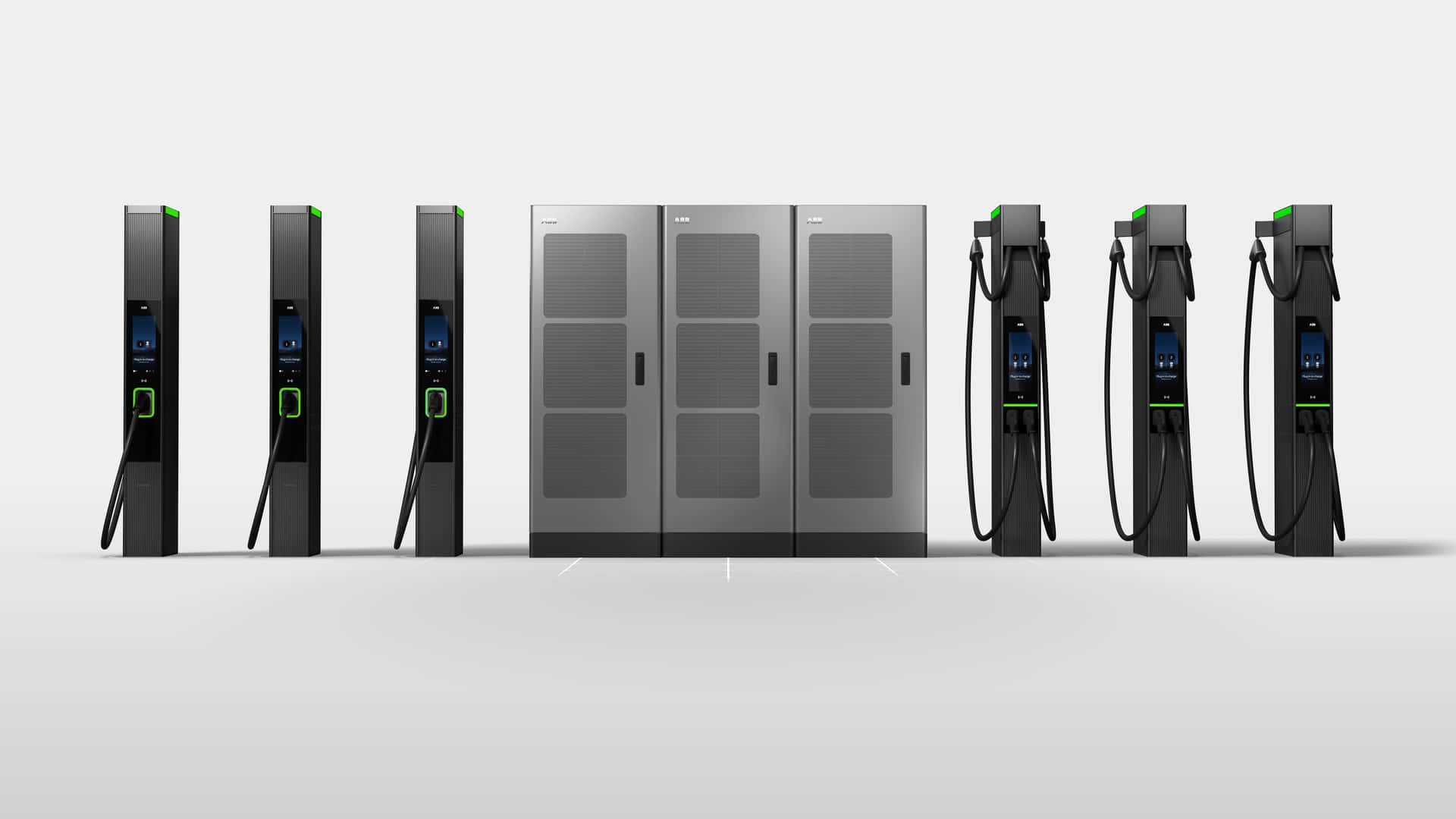
ABB, the Swiss technology company, has recently introduced a groundbreaking EV DC fast charger system known as the OM M-Series power cabinet. This innovative power cabinet has the capability to deliver up to 1.2 MW of power to a single electric vehicle or dynamically allocate power to as many as 24 EVs. ABB boasts that this new distribution cabinet has an industry-leading power density, making it a game-changer in the world of electric vehicle charging infrastructure.
The OM M-Series power cabinet is designed to optimize space-constrained sites, with a power density of 625 kilowatts per square meter. This allows charging networks to make the most efficient use of available space. The distribution cabinet can be paired with various dispensers from ABB, providing a customizable setup that can cater to a wide range of scenarios. The full M1200 setup includes three distribution cabinets that can collectively deliver up to 1.2 MW of power either to a single EV through a liquid-cooled MCS connector or to multiple electric cars using CCS or NACS connectors.
When configured for megawatt charging, the OM Ultra dispenser is the only compatible option with the new power cabinet. The OM Ultra dispenser can output a maximum of 1,500 amps at up to 980 volts, making it suitable for high-power charging needs. For passenger EVs, the OM Solo dispenser can deliver up to 800 kW to a single electric car with its 800A peak current. It comes with a liquid-cooled cable that can be configured with a CCS or NACS connector. Additionally, ABB offers the OM Duo dispenser, which features two outlets capable of delivering up to 800A each.
Recognizing that not all charging sites have the same requirements, ABB also offers smaller power cabinets to suit different needs. The M200 delivers 200 kW, followed by the M400 with 400 kW and the M800 with 800 kW. The modular nature of the system allows for scalability, enabling sites to start with a smaller unit and expand as needed to accommodate increasing demand.
In conclusion, ABB’s new OM M-Series power cabinet represents a significant advancement in EV charging technology. With its high power density and versatile configuration options, this system is poised to revolutionize the electric vehicle charging infrastructure, providing efficient, high-power charging solutions for a wide range of applications. The demand for high-power fast chargers for electric vehicles (EVs) is on the rise as modern EVs are now capable of charging at over 300 kW. Companies like ABB are stepping up to the challenge by introducing megawatt-capable charging infrastructure to meet the increasing power demands of EVs.
One of the key advantages of these high-power chargers is that they can significantly reduce charging times for EVs, making them more convenient and practical for drivers. With ABB’s megawatt-capable charging system, EV owners can expect faster charging speeds and shorter wait times at charging stations.
In addition, ABB’s charging system is designed to be cost-effective and easy to install. Because the dispensers only need to be hooked up to the cabinet, the upgrade costs should be minimal, making it an attractive option for businesses and municipalities looking to expand their charging infrastructure.
But ABB is not the only player in the megawatt charging space. Alpitronic also offers a split DC charging system that can deliver up to 600 kW to a single EV, while Tesla’s latest Supercharger setup can output a whopping 1.2 MW. This competition in the high-power charging market is driving innovation and pushing the boundaries of what is possible in terms of fast charging technology.
Overall, the growth of megawatt-capable charging systems is a positive development for the EV industry. As more EVs hit the roads and demand for fast charging increases, having high-power charging infrastructure in place will be essential for supporting the widespread adoption of electric vehicles. With companies like ABB leading the way, the future of fast charging looks bright.