
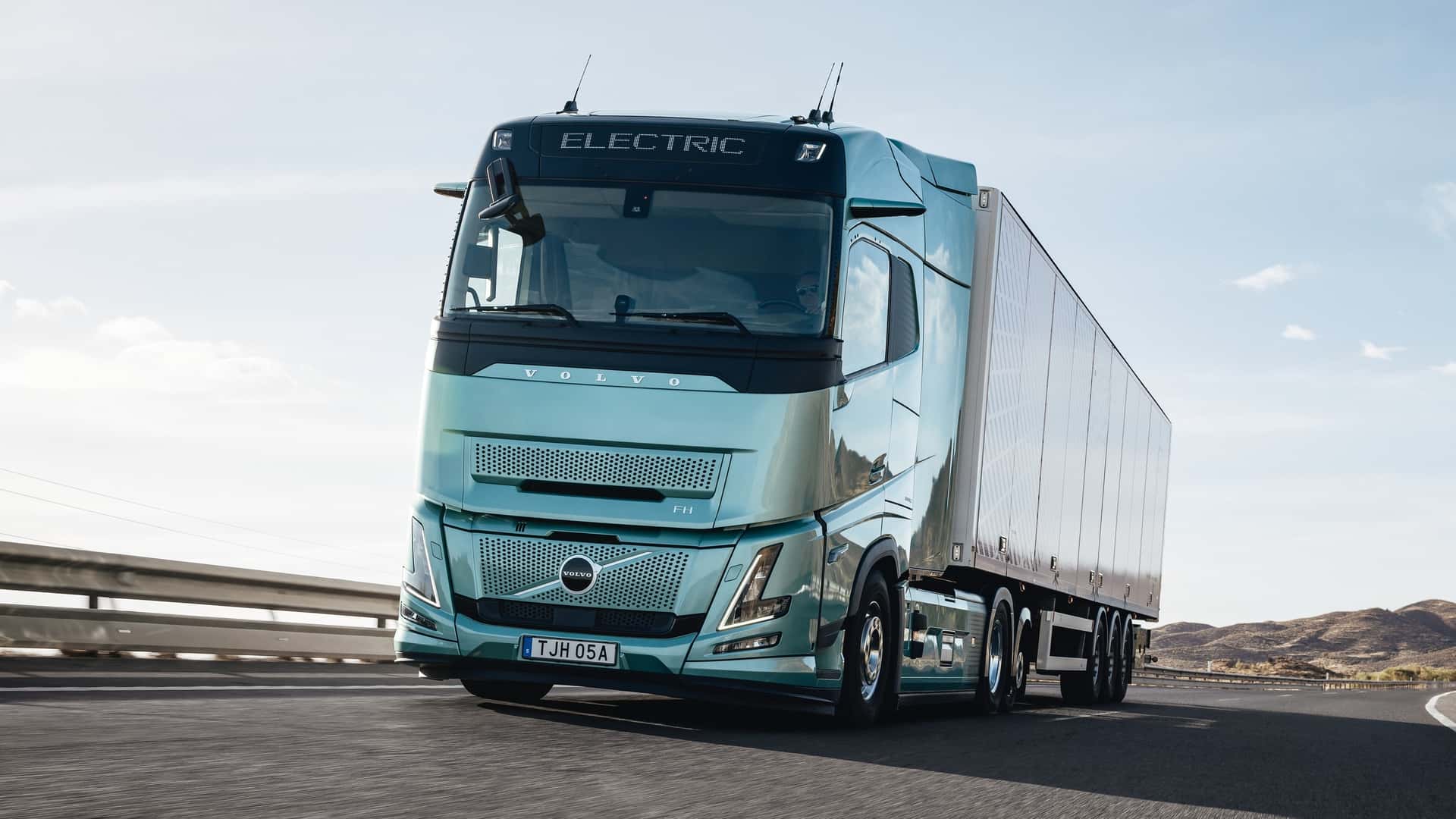
The extended-range Volvo FH Aero Electric truck is a game-changer in the world of electric big rigs. With a range of up to 435 miles on a single charge, it surpasses its predecessor by 60 miles thanks to advancements in electric motor technology, a higher-capacity battery, and aerodynamic enhancements.
One of the key features of the FH Aero Electric with Extended Range is its newly designed electric rear axle. This axle integrates two electric motors, power electronics, a six-speed transmission, and a traditional axle, resulting in power outputs of 570 or 625 horsepower depending on the configuration. This powerful setup allows the truck to operate efficiently and effectively on long-haul routes.
The truck is equipped with a high-voltage battery with a maximum capacity of 725 kilowatt-hours, made possible by the more compact rear e-axle. This allows customers to choose between six or eight individual L-shaped packs, providing ample energy for extended journeys. In comparison, the standard FH Aero Electric truck comes with up to 540 kWh of energy capacity.
Charging the extended-range Volvo FH Aero Electric is a breeze thanks to its MCS charging connector, which can accept up to 700 kW of power from a compatible charger. With a megawatt-capable DC fast charger, the truck can go from 20% to 80% charge in just 50 minutes, while a 350 kW CCS fast charger will top up the batteries in approximately 85 minutes.
In terms of performance, the new long-range model boasts a Gross Combination Weight (GCW) of up to 48 tonnes and a payload capacity of up to 28 tonnes. It is available in a single 6×2 configuration with a lightweight tax axle, and offers cab options including a Globetrotter and a Globetrotter XL version.
While the extended-range FH Aero Electric is a great option for long-distance hauling, Volvo Trucks also recognizes the need for customization in the trucking industry. That’s why the regular FH Aero Electric model offers more flexibility and options to meet a variety of needs.
Overall, the extended-range Volvo FH Aero Electric truck is a testament to Volvo Trucks’ commitment to innovation and sustainability in the transportation industry. With its impressive range, power, and charging capabilities, it sets a new standard for electric big rigs and paves the way for a greener future in trucking. The world of fashion is constantly evolving, with new trends emerging every season. From the runways of Paris and Milan to the streets of New York and Tokyo, fashion is a global phenomenon that influences how we dress and express ourselves. In recent years, sustainability has become a major focus in the fashion industry, as designers and consumers alike have become more aware of the environmental and social impact of the clothing we wear.
Sustainable fashion is a movement that aims to reduce the negative effects of the fashion industry on the environment and society. This includes using eco-friendly materials, reducing waste and pollution, and promoting fair labor practices. Many designers are now incorporating sustainable practices into their collections, from using organic and recycled fabrics to partnering with ethical manufacturers.
One of the key aspects of sustainable fashion is the concept of circularity, which is the idea that clothing should be designed to last a long time and be easily recyclable or biodegradable at the end of its life cycle. This means using durable materials, designing timeless pieces that won’t go out of style, and creating systems for recycling and reusing clothing.
Another important aspect of sustainable fashion is transparency. Many consumers are now demanding more information about where their clothes are made, who made them, and under what conditions. This has led to the rise of ethical fashion brands that are committed to fair labor practices and transparency in their supply chain.
In addition to reducing the environmental impact of the fashion industry, sustainable fashion also has the potential to empower communities and promote social justice. By supporting ethical brands and fair trade practices, consumers can help improve the lives of garment workers in developing countries and promote economic development in marginalized communities.
Overall, sustainable fashion is not just a trend – it’s a movement that is here to stay. As consumers become more conscious of the impact of their clothing choices, designers and brands are responding with innovative solutions that prioritize the planet and its people. By supporting sustainable fashion, we can all contribute to a more ethical and environmentally-friendly fashion industry.