
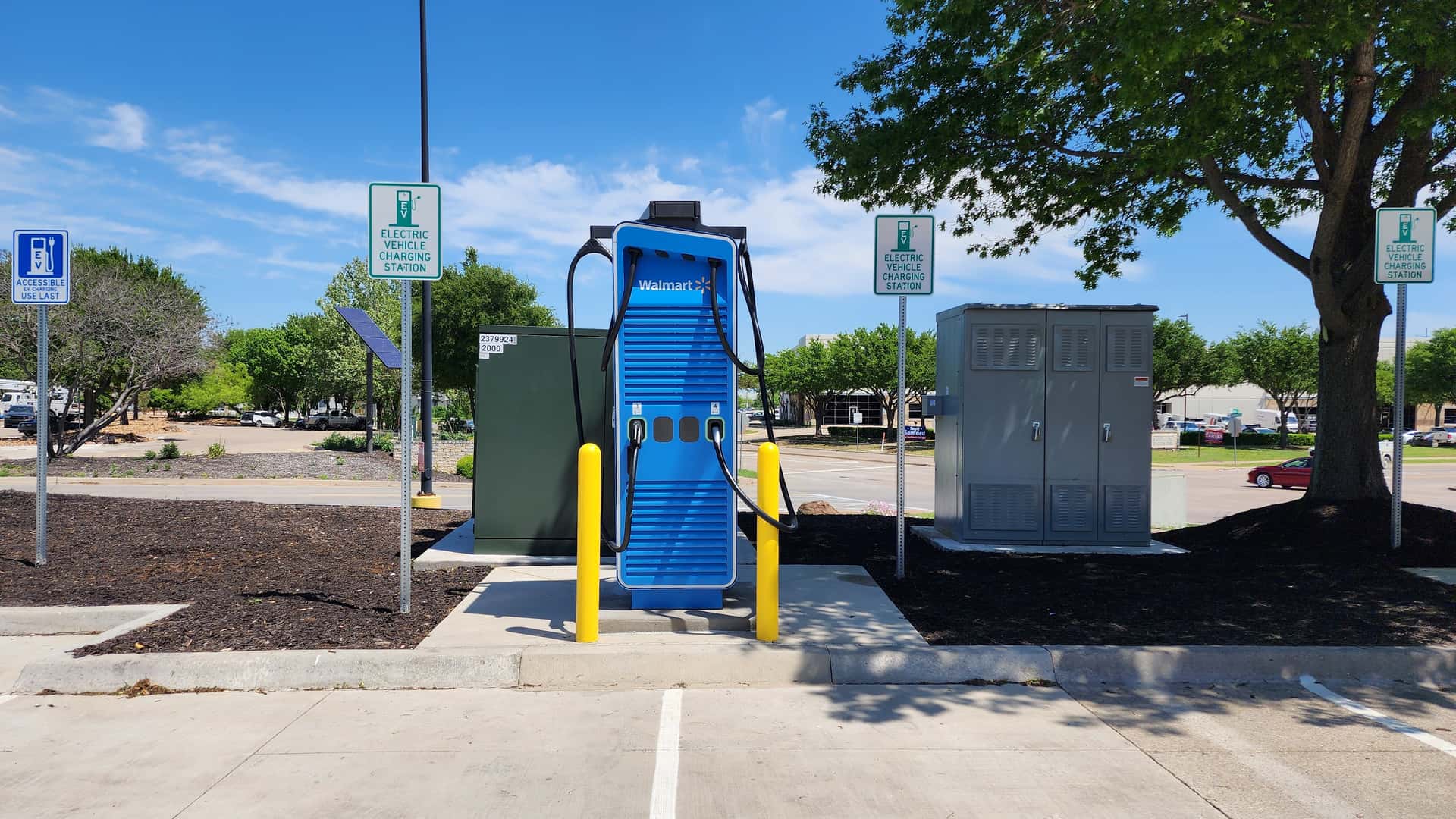
Walmart, the retail giant known for its wide range of products and services, has recently made a significant expansion to its electric vehicle (EV) fast charging network in the United States. In just two months, Walmart has increased the number of DC fast charging stations at its stores by an impressive 50%, now boasting over 200 ports across the country.
According to the Department of Energy’s Alternative Fuels Data Center and EVChargingStations.com, Walmart currently has 31 DC fast charging stations with a total of 224 high-powered connectors. The company has exclusively installed 400-kilowatt chargers from Alpitronic or ABB, equipped with NACS cables and CCS1 ports. This means that Walmart now has 112 individual dispensers at various locations, with plans to add thousands more in the near future.
While Walmart has previously hosted DC fast chargers from other operators like Electrify America, the company made the decision to enter the EV charging business in 2023. The first Walmart-branded chargers went online last year, marking the beginning of the company’s commitment to expanding its charging network.
The development of Walmart’s EV charging network started slowly but has gained momentum in recent months. The initial locations became operational in April of last year, with the network growing to 10 stations by November. By February, the number of stations had doubled to 20, and now Walmart has reached a total of 31 charging stations in a relatively short period of time.
Looking ahead, Walmart has ambitious plans for its EV charging network. The company aims to install fast chargers at thousands of its locations by 2030, with further expansion expected in the coming years. Currently, Texas leads the way with 15 Walmart EV charging stations, followed by Arizona with six, Florida with three, and Oklahoma with two. Several other states, including Alabama, Arkansas, Georgia, New Jersey, and South Carolina, each have one Walmart EV charging station.
To utilize Walmart’s EV chargers, drivers are required to use the store’s smartphone app. Pricing varies by location, but the average cost is around $0.48 per kilowatt-hour. As Walmart continues to invest in its EV charging network, drivers can expect more convenient and accessible charging options at their local Walmart stores. The world is currently facing a global pandemic that has affected millions of lives and disrupted economies worldwide. With the rapid spread of the coronavirus, countries have implemented various measures to contain the virus and prevent further transmission. One of the key strategies that have been widely adopted is the use of face masks.
Face masks have become a common sight in public places as people try to protect themselves and others from the virus. The Centers for Disease Control and Prevention (CDC) and the World Health Organization (WHO) have recommended the use of face masks as a crucial tool in preventing the spread of COVID-19.
There are different types of face masks available, including surgical masks, N95 respirators, and cloth masks. Surgical masks are disposable masks that provide a physical barrier to prevent respiratory droplets from spreading. N95 respirators are tight-fitting masks that filter out at least 95% of airborne particles, including viruses. Cloth masks, on the other hand, are reusable masks made of fabric that can be washed and worn again.
The effectiveness of face masks in preventing the spread of COVID-19 has been supported by scientific evidence. Studies have shown that wearing a face mask can significantly reduce the transmission of respiratory droplets that contain the virus. This is especially important in situations where social distancing is not possible, such as in crowded indoor spaces or on public transportation.
In addition to protecting others, wearing a face mask also offers some level of protection to the wearer. While no mask is 100% effective, wearing a mask can reduce the risk of inhaling respiratory droplets that may contain the virus. This is particularly important for individuals who are at higher risk of severe illness from COVID-19, such as older adults and those with underlying health conditions.
Despite the clear benefits of wearing face masks, there has been some resistance and skepticism surrounding their use. Some people argue that wearing a mask is uncomfortable or inconvenient, while others believe that masks are not effective in preventing the spread of the virus. However, experts emphasize that wearing a mask is a simple and effective way to protect oneself and others from COVID-19.
As the world continues to battle the pandemic, it is crucial for individuals to follow public health guidelines and wear face masks in public settings. By taking this simple step, we can all play a part in slowing the spread of the virus and protecting our communities. Face masks may be a temporary measure, but they are a powerful tool in the fight against COVID-19. Let’s all do our part and mask up for the greater good.