
But the big question remains: how sustainable is this strategy long-term?
With Chinese EVs flooding the global market and offering feature-rich vehicles at competitive prices, American automakers may find themselves in a tough spot. The appeal of a stripped-down, no-frills vehicle may not be enough to compete with the bells and whistles offered by other manufacturers.
Additionally, as consumer expectations continue to evolve and demand for technology integration in vehicles grows, the “less-for-less” approach may not hold up. Consumers may not be willing to sacrifice convenience and comfort for a lower price tag.
It will be interesting to see how Dodge, Slate, and other American automakers navigate this new trend and whether they can successfully bring cheaper EVs to market without compromising on quality and features. Only time will tell if this strategy pays off in the long run.
Value, Redefined
When looking at the price of a new vehicle, it’s hard not to wonder about the features that are sacrificed in order to meet that price point. Especially when comparing vehicles from overseas, particularly China, where electric vehicle makers are churning out cars at a fraction of the cost. The value proposition becomes even more intriguing when you consider the price disparity between Western and Chinese automakers.
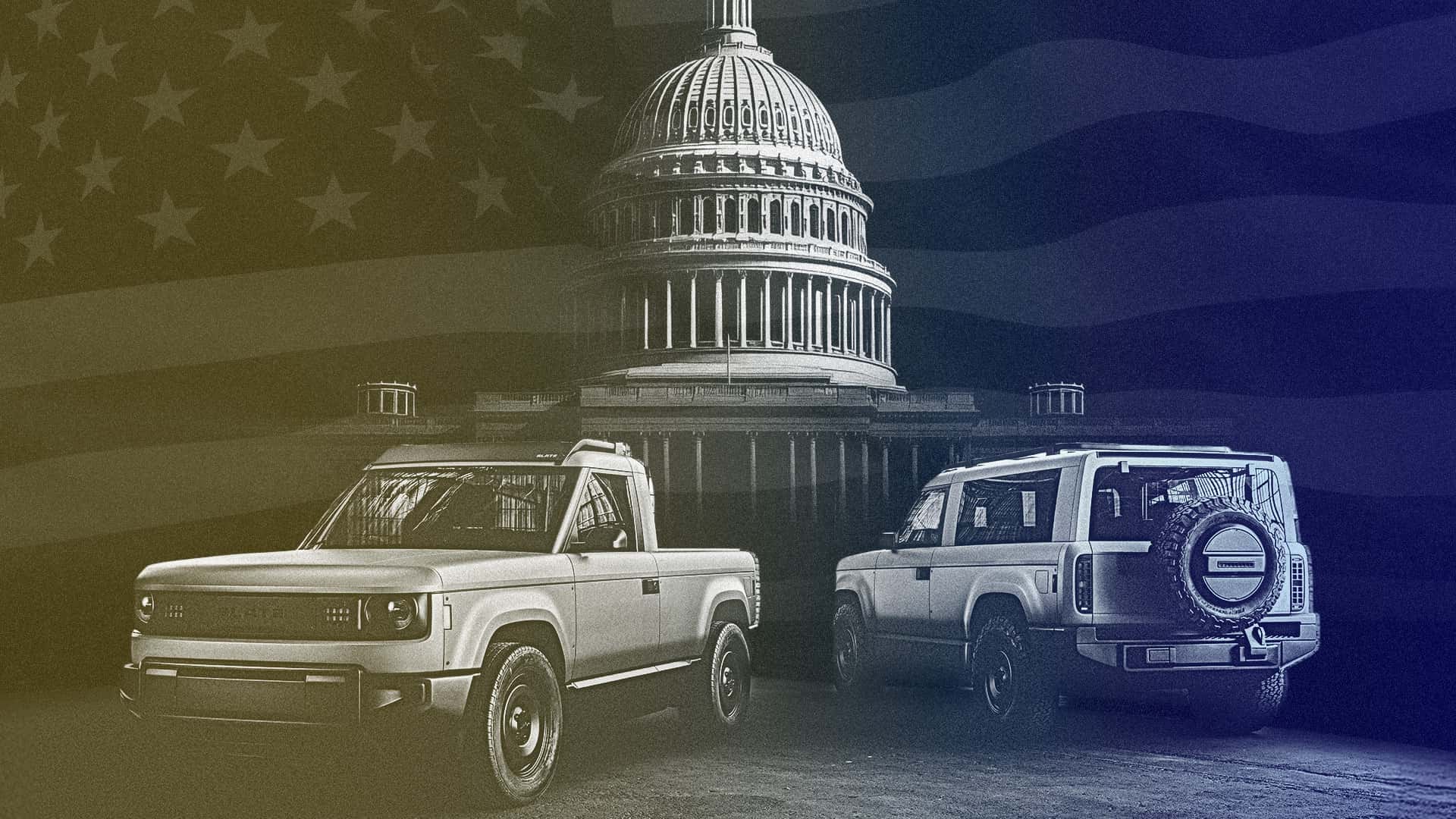
One company that caught the attention of many with its affordable electric truck was Slate. Priced under $20,000 after factoring in the federal tax credit, Slate offered a no-frills truck with roll-up windows and plastic body panels. At a time when other automakers were focusing on high-priced electric SUVs, Slate’s price point was attractive to those looking for a more budget-friendly EV option.
However, as inflation rose and the EV tax credit disappeared, the dream of a sub-$20,000 truck started to fade. With a higher price tag, Slate found itself in a precarious position, straddling the line between incredible value and a more questionable price point. Despite the price increase, Slate continued to market its truck as a customizable option, focusing on features rather than just cost.
Competition Is Coming
As Slate grappled with its pricing strategy, other automakers were also looking to enter the affordable electric vehicle market. Ford, for example, is targeting a sub-$30,000 price point with its upcoming electric pickup. Unlike Slate, Ford has not hinted at stripping out basic features to meet this price point, setting a standard for what consumers can expect from a $30,000 EV from an established domestic automaker.
In contrast, Chinese automakers have already set the bar for affordable electric vehicles. By reducing costs through software features, scaling production, and leveraging vertical integration, Chinese brands have been able to offer EVs with competitive features at lower prices than Western brands. This approach has allowed Chinese EVs to gain popularity in overseas markets, including Europe, despite facing tariffs on electric models.
The uncomfortable truth is that Western automakers are struggling to deliver EVs with the features consumers want at a price they are willing to pay. In response, they are resorting to drastic measures to reduce prices, while Chinese brands are proving that cost-effective electric vehicles can be achieved through innovative strategies and advancements in battery technology. As the demand for affordable EVs continues to grow, it will be interesting to see how Western automakers adapt to the changing landscape of the electric vehicle market. Canada could soon find itself in a similar predicament as the United States when it comes to opening its borders to Chinese automakers. A major spat with the U.S. over trade policies has left Canada in a delicate position, with potential consequences for its own auto industry.
The political fallout from the U.S.-China trade tensions has been significant. President Donald Trump’s invitation to Chinese automakers to build in the U.S. came with numerous requirements that have yet to be fully realized. There are ongoing efforts by legislators to keep Chinese EVs out of the States, with proposals for legislation that would prevent Chinese cars from entering the market altogether.
Republican Senator Bernie Moreno has been vocal about his opposition to Chinese automakers entering the U.S. market, citing concerns about hardware, software, and partnerships. Democratic Senators have also raised alarm about the potential economic and national security risks associated with allowing Chinese automakers to establish a presence in the country.
The debate over Chinese automakers entering the U.S. market has implications for Canada as well. Canadian automakers are facing similar challenges in terms of cost competitiveness, supply chain issues, and market dynamics. The pressure to cut costs and compete with Chinese automakers on affordable EVs is mounting, but the obstacles are formidable.
As the global EV market becomes increasingly competitive, Canada will need to navigate these challenges carefully. Opening its borders to Chinese automakers could have far-reaching consequences for the country’s auto industry and economy. The decisions made in the coming months will shape the future of Canada’s automotive sector and its relationship with China.