
Nvidia is making strides in the autonomous driving space, with CEO Jensen Huang taking a hands-on approach to testing the company’s technology. Recently, Huang went for a ride with Nvidia’s head of automotive, Xinzhou Wu, in a Mercedes CLA sedan equipped with Nvidia’s hands-free autonomous driving system. The ride took them from Woodside, California, to downtown San Francisco, showcasing the capabilities of the system.
Nvidia is positioning itself as a leader in autonomous driving, supplying chips to companies like Tesla and offering AI-powered driving features to partners like Mercedes, Jaguar Land Rover, and Lucid. At CES earlier this year, Huang unveiled Alpamayo, a portfolio of AI models, simulation blueprints, and datasets that can enable vehicles to achieve Level 4 autonomy.
Huang emphasized Nvidia’s unique approach to autonomous driving, combining an end-to-end AI model with a traditional, human-engineered “classical” stack. This approach allows Nvidia’s system to benefit from human-like driving behavior while maintaining a safety framework based on traditional rules of the road.
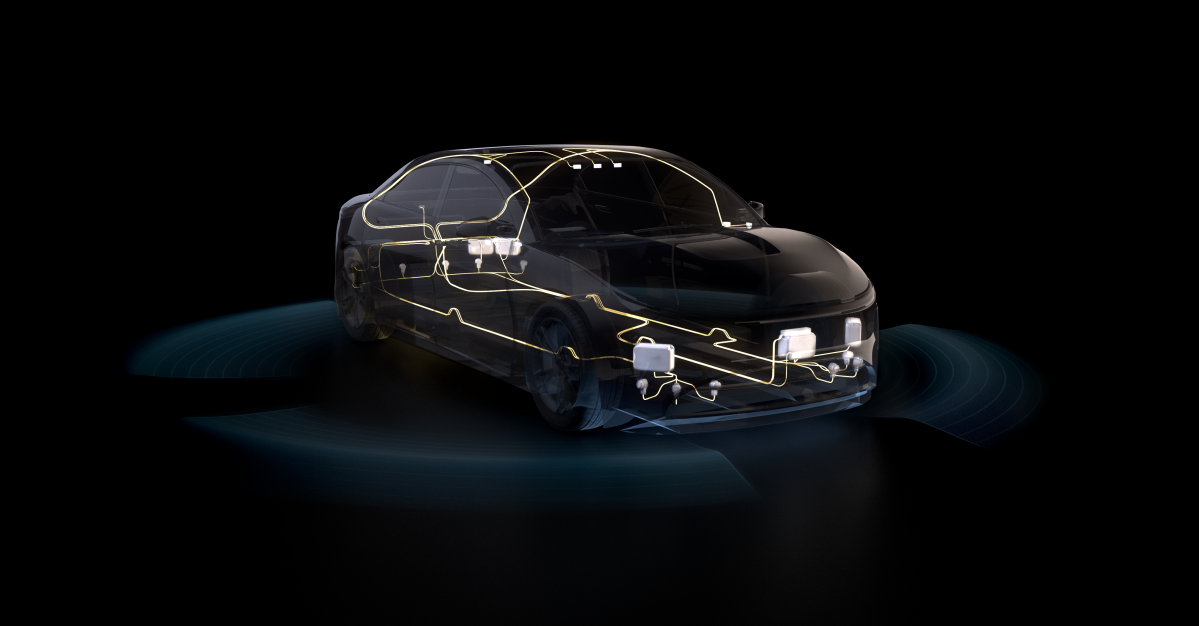
When compared to Tesla’s Full Self-Driving system, Nvidia distinguishes itself through the use of multiple sensors, including cameras, radar, ultrasonic sensors, and lidar. Nvidia believes that redundancy and diversity in sensing technologies are crucial for handling challenging edge cases and ensuring higher levels of safety.
Nvidia’s DRIVE Hyperion platform offers multiple configurations, with a base version using a simpler and more cost-effective sensor setup that relies primarily on cameras and radar. For higher levels of autonomy, lidar sensors can be added, making advanced autonomy accessible in vehicles priced around $40,000 to $50,000.
In terms of data advantages and disadvantages, Nvidia is leveraging synthetic driving data and simulation techniques to address edge cases and enhance the capabilities of its autonomous driving system. The company is working on the Vision Language Action model, which combines visual perception, language understanding, and physical action to create a unified architecture for autonomous driving.
Overall, Nvidia’s approach to autonomous driving combines cutting-edge technology with a focus on safety and reliability, positioning the company as a key player in the future of self-driving vehicles.