
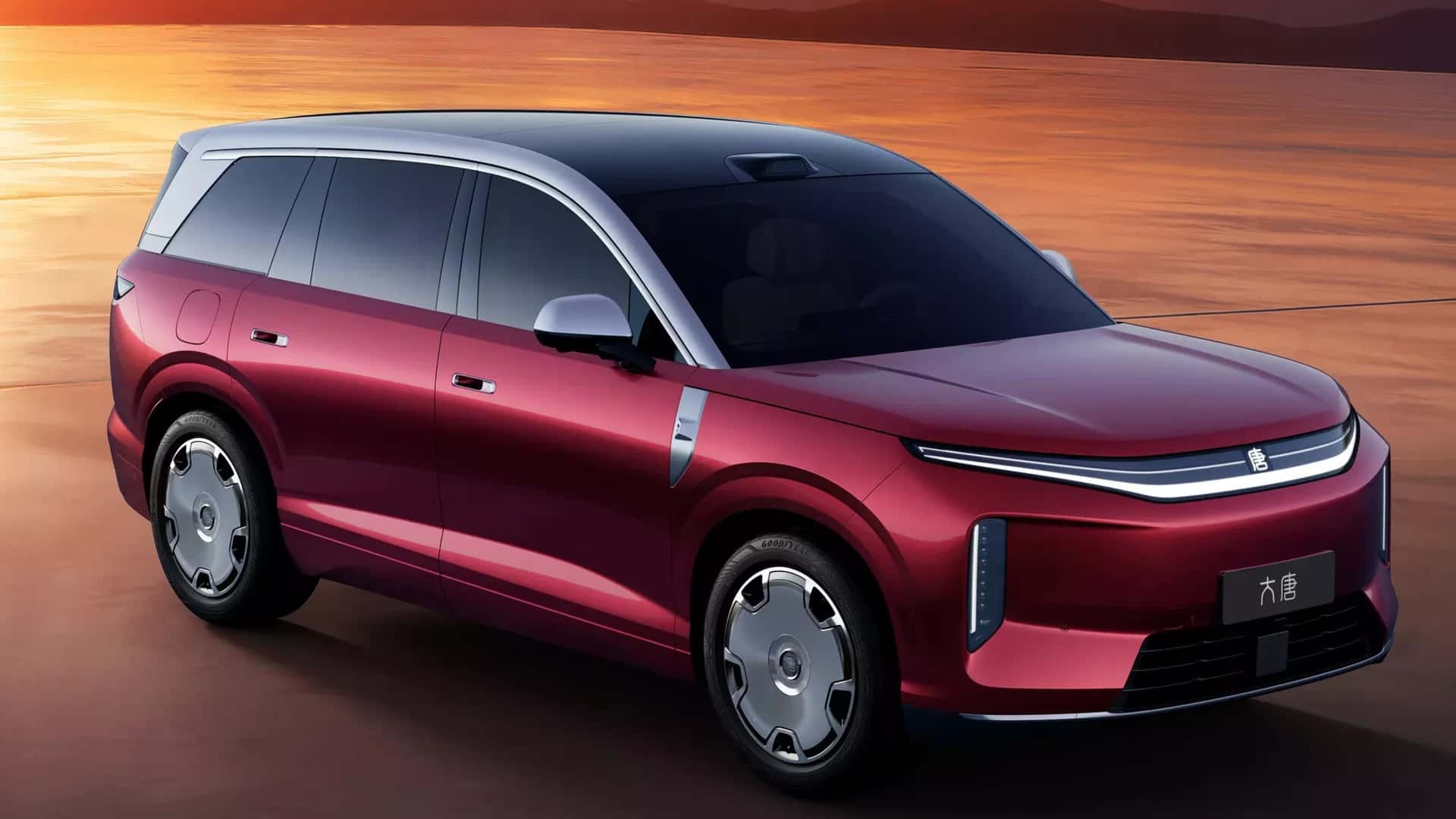
BYD’s Great Tang SUV is setting a new standard in the electric vehicle market, leaving Western automakers in the dust with its impressive lineup. The flagship SUV is a true tech fest, boasting cutting-edge features that outshine its competitors.
One of the most remarkable features of the Great Tang SUV is its incredible range of nearly 600 miles on a single charge. This is a game-changer in the EV industry and sets a new benchmark for long-distance driving without the need for frequent recharging.
But the real standout feature of the Great Tang SUV is its charging capabilities. With a whopping 1.5-megawatt charging power, this three-row EV can recharge its battery as quickly as a traditional gas fill-up. This is made possible by BYD’s latest Super e platform and the second-generation Blade lithium iron phosphate battery.
The 1,000-volt architecture of the Great Tang SUV allows it to accept 1,500-kilowatt Flash charging, making it one of the fastest-charging electric vehicles on the market. In just nine minutes, the second-gen Blade battery can go from 10% to 97% state of charge when connected to BYD’s latest Flash chargers.
Even in extreme weather conditions, such as freezing temperatures of -22°F (-30°C), the Great Tang SUV’s LFP battery can charge from 20-97% in about 12 minutes. This level of performance is unparalleled in the current EV landscape and showcases BYD’s commitment to pushing the boundaries of electric vehicle technology.
Compared to other fast-charging electric SUVs available in the U.S., such as the Lucid Gravity and Porsche Cayenne Electric, the Great Tang SUV stands out for its unmatched charging capabilities. With BYD’s relentless innovation and focus on cutting-edge technology, it’s clear that the company is leading the way in the electric vehicle revolution.
The electric SUV market is heating up with the introduction of impressive new models boasting incredible range figures. Among them, the Lucid Gravity stands out with an EPA-rated range of up to 450 miles (724 kilometers) when equipped with the 123-kilowatt-hour battery. In comparison, the Cayenne Electric, powered by a 108-kWh pack, has an impressive WLTP range rating of up to 339 miles (642 km) for the entry-level version, which should translate to approximately 341 miles (550 km) on the EPA procedure once tested.
Another notable contender in the electric SUV segment is the BYD Great Tang, which offers a maximum estimated range of 590 miles (950 km) in rear-wheel drive configuration. However, it is important to note that this range figure is likely based on China’s CLTC procedure, which tends to produce optimistic results due to its high city driving weighting. If the Great Tang were to undergo testing in the U.S., its EPA rating would probably fall around the 400-mile (643 km) mark, still surpassing the range of the Lucid Gravity Touring at 337 miles.
The Great Tang RWD model is available in China with two powertrain options – 402 horsepower (300 kW) or 496 hp (370 kW). There is also an all-wheel drive version that adds a 288 hp (215 kW) motor at the front for extra power, albeit at a slight range decrease to a reported 528 miles (850 km) on the CLTC cycle.
Measuring an impressive 208.7 inches (5,302 millimeters) in length and riding on a 123.2-inch (3,130 mm) wheelbase, the BYD Great Tang exudes a commanding presence, especially when finished in a dual-tone color scheme. Inside, the SUV offers a luxurious three-row layout with captain’s chairs for second-row passengers, as well as a built-in fridge, a fold-down screen for rear passengers, and a trio of screens upfront. While BYD has not disclosed the exact specifications of these screens or the usable capacity of the high-voltage battery, the vehicle is equipped with rear-wheel steering, adaptive suspension, and BYD’s advanced driver assistance system known as “God’s Eye” B lidar.
With its impressive range figures, luxurious interior, and advanced technology features, the BYD Great Tang is certainly a strong competitor in the electric SUV market, offering a compelling option for buyers looking for a high-performance and long-range electric vehicle. Climate change is a pressing issue that affects every corner of the globe. From rising sea levels to extreme weather events, the impacts of climate change are becoming more evident with each passing year. One of the most significant aspects of climate change is the effect it has on our oceans.
Oceans play a crucial role in regulating the Earth’s climate. They absorb large amounts of carbon dioxide from the atmosphere, acting as a carbon sink that helps to mitigate the effects of greenhouse gas emissions. However, as the levels of CO2 in the atmosphere continue to rise, the oceans are becoming increasingly acidic. This process, known as ocean acidification, has serious consequences for marine life.
The increasing acidity of the oceans poses a threat to a wide range of marine organisms, particularly those that rely on calcium carbonate to build their shells and skeletons. Corals, shellfish, and plankton are all at risk as the pH of the oceans decreases. In fact, some studies suggest that by the end of this century, the oceans could be more acidic than they have been in the past 20 million years.
The effects of ocean acidification are already being felt in marine ecosystems around the world. Coral reefs, often referred to as the “rainforests of the sea,” are particularly vulnerable to the impacts of acidification. Corals rely on a delicate balance of conditions to build their calcium carbonate skeletons, and even small changes in pH can disrupt this process. As a result, coral reefs are experiencing widespread bleaching events and die-offs, threatening the countless species that depend on them for food and shelter.
Shellfish, such as oysters and mussels, are also at risk from ocean acidification. These organisms rely on calcium carbonate to build their shells, and as the pH of the oceans decreases, it becomes harder for them to do so. This can have cascading effects throughout the food chain, as shellfish are an important food source for many marine animals, including humans.
In addition to the direct impacts on marine organisms, ocean acidification can also have broader implications for the health of the oceans and the planet as a whole. For example, the ability of the oceans to absorb carbon dioxide from the atmosphere may be compromised as they become more acidic, leading to even higher levels of CO2 in the atmosphere and further exacerbating climate change.
Addressing ocean acidification requires a coordinated global effort to reduce greenhouse gas emissions and protect marine ecosystems. This will require policy changes at the national and international levels, as well as individual actions to reduce our carbon footprint and protect the health of the oceans. By working together to address this urgent issue, we can help ensure a healthy future for our oceans and the planet.