
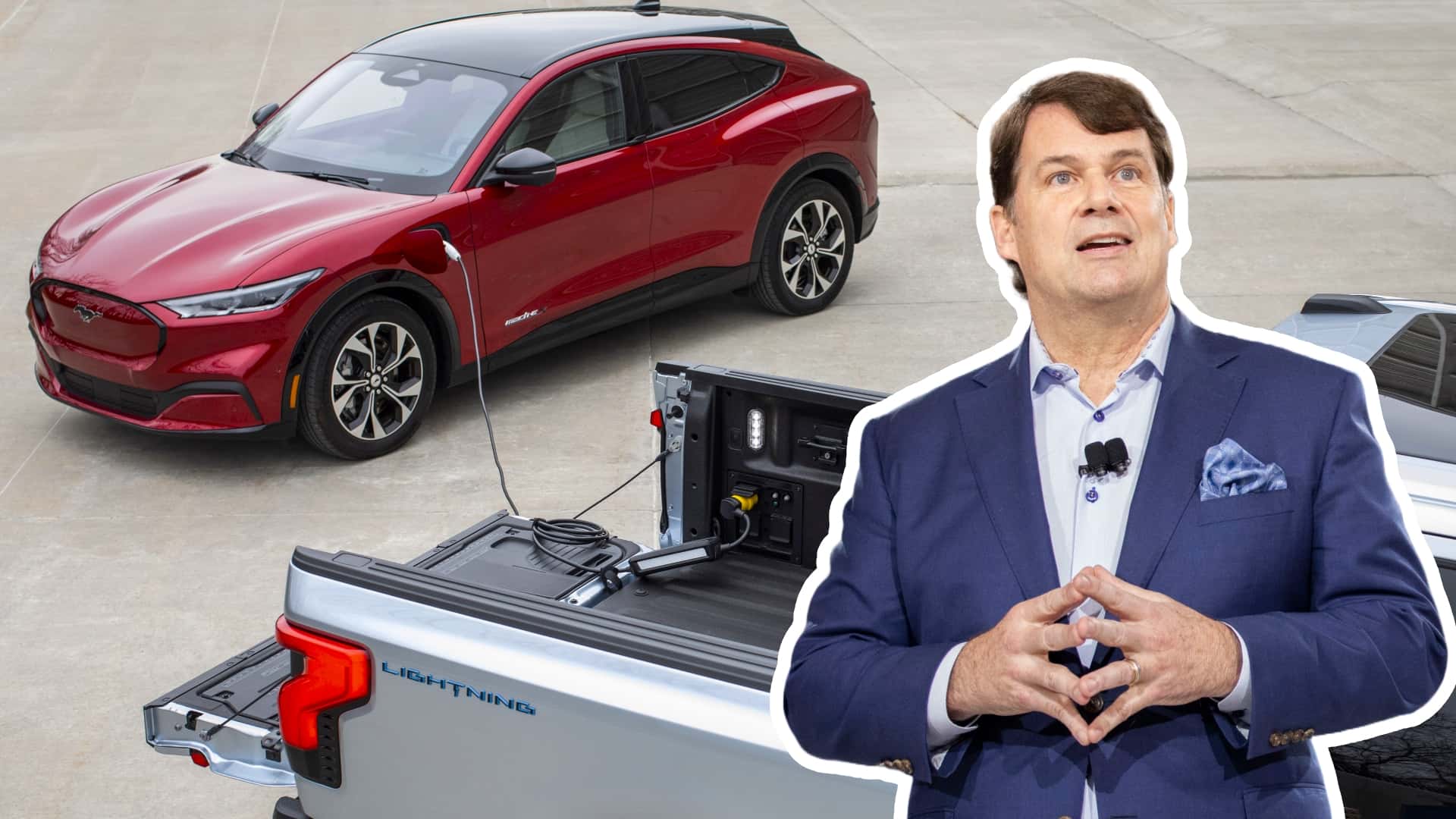
They’ve been doing it for decades. We had to leapfrog. We had to build a new vehicle from the ground up.”
This shift in software architecture is what enabled the transition to electric vehicles in the first place. Traditional automakers were held back by their reliance on legacy systems and suppliers, while Tesla’s clean slate approach allowed them to innovate rapidly and integrate software seamlessly into their vehicles.
And it’s not just about EVs. The rise of Chinese automakers like NIO, XPeng, and Li Auto can also be attributed to their strong focus on software development. These companies have embraced cutting-edge technology and created user-friendly interfaces that have resonated with consumers.
Driving Towards Automation
As we move towards a future where driving becomes more automated, the importance of software in vehicles will only continue to grow. Farley acknowledges this, stating that “as driving becomes more automated, the software experience is going to become even more important.”
Autonomous driving technology relies heavily on complex software systems that can interpret sensor data, make split-second decisions, and communicate with other vehicles on the road. This level of sophistication requires a robust software infrastructure that traditional automakers are still struggling to implement.
Companies like Tesla, Waymo, and Cruise have been at the forefront of autonomous driving development, leveraging their expertise in software to push the boundaries of what’s possible. Their vehicles are equipped with advanced AI algorithms that can navigate city streets, predict traffic patterns, and react to unexpected obstacles.
Farley’s bold claim that the software-defined vehicle revolution is bigger than EVs or competition from China may seem surprising at first. But when you consider the impact that software has had on the automotive industry, it becomes clear that he may be onto something.
As we look towards a future where cars are more than just modes of transportation, but interconnected devices that enhance our lives, the role of software in shaping the automotive landscape cannot be understated. Whether it’s enabling electric vehicles, driving automation, or creating seamless user experiences, software is the driving force behind the next evolution of the automotive industry.
So the next time you step into a modern car with its sleek touchscreen display and intuitive controls, remember that it’s not just a vehicle – it’s a reflection of the software revolution that’s reshaping the way we think about transportation.
The shift to software-defined vehicles (SDVs) has revolutionized the automotive industry, starting with Tesla’s groundbreaking approach with the original Model S. This new methodology focused on designing vehicles with software at the forefront, enabling cost-effective electric cars with impressive range and advanced features. While American, Japanese, Korean, and German automakers have been slow to adopt this strategy, Chinese companies have quickly embraced it, surpassing Western products in terms of cost, software experience, polish, and design.
The success of SDVs has paved the way for the electric vehicle (EV) revolution, but the real transformation is still on the horizon. As we move towards an autonomous future, the interior of vehicles is becoming increasingly important. In China, cars are already being viewed as a “third space” for entertainment and productivity. This shift is expected to occur in the Western market as well, with vehicles serving as spaces for videoconferencing, content consumption, and other activities during autonomous driving.
Ford CEO Jim Farley highlights the need for vehicles to evolve into entertainment spaces, especially as autonomy becomes more prevalent. The focus is shifting from driving dynamics to in-car experiences, with concepts featuring rotating seats and recliners to enhance comfort and versatility. As autonomy becomes more feasible, the in-car experience will play a crucial role in shaping consumer preferences and driving innovation in the industry.
The future of automotive technology lies in software-driven vehicles that prioritize connectivity, entertainment, and productivity. As SDVs continue to disrupt the traditional automotive landscape, manufacturers will need to adapt to changing consumer expectations and embrace a more software-centric approach to vehicle design. The shift towards autonomous driving and in-car experiences will redefine the concept of car ownership, transforming vehicles into multifunctional spaces that cater to a wide range of consumer needs. The future of the automotive industry is undergoing a massive transformation, one that goes beyond just the shift towards electric vehicles. While reducing emissions and combating climate change are crucial for the planet, car companies are now facing a new challenge – becoming software companies.
It’s no longer just about offering the most powerful motor or the longest range. The focus is shifting towards creating a holistic and immersive experience for consumers. From the safety and quality of autonomous driving systems to onboard workspaces and entertainment options, car manufacturers are now competing on a whole new level.
This shift is significant for two main reasons. First, selling gas cars or electric cars puts companies in a similar hardware-focused business model. However, transitioning to become software companies requires a completely different approach. It involves developing cutting-edge autonomous solutions, AI tools, entertainment partnerships, user experience research, and ongoing support on a unified platform. This transition is complex and challenging, leading many companies to struggle with the change.
Secondly, simplifying the automotive experience is key to this transformation. By centralizing the computing platform and making the hardware relatively simple, companies gain more flexibility. Ford CEO, Jim Farley, highlights the importance of having a platform that can accommodate various electric motors and batteries, opening up possibilities beyond just cars. This includes applications in robotics, delivery drones, and electric vertical take-off and landing vehicles (eVTOLs).
While Ford may not venture into all these industries, mastering a world-class software platform for the automotive sector could pave the way for expansion into other sectors. Additionally, there is room for innovation in different form factors that automakers have yet to explore, such as micro-mobility pods and autonomous heavy-duty equipment.
In conclusion, the future of the automotive industry is undoubtedly electric. However, the real transformation lies in the evolution from traditional car manufacturing to software-driven experiences. As companies navigate this shift, they are not only redefining the way we drive but also opening doors to a multitude of new possibilities in the mobility sector.