
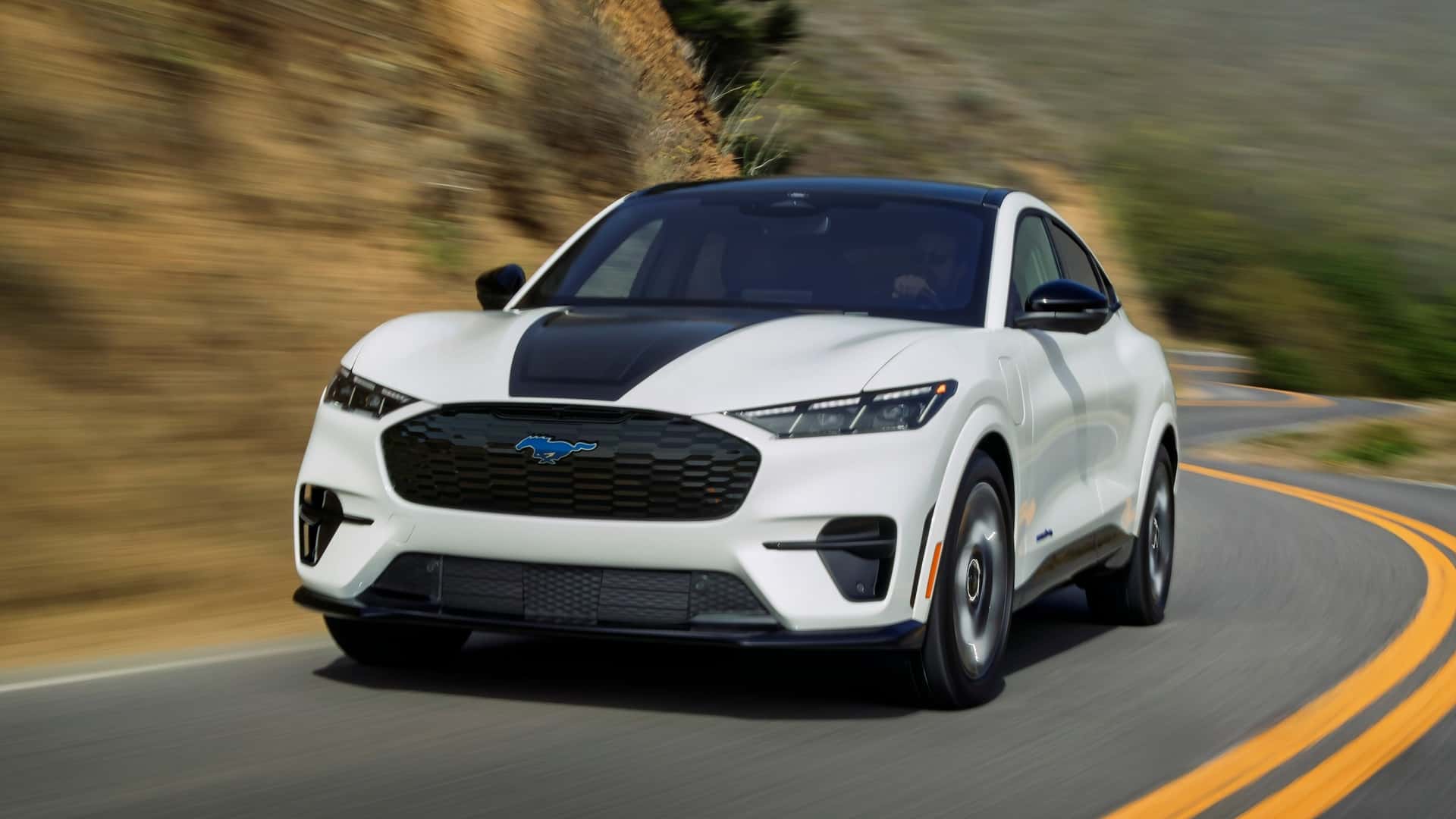
While it may be disappointing to see once-free features like frunks become paid options, it seems that car manufacturers are trying to find ways to cut costs and increase profits wherever possible. Ford’s decision to make the frunk on the 2026 Mustang Mach-E an optional extra for $495 may be a reflection of the fact that many drivers were not utilizing the frunk space as much as expected.
The frunk on the Mach-E was initially marketed as a convenient storage space, offering nearly 5 cubic feet of storage capacity and even equipped with a drain for added functionality. However, a reduction in size in 2024 due to a new heat pump meant that the frunk was not as spacious as before. Despite this, the frunk still provided useful storage space for items like luggage or beverages.
It is puzzling why Ford would choose to make consumers pay for access to the frunk space, especially since it was a key feature of the Mach-E. Other electric vehicle manufacturers, like Dodge with the Charger EV, also offer frunks as optional extras at additional costs. In the case of the Charger EV, the frunk option is bundled with a more powerful R/T package, which comes with a hefty price tag of $5,000.
As consumers, it may be a matter of personal preference whether the presence of a frunk would significantly impact the decision to purchase a vehicle. Some may find frunk space to be a valuable addition for storing items, while others may not see it as a crucial feature. Ultimately, the trend of making once-free features paid options in the automotive industry raises questions about the value placed on convenience and practicality for consumers.
While the Tesla Model 3 and Model Y have gained popularity with their frunks, it seems that not all electric vehicle manufacturers are following suit. The Chevrolet Equinox EV and Volkswagen ID.4, for example, do not come equipped with frunks. However, this lack of a frunk has not hindered their success in the global sales market.
General Motors and Volkswagen Group have been able to achieve impressive sales figures with their EVs, despite not including frunks in their designs. This raises the question – is the frunk really necessary for a successful electric vehicle?
Ford seems to think otherwise. The company has chosen not to include frunks in their electric vehicle lineup, suggesting that perhaps the frunk is simply a fad that some consumers do not prioritize. Instead, Ford has focused on other features and aspects of their EVs to attract buyers.
It appears that the importance of a frunk in an electric vehicle may vary depending on the preferences of the consumer. While some may find the added storage space and convenience of a frunk to be a valuable feature, others may not see it as a necessity. Ultimately, what matters most is the overall performance, range, and design of the electric vehicle, rather than whether or not it has a frunk.
As electric vehicles continue to gain popularity and evolve, manufacturers will likely continue to experiment with different features and designs to attract consumers. Whether or not the frunk remains a staple in electric vehicles remains to be seen, but one thing is clear – it is not a make or break feature for all EV buyers.