
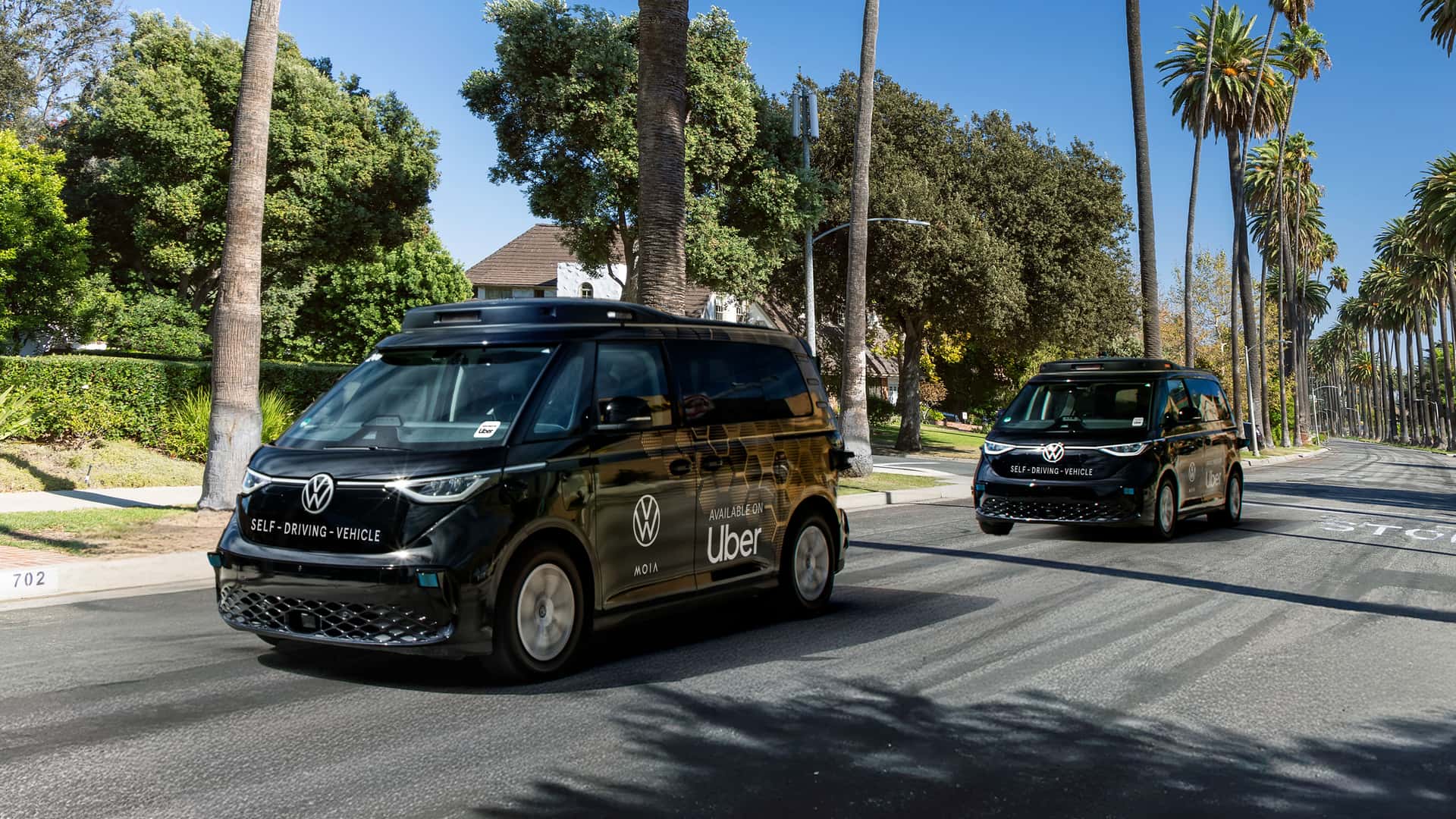
Uber is making a significant investment in building out public fast-charging stations across the U.S. and Europe to support its expanding autonomous vehicle partnerships. The company announced a $100 million investment in the project, which aims to provide the necessary infrastructure for its autonomous vehicle ambitions, which now include more than 20 partnerships worldwide.
To make this vision a reality, Uber is partnering with private charging networks such as EVgo, Ionity, and others to build the charging stations. These partnerships will ensure minimum utilization guarantees for the stations, as fast-charging infrastructure requires substantial upfront capital and high usage rates to be financially viable.
Uber’s Global Head of Mobility, Pradeep Parameswaran, emphasized the importance of building the right charging infrastructure at scale to unlock the full potential of autonomy and electrification in cities. The company’s approach involves deploying roughly 1,000 DC fast-charging stations through regional partnerships.
In the U.S., Uber has teamed up with EVgo to build stations in major cities like New York, Los Angeles, Boston, and San Francisco. In London, Hubber and Ionity will handle installations, while Electra will lead deployment in Paris and Madrid. Additionally, Uber maintains a partnership with Revel in New York City for charging infrastructure.
The company plans to first roll out the Uber-developed and managed charging sites in the Bay Area, Los Angeles, and Dallas before expanding to other cities. Many of these stations will be located at Uber’s autonomous vehicle depots, where day-to-day fleet operations such as cleaning, maintenance, and inspections are already conducted.
This strategic move aligns with Uber’s broader autonomous vehicle initiatives, which span across ride-hail, delivery, and freight services. With most of these partnerships involving passenger EVs equipped with self-driving technology, reliable and high-speed charging infrastructure is essential to keep these vehicles in service.
Overall, Uber’s investment in building out fast-charging stations reflects its commitment to establishing the necessary infrastructure to support its growing autonomous vehicle partnerships and furthering its position in the evolving mobility landscape. The shift towards electric vehicles (EVs) is gaining momentum, with Uber’s human driver network increasingly going electric, especially in major cities like New York. This trend is further fueled by the growing demand for EVs in urban areas, where sustainability and environmental concerns are at the forefront.
In addition to the transition to electric vehicles, Uber is also making strides in the autonomous driving sector. Currently, autonomous rides are available in Austin, Atlanta, and Phoenix, where Waymo robotaxis operate through the platform. Furthermore, internationally, Uber has partnered with WeRide to offer autonomous rides in cities like Abu Dhabi, Dubai, and Riyadh.
However, the EV market in the United States saw a slight dip in sales after the federal tax credit for EVs expired last September. Despite this, the charging infrastructure for EVs continued to expand, with 18,000 new public fast-charging stations added last year, marking a 30% year-over-year increase. This growth in charging infrastructure is crucial for supporting the increasing demand for EVs and ensuring that drivers have convenient access to charging facilities.
Overall, the combination of Uber’s transition to electric vehicles, the expansion of autonomous rides, and the growth of charging infrastructure is indicative of the industry’s shift towards a more sustainable and environmentally friendly future. As more cities and companies embrace EV technology, we can expect to see further advancements and innovations in the transportation sector.