
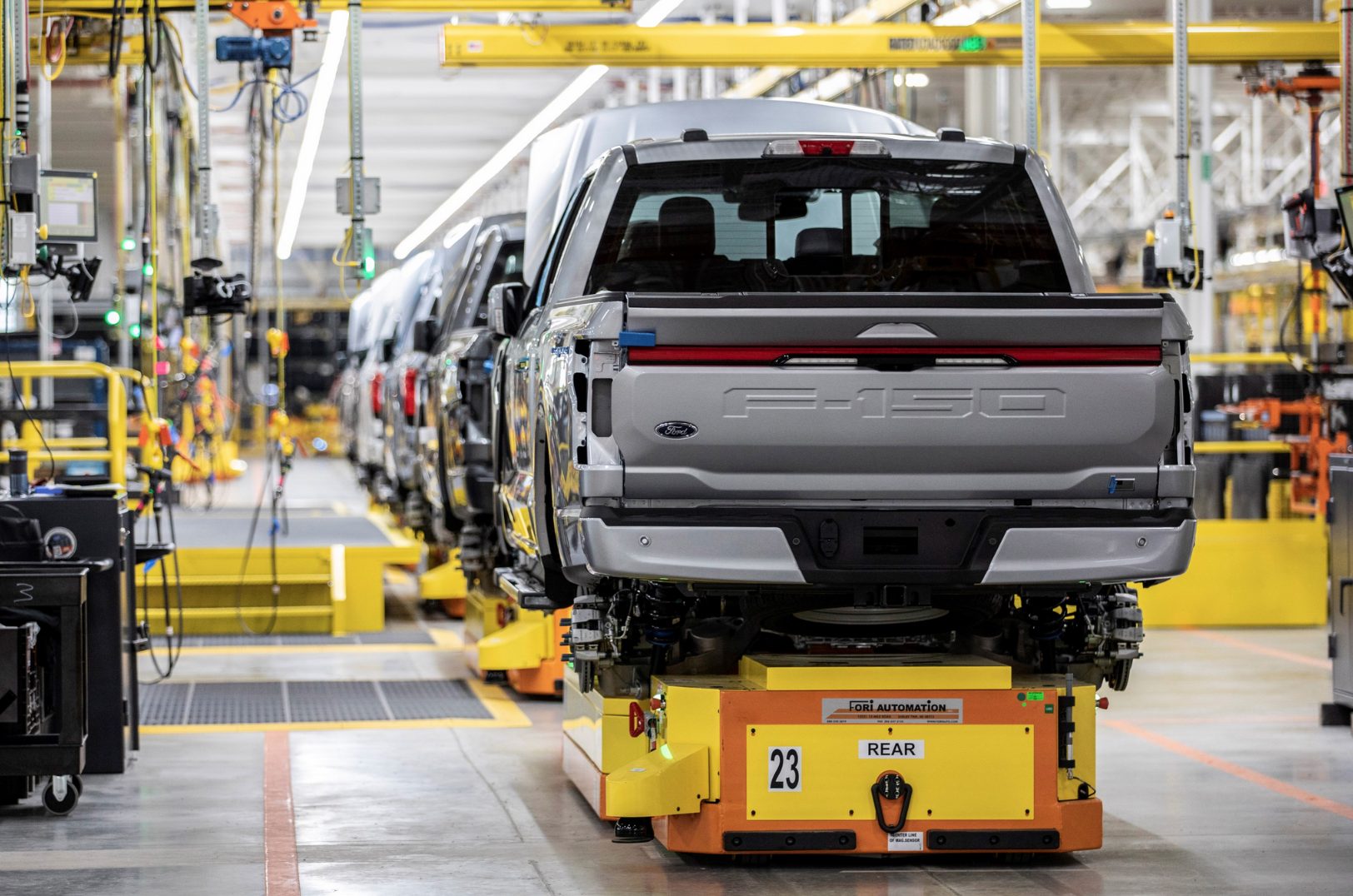
Ford is changing up its electric vehicle game with the introduction of a new “Universal Electric Vehicle” (UEV) platform, set to launch a mid-size electric pickup truck starting at around $30,000. This shift in strategy was unveiled during a recent technical briefing, where Ford executives shared their plans to incorporate various manufacturing and electrical advancements inspired by Tesla and its Cybertruck to hit this price target by 2027.
One of the key innovations that Ford is embracing is “gigacasting,” a manufacturing technique that involves using large aluminum castings to reduce the number of parts in the vehicle. By implementing gigacasting, Ford aims to streamline production and reduce costs, with the new pickup truck expected to have only two parts compared to the current Maverick’s 146 parts. Additionally, Ford is transitioning to a 48-volt zonal electrical architecture, a system that was first introduced on the Cybertruck. This new electrical setup minimizes the amount of wiring required in the vehicle, leading to weight savings and lower production expenses.
Instead of relying on large and expensive battery packs for range, Ford is prioritizing efficiency in its upcoming electric pickup. To achieve this goal, the automaker has assembled a team of experts, including Tesla veteran Alan Clarke and engineers from the Formula 1 world. Their objectives for the new truck include improving aerodynamics by 15% compared to any current pickup on the market, achieving a 0-60 mph acceleration time of around 4.5 seconds, offering more interior passenger space than a Toyota RAV4 despite its mid-size footprint, and utilizing prismatic Lithium Iron Phosphate (LFP) cells manufactured in Michigan, which are known for their durability and cost-effectiveness.
Notably, Tesla CEO Elon Musk responded to Ford’s technical shift by acknowledging the adoption of 48-volt technology and gigacasting. Musk tweeted, “Imitation is the sincerest form of flattery. Glad to see others finally realizing that 48V and large castings are the only way to make EVs affordable.” This exchange between Musk and Ford CEO Jim Farley reflects the ongoing friendly rivalry between the two companies, with Ford now taking a more serious approach to incorporating Tesla’s engineering principles to address its own challenges in the electric vehicle market.
Overall, Ford’s move towards a more cost-effective electric vehicle platform signals a significant shift in the industry, with the company leveraging innovative manufacturing and electrical technologies to deliver a competitive electric pickup truck at an affordable price point. As Ford continues to make strides in the EV market, the automotive landscape is poised for further evolution and competition in the coming years. The world of technology is constantly evolving, with new innovations being introduced on a regular basis. One of the latest trends in the tech industry is the rise of artificial intelligence (AI) and machine learning. These technologies have the potential to revolutionize the way we live and work, offering new possibilities and opportunities for businesses and individuals alike.
AI and machine learning are often used interchangeably, but they are actually two distinct technologies. AI refers to the ability of a computer or machine to perform tasks that typically require human intelligence, such as speech recognition, decision-making, and visual perception. Machine learning, on the other hand, is a subset of AI that involves training a computer to learn from data and make predictions or decisions based on that data.
One of the key advantages of AI and machine learning is their ability to process and analyze vast amounts of data quickly and accurately. This can help businesses make better decisions, improve customer service, and optimize operations. For example, AI-powered chatbots can provide instant customer support, while machine learning algorithms can help businesses predict trends and make strategic decisions.
In addition to business applications, AI and machine learning also have the potential to improve our daily lives. For example, smart home devices that use AI can learn our preferences and adjust settings accordingly, making our homes more comfortable and efficient. AI-powered healthcare applications can help doctors diagnose and treat patients more effectively, while autonomous vehicles can make transportation safer and more convenient.
However, as with any new technology, there are also challenges and concerns associated with AI and machine learning. One of the main concerns is the potential for bias in AI algorithms, which can lead to unfair or discriminatory outcomes. There are also ethical considerations surrounding the use of AI in areas such as surveillance, privacy, and job displacement.
Despite these challenges, the future of AI and machine learning looks promising. As technology continues to advance, we can expect to see even more innovative applications of these technologies that will improve our lives and drive economic growth. It is important for businesses, policymakers, and individuals to stay informed and engaged in the development of AI and machine learning to ensure that these technologies are used responsibly and ethically.