
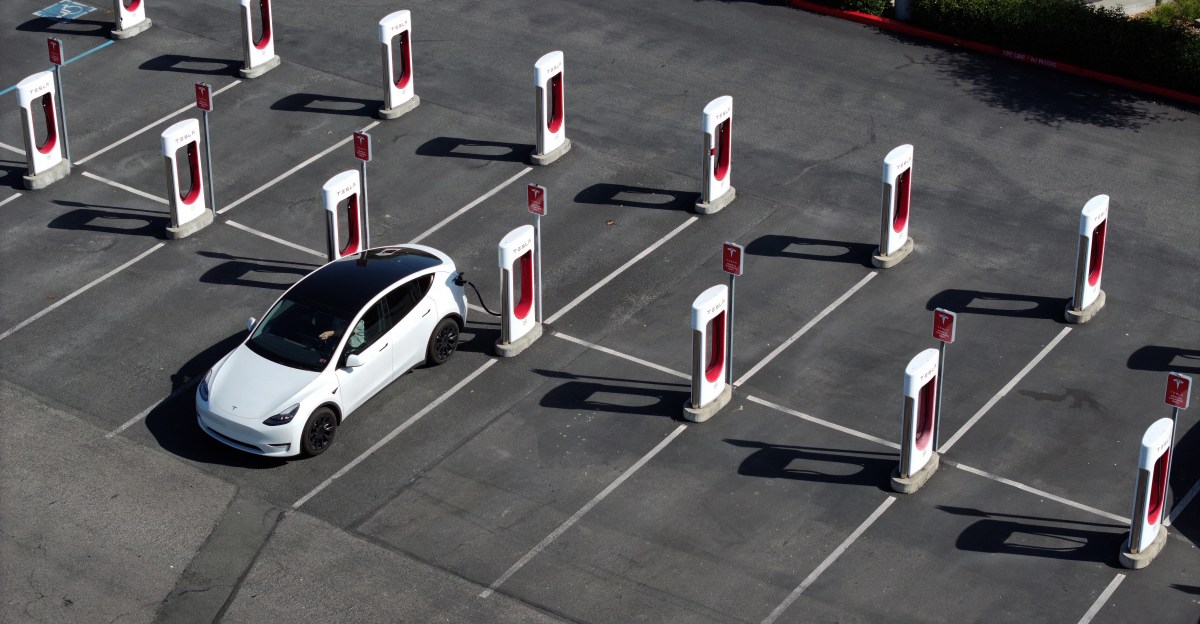
The push for electric vehicles (EVs) in the US has hit a roadblock as Donald Trump’s administration attempts to halt funding for the National Electric Vehicle Infrastructure (NEVI) program. Initially, Trump tried to freeze $5 billion in funding for the NEVI program, which was approved as part of the Bipartisan Infrastructure Law. However, a federal judge ordered the government to unfreeze the funds, prompting Trump’s administration to come up with a new tactic to stall the plan.
The latest proposal from the US Department of Transportation requires that EV chargers must be built in the US with components originating from the US to be eligible for NEVI funding. This means that EV chargers would need to increase their US-made parts from 55 percent to 100 percent. Industry and environmental groups have criticized this move, stating that it would essentially halt the build-out of EV charging infrastructure.
Albert Gore, executive director of the Zero Emissions Transportation Association, expressed concerns that the proposal does not align with the current industry standards and may deter further investment in US-made EV chargers. Most of the supply chain for EV charging equipment currently runs through China, as Chinese companies have been heavily involved in supplying EV charging stations globally.
While US manufacturers are working to increase their production capacity, there are currently no EV charging stations with 100 percent US-made materials and components. Ingrid Malmgren, policy director at Plug In America, highlighted that while some components like enclosures, cables, and final assembly are done in the US, power modules and advanced electronics are sourced globally.
The proposal by the USDOT is viewed as a de facto moratorium on EV charging build-out, which is crucial for supporting the growth of EV sales in the US. Critics argue that the new requirements set by the administration would hinder job growth and impede the progress of the NEVI program.
Despite calls for incremental increases in US-made charging equipment to receive federal funding, the 100 percent compliance requirement is deemed unachievable at this time. Critics believe that the real intent of Trump’s administration is to halt the NEVI program altogether, as previous policies have favored polluting industries over cleaner alternatives like EVs.
States such as Georgia, which were anticipating NEVI funds for new charging stalls, are now facing uncertainty due to the proposed changes. The move to restrict funding for EV charging infrastructure comes at a time when a robust and reliable charging network is essential for the widespread adoption of electric vehicles in the US.