
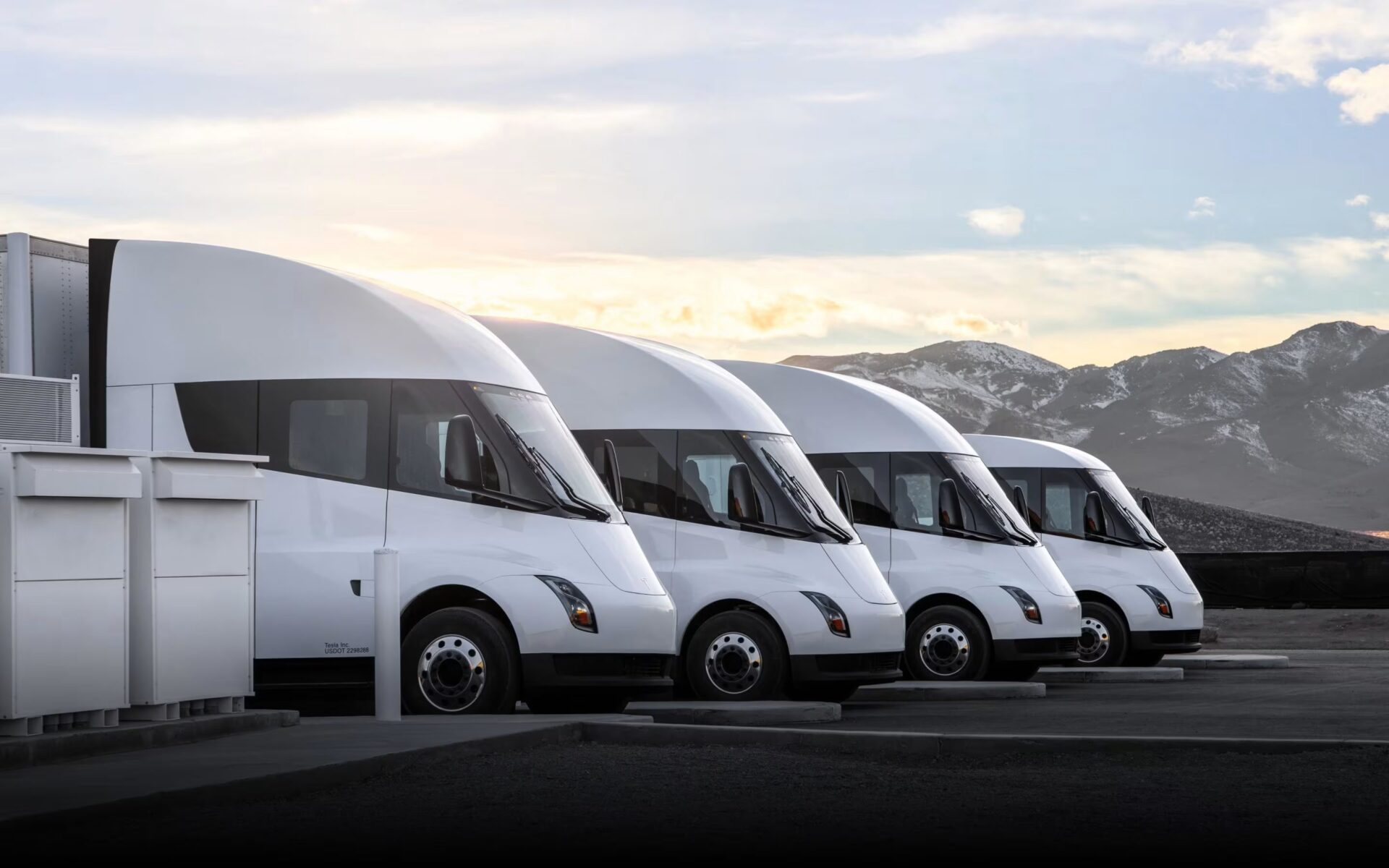
Tesla has finally unveiled the production-ready version of its highly anticipated electric Semi truck. The company has quietly updated its official Semi website, providing final specifications for two trims — Standard Range and Long Range — ahead of customer deliveries set to commence in the coming months.
The Standard Range Semi boasts an estimated 325 miles of range at a full 82,000-pound gross combination weight, while maintaining a curb weight under 20,000 pounds. On the other hand, the Long Range version offers a range of 500 miles, albeit with a higher curb weight of 23,000 pounds. Both variants share an impressive efficiency rating of 1.7 kWh per mile, a crucial metric for fleet operators aiming to reduce operating costs.
Each Semi is powered by three independent motors on the rear axles, delivering up to 800 kW of drive power. Tesla emphasizes that both trims are designed for autonomy, aligning with the company’s broader vision for self-driving commercial transport. Additionally, each truck supports electric Power Take Off (ePTO) up to 25 kW, enabling operators to power auxiliary equipment directly from the vehicle.
Charging details are equally noteworthy. Both versions support MCS 3.2 charging and can recharge up to 60% of their range in just 30 minutes. The Long Range Semi boasts a peak charging speed of 1.2 megawatts, while the peak charging rate for the Standard Range model has yet to be disclosed. These figures suggest rapid turnaround times that could make electric long-haul trucking a feasible option at scale.
This unveiling follows Tesla’s reveal of the redesigned Semi last fall, featuring a more efficient powertrain, increased payload capacity, and a refreshed exterior inspired by the Model Y. Since then, the updated Semi has been spotted testing near Tesla’s facilities in Nevada and around the Fremont factory, indicating that production readiness has been steadily progressing.
With final specifications now public, Tesla seems to be nearing the finish line. If the Semi lives up to its promises in real-world fleet operations, it could signify a significant shift in commercial trucking and a major success for Tesla’s energy and autonomy ambitions.